
Food
“Never say no to eedu”
The Bawa revives nostalgia for the Irani cafés of old
"The unique selling point of The Bawa — in fact its only selling point — is that the focus is on serving authentic, home-style Parsi food,” says Yohann Doongaji who opened The Bawa cafe in Poona in May 2018. The latest addition to the city’s booming restaurant scene, it is already earning a reputation as a quirky and popular eatery.
"Our aim is to give you a glimpse into a traditional Parsi home, complete with home-cooked food and recipes that have been handed down from generation to generation.” Two of the chefs, including head chef Kishore Sawale, were trained by Doongaji’s mother in the Nagpur restaurant The B. A. W. A. (see "No veg. Only non-veg,” Parsiana August 7, 2016) and now work at the Viman Nagar outlet.
Open from 7.30 a.m. until 11.30 p.m., The Bawa serves an all-day breakfast, with more than 15 variations of egg-based dishes ["Never say no to eedu (egg)”] including akoori, papeta per eedu and tambota per eedu. There is bun maska and Irani chai with a good selection of sandwiches, waffles and pancakes. In addition are all the traditional Parsi favorites such as patra ni machhi, sali murghi, bhéja na cutlets and chicken farcha, all of which can be washed down with raspberry or ice-cream soda. Dhansak is only served on weekends. The mutton or vegetarian berry pulau adds a Persian touch to the menu. Falooda and Parsi Dairy Farm kulfis will soon be added to the menu.
"Our aim is to give you a glimpse into a traditional Parsi home, complete with home-cooked food and recipes that have been handed down from generation to generation.” Two of the chefs, including head chef Kishore Sawale, were trained by Doongaji’s mother in the Nagpur restaurant The B. A. W. A. (see "No veg. Only non-veg,” Parsiana August 7, 2016) and now work at the Viman Nagar outlet.
Open from 7.30 a.m. until 11.30 p.m., The Bawa serves an all-day breakfast, with more than 15 variations of egg-based dishes ["Never say no to eedu (egg)”] including akoori, papeta per eedu and tambota per eedu. There is bun maska and Irani chai with a good selection of sandwiches, waffles and pancakes. In addition are all the traditional Parsi favorites such as patra ni machhi, sali murghi, bhéja na cutlets and chicken farcha, all of which can be washed down with raspberry or ice-cream soda. Dhansak is only served on weekends. The mutton or vegetarian berry pulau adds a Persian touch to the menu. Falooda and Parsi Dairy Farm kulfis will soon be added to the menu.
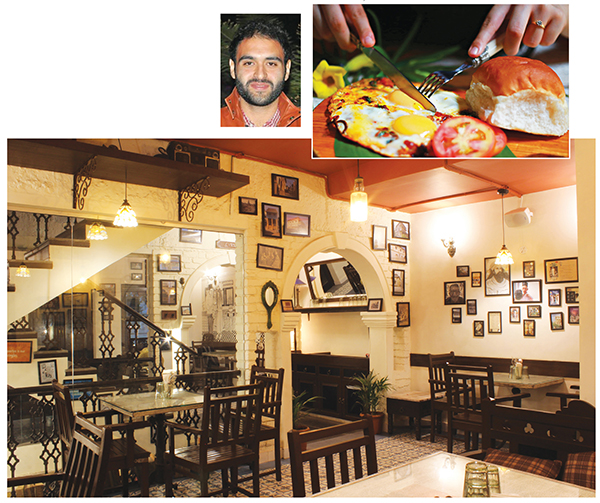
Clockwise from top: Yohann Doongaji; an egg dish; interiors of The Bawa — homely and welcoming
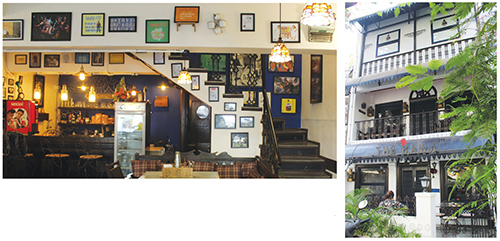
From l: The Bawa recreates ambience of a traditional Parsi home; building housing the eatery
In addition to the food, the most striking feature is the homely and welcoming atmosphere. Along with Nagpur-based designer Samruddhi Chaphle, Doongaji has taken great pains to make customers feel as though they are in a Parsi home. "It’s like inviting someone to dine in your house,” he points out. Entering the restaurant through wooden slatted doors, the first thing you notice is a hatstand, complete with a topi and a walking stick, and an antique gramophone, both of which used to be familiar fixtures in Parsi homes. The vintage tables, sofas and chairs are well spaced out, two of the walls are painted with vignettes of Parsi life in a style strongly reminiscent of cartoonist Mario Miranda’s famous sketches of Goa; the other walls are covered with sepia-toned portraits of illustrious Parsis and photographs of famous Irani cafes and restaurants in Bombay, Poona and elsewhere; a prominently positioned poster lists "Nine Reasons to Marry a Bawa” and an entire wall displays photographs of Parsiana covers. There are also shelves of books — vintage as well as contemporary — that can be borrowed or exchanged. For smokers, there is the "otla” (verandah) on the first floor balcony, complete with Parsi easy chairs.
Born and brought up in Nagpur, where his parents Annahita and Shiraz Doongaji ran The B.A.W.A. which shut down in January 2018, it is not surprising that Yohann developed a taste for good food. "My mother is an excellent cook and she had her own bakery. During my college days in Nagpur, my friends Zaran Bhagwagar, Sudarshan Barai and I would set up a counter at Traffic Park on weekends and sell chicken farchas, cutlets and patra ni machhi,” Yohann recalls. This small-scale enterprise proved extremely successful and Yohann realized that there was always a market for wholesome home-style cooking.
So two years ago, he moved to Poona armed with a degree in mass communications and a craving to set up his own eatery, "with financial help from my father and my mother’s recipes.” After searching for a suitable location for a year-and-a-half, Yohann came across an old two-storey bungalow in the bustling Viman Nagar neighborhood near the city’s airport. This is a prime location for his 60-seater café-style restaurant, which is spread over the ground and first floors.
It is early days yet, but the response to The Bawa’s food and ambience has been encouraging. Yohann plans to obtain a liquor license and also hopes to introduce events such as "date nights” and performances by live bands. He also plans to start serving lagan nu bhonu on banana leaves, which is sure to be a crowd-puller. "We are trying to restore the dying legacy of the chaotic, crowded, bustling, colorful, quirky, eccentric world of an Irani café.” With its motto of "great food, great people and smiles all around” The Bawa is well on its way to fulfilling Yohann’s dream of "reviving the love for Irani cafes.”
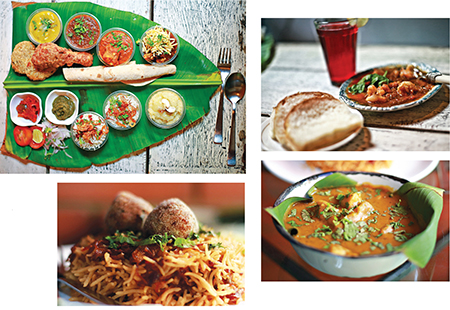
Traditional Parsi dishes at The Bawa
The chef shares two recipes with Parsiana readers.
BHAJI DANA MA GOSHT
Mutton (1 kg)
All types of spinach — palak, chowlai and methi (250 g each)
Ginger-garlic paste (1 tbsp)
Green chilli-garlic-cumin paste (2 tbsp)
Turmeric (1 tsp)
Red chilli powder (2 tsp)
Coriander-cumin powder (1 tsp)
Garam masala (1 tsp)
Onions (5-6)
Tomatoes (5-6 — chopped fine)
Coriander leaves (200 g — chopped fine)
Spring onions (4-5 sprigs — optional)
Green peas ( 250 g)
Salt (to taste)
Clean and wash the mutton well. Marinade with ginger-garlic paste. Put it in the cooker, and after two whistles, cook on low flame for 20 minutes.
Wash and cut all the three types of spinach. Chop onions and brown them. Add chopped tomatoes, ginger-garlic and green chilli-garlic-cumin pastes and roast it well. Add turmeric, chilli and coriander-cumin powders with garam masala and salt. Add the spinach, mix well and let it cook.
Add the green peas, mutton along with the stock and cook on low flame. Garnish with coriander and serve.
Mutton (1 kg)
All types of spinach — palak, chowlai and methi (250 g each)
Ginger-garlic paste (1 tbsp)
Green chilli-garlic-cumin paste (2 tbsp)
Turmeric (1 tsp)
Red chilli powder (2 tsp)
Coriander-cumin powder (1 tsp)
Garam masala (1 tsp)
Onions (5-6)
Tomatoes (5-6 — chopped fine)
Coriander leaves (200 g — chopped fine)
Spring onions (4-5 sprigs — optional)
Green peas ( 250 g)
Salt (to taste)
Clean and wash the mutton well. Marinade with ginger-garlic paste. Put it in the cooker, and after two whistles, cook on low flame for 20 minutes.
Wash and cut all the three types of spinach. Chop onions and brown them. Add chopped tomatoes, ginger-garlic and green chilli-garlic-cumin pastes and roast it well. Add turmeric, chilli and coriander-cumin powders with garam masala and salt. Add the spinach, mix well and let it cook.
Add the green peas, mutton along with the stock and cook on low flame. Garnish with coriander and serve.
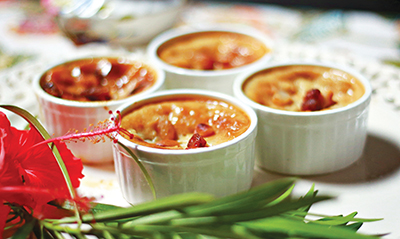 LAGAN NU CUSTARD
Milk (1 ltr)
Sugar (150 g)
Vanilla essence (few drops)
Cashew nuts (150 g)
Eggs (2)
Bread (2 slices)
Cardamom-nutmeg (1 tsp)
Raisins (50 g — for garnish)
Cashew nuts (50 g — for garnish)
Boil the milk well. Add cashew nuts after grinding them (not to a very fine paste) with sugar and let it cook. After adding bread slices, whisk in a blender.
Cool it completely. Add vanilla essence, beaten eggs and cardamom-nutmeg powder.
Put the mix in a baking tray and bake at 250°C for half an hour till brown on top.
Remove from oven and garnish with raisins and cashew nuts.
◆ ◆ ◆
From the archive