
Business
GUSTI’s gumption
The tools created by GUSTI Tool Works are in demand in the aerospace, locomotive, energy, oil and natural gas sectors
"I don’t advocate entrepreneurship. I have been through three years of hell,” says Tosher Hormusjee, founder and director of GUSTI Tools Works (GTW) LLP and Global Unified Source for Technology Integration (GUSTI) Private Limited. He shared the "funding agonies” he experienced before he could commence commercial production in November 2017 at his Bangalore factory. "We had hell with banks. Our biggest problem was finance. If an entrepreneur has money then it is worth starting independently. If he’s looking for funds, he should be very sure that his funding plans are completely in place before starting out,” he cautions. A former director of G. W. Precision Tools, Hormusjee sold his stake in the company and chose to venture out on his own. To raise Rs 30 crores for a new enterprise, he had to mortgage all his family properties, he reveals.

Tosher (l) and Zoish Hormusjee
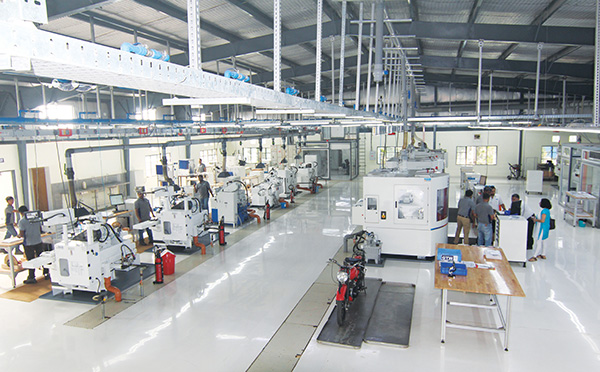
On the shop floor: zero compromise on quality;
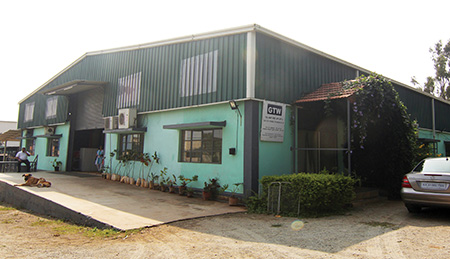
GUSTI factory in Bangalore
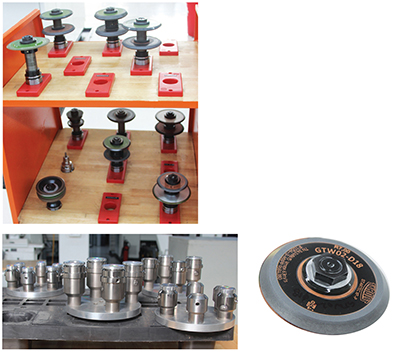
Tools manufactured
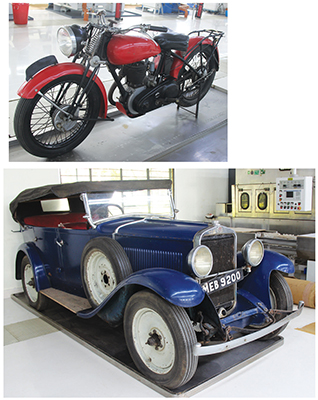
Vintage Norton bike Oozy, and Fiat car Boozy get pride of place
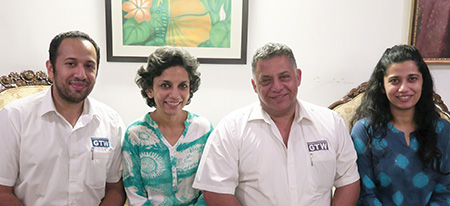
From l: Zoish, Radhika, Tosher and Roshni Hormusjee
Systems are now in place to create precision tools and total tooling solutions at their "very high automation, digital factory” in Bangalore. GUSTI products that include solid carbide tools, boring bars, graphite end mills, micro drills and fixtures are in demand in specialized sectors like "aerospace component manufacturing, energy, oil and natural gas, medical, automobile…Our long-term strategy is to shift focus from automobiles that was our prime focus area to aerospace,” declares Hormusjee, so that profits start accruing after five years instead of the normal gestation period of eight to 10 years. Working in strategic collaboration with Starrag, a German company, among the assignments currently accepted by GUSTI is the manufacture of functional turbine blades seen in aircrafts.
At their factory, "there is zero compromise on quality,” stresses the founder. With their raw materials sourced from Europe, GUSTI issues a certificate of origin if demanded by customers. The components required to create the tools are accessed from storage units on their premises using computer codes. Whilst the operator is busy at work following the diagram in front of him, the progress of every tool in the manufacturing stage can be tracked on the centralized computers.
Knowing that it takes 18 months to two years to manufacture the sophisticated machines that they handle, all equipment is given due care, operated with oil imported from Germany. Further, the gaseous emissions in the factory are controlled through specially installed ducts that facilitate exchange of air every 10 minutes. Noise is kept to a bare minimum. Fire safety measures are in place. The floors are spotlessly clean. Food is prohibited on the factory floor for it can attract rats. They are more comfortable introducing cobras, vipers and kraits in their compound to kill rats, rather than see rodents gnaw any equipment, reveals Hormusjee.
GTW’s prestigious business partners include international firms like Oerlikon Balzers, Tyrolit, Wendt, 3M, Haimer...
Since the tools that they create fall within the domain of Intellectual Property Rights which is "very important for our customers and ourselves,” Hormusjee believes in installing military grade security and safety measures. No cell phones or cameras with flash are permitted within their factory precincts.
Sharing the floor space at the factory are two vintage vehicles, a 1927 Fiat that has been named Boozy since she consumes a lot of petrol, and a Norton bike of 1906-1930 vintage that has been named Oozy since there is considerable oil spillage. The Fiat was gifted to him by his aunt Jini Kharas and her daughters Meher and Pheroza. With his passion for vintage vehicles, he takes great pride in their maintenance.
Setting up a company dealing with tooling solutions lay within 55-year-old Tosher’s expertise. In 1998, along with his father Gusti Hormusjee, an authority on tooling who had studied in Germany, they had founded G. W. Precision Tools. On Gusti’s demise in 2002, Tosher took over the reins and ran it along with the German partner for a decade. When the partner went bankrupt, "I had the option to buy them out or to exit the company. I sold my stake in 2014 and registered Gusti Tool Works in 2015.” Twenty-six-year-old son Zoish who graduated in mechanical engineering in 2013 and daughter Roshni, aged 28, are co-directors in the company.
"Theoretical knowledge is desirable. Practical knowledge is crucial and critical,” says Tosher whose engineering knowledge is "all hands on.” Since he refuses to pay bribes when dealing with government and customs officials, he has learnt to accept delays when installing new machinery. One of their imported machines was not released from the Madras port for one and a half months, after which a penalty of Rs 10 lakhs was imposed. Under the Exports Promotion Capital Goods (EPCG) scheme, there is supposed to be zero duty on the goods they import for manufacturing purposes but they are compelled to pay high amounts.
Yet another company that Tosher is keen to nurture is Global Unified Source for Technology Integration (expanded from GUSTI) Private Limited. This "GUSTI concept is a dream, something that India needs desperately but will take time,” he states whilst directing us to learn from the internet about this "mega project that I hope will come to fruition one day.” For the present he hopes to draw investors since the Karnataka government did not sanction land. GUSTI, as envisaged by Tosher, is meant to serve as an "all-encompassing development engine” that will provide business incubator and support services as also clustering and networking opportunities for academia, research and development, and manufacturing. The main objective is to facilitate the conversion of "innovative ideas into commercially viable products,” so that companies can pursue their goals and run their business without worrying about the nitty-gritties.
A graduate in environmental science from St Joseph’s College in Bangalore, Tosher was initially in the real estate business, involved with movie production, working with Sir David Lean of Dr Zhivago fame, and for a while worked in a printing press. When his father said "Aai badhu bandh kar (stop dabbling in petty businesses),” Tosher joined him and soon learnt the ropes of tooling.
Realizing the importance of short courses to update his knowledge, he is convinced they "always help. The cross-cultural management course gave me insights into the behavioral patterns of different people. Anyone who does international business should attend it,” he recommends.
To encourage greenery on their factory premises, employees are encouraged to plant trees and take responsibility for certain sections of the property. On the notice board at the factory is a record of the trees planted by different employees. Even visitors to the factory are expected to plant saplings before leaving their property. Rather than see ship containers discarded, the environment conscious Tosher buys them and converts them into rooms on his factory grounds.
Life member of the Bangalore Parsi Zoroastrian Anjuman, Tosher is disappointed that the "vibrant, lovely, happy community that had absolutely no problem with dissent and disagreement had become right wing, rigid in its views, issuing fatwas.” Whilst hopeful of change with the recent election of Air Chief Marshal Fali Major (Retd) as president, he was appalled that the erstwhile trust board had introduced rules granting membership only to those who agreed to sign sworn affidavits that they support dakhmenashini and oppose interfaith marriages. According to him, religion should be "in the heart and home” and he does not support "public profession of religious faith and belief.” Tosher questions, "What does it matter if someone chooses dakhmenashini, burial or cremation?”
Married to Radhika Varma, a Hindu, Tosher says he wears the sudreh regularly, although "I have never forced my children to wear it.” While both the children have been navjoted, they have been exposed to the faiths of both the parents. Zoish wears the sudreh daily even whilst he is officially recognized as the 16th heir to the throne of the erstwhile Maharaja of Travancore, Radhika being a princess and descendant of the legendary artist Raja Ravi Varma whose family owns the Padmanabhaswamy Temple. While their marriage "created ripples in her case,” Tosher was fortunate that his dad advised him, "Marry whoever you want as long as you are happy.”
"I have two PhDs,” says Tosher, continuing after a pause, "in playing the fool.” In the same tone he states he goes "to the family for sound advice: from my wife, I get sound, and from my children, advice.” Radhika is an unassuming, soft-spoken artist and so too is Roshni who is currently experimenting with art as a career. He considers Zoish "the most important asset” in his organization. Tosher leaves some decisions, like choice of team members, completely to Zoish who is expected to do everything at the factory, including cleaning and washing, and is yet "the lowest paid employee.”
To escape the city life, Tosher takes refuge in his farm house. His love for animals, angling (catching fish and releasing them again in the waterway) and nature is manifested at their factory premises too. A rock garden and fish pond are currently under development and he makes time to throw in some fish feed to derive joy in seeing the shoal rush to the surface of the water. Seeking to improve the environs of his factory, he is keen that his workforce and customers can simultaneously enjoy the best of both, the mechanical and natural worlds.
◆ ◆ ◆
From the archive