
In Memoriam
Like father, like daughter
Resembling her father in looks and demeanor, Dina Wadia’s death at her residence in New York on November 2, 2017 at the age of 98 was widely reported in the media in India and Pakistan for she was the only child of Mohammad Ali Jinnah, the founder of Pakistan.
The father and daughter had an amicable, easygoing relationship when she was schooling in London. During the early 1930s, "Dina was Jinnah’s sole comfort… the pampered daughter could be a joy to her doting father,” it was recorded in Stanley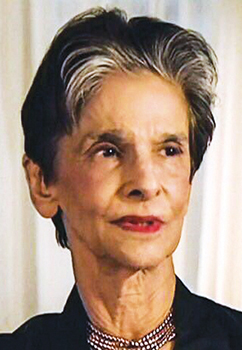 Wolpert’s Jinnah of Pakistan. The father’s frequent references to the book Grey Wolf, based on the life of Turkey’s modernist leader Kemal Ataturk, made Dina give Jinnah the nickname ‘Grey Wolf.’
Having lost her mother Rattanbai (Ruttie) Petit (granddaughter of Sir Dinshaw Petit, first baronet), when she was nine years old and her father was busy pursuing his political dreams, it was her maternal grandmother Dina Petit who played a major role in her formative years. The child who had not been given a name until her mother’s demise, reportedly chose to adopt her grandmother’s name with her father’s consent.
The father-daughter ties snapped when Dina dared to oppose him when she was 19 years of age and marry Neville Wadia, the scion of a Parsi family. A greatly agitated Jinnah reprimanded her for choosing a Parsi when there were millions of Muslim boys in India. Unabashed Dina is known to have responded, "Father, there were millions of Muslim girls in India. Why did you not marry one of them?” Her mother had converted to Islam when she was 16 years old to become Jinnah’s second wife, thereby earning the wrath of her family and the Parsi community.
In the following decade the relationship between Dina and her father "became extremely formal… They did correspond but he addressed her as ‘Mrs Wadia,’” states Wikipedia. Subsequently they patched up their differences and "often spoke and wrote to each other,” recalled Andrew Whitehead, honorary professor at the University of Nottingham and a former editor of History Workshop Journal on his blog. Guarding her privacy, Dina never gave interviews but had made an exception for Whitehead. After five years of striving, he succeeded in meeting Dina in her apartment off Madison Avenue in New York in 2002. "There was something remarkable about her… She lived in the sort of exclusive apartment building where you didn’t get into the lobby, never mind beyond it, unless you were expected. She wouldn’t allow me to record an interview — she insisted nothing should be on the record — she wouldn’t permit herself to be photographed… though she relented as I was leaving and let me take a photo of a life size, full length portrait of her painted in London in 1943 when she was expecting her son Nusli (now chairman of the Wadia Group of Companies and Britannia Industries),” stated Whitehead.
The father and daughter had an amicable, easygoing relationship when she was schooling in London. During the early 1930s, "Dina was Jinnah’s sole comfort… the pampered daughter could be a joy to her doting father,” it was recorded in Stanley
Wolpert’s Jinnah of Pakistan. The father’s frequent references to the book Grey Wolf, based on the life of Turkey’s modernist leader Kemal Ataturk, made Dina give Jinnah the nickname ‘Grey Wolf.’ Having lost her mother Rattanbai (Ruttie) Petit (granddaughter of Sir Dinshaw Petit, first baronet), when she was nine years old and her father was busy pursuing his political dreams, it was her maternal grandmother Dina Petit who played a major role in her formative years. The child who had not been given a name until her mother’s demise, reportedly chose to adopt her grandmother’s name with her father’s consent.
The father-daughter ties snapped when Dina dared to oppose him when she was 19 years of age and marry Neville Wadia, the scion of a Parsi family. A greatly agitated Jinnah reprimanded her for choosing a Parsi when there were millions of Muslim boys in India. Unabashed Dina is known to have responded, "Father, there were millions of Muslim girls in India. Why did you not marry one of them?” Her mother had converted to Islam when she was 16 years old to become Jinnah’s second wife, thereby earning the wrath of her family and the Parsi community.
In the following decade the relationship between Dina and her father "became extremely formal… They did correspond but he addressed her as ‘Mrs Wadia,’” states Wikipedia. Subsequently they patched up their differences and "often spoke and wrote to each other,” recalled Andrew Whitehead, honorary professor at the University of Nottingham and a former editor of History Workshop Journal on his blog. Guarding her privacy, Dina never gave interviews but had made an exception for Whitehead. After five years of striving, he succeeded in meeting Dina in her apartment off Madison Avenue in New York in 2002. "There was something remarkable about her… She lived in the sort of exclusive apartment building where you didn’t get into the lobby, never mind beyond it, unless you were expected. She wouldn’t allow me to record an interview — she insisted nothing should be on the record — she wouldn’t permit herself to be photographed… though she relented as I was leaving and let me take a photo of a life size, full length portrait of her painted in London in 1943 when she was expecting her son Nusli (now chairman of the Wadia Group of Companies and Britannia Industries),” stated Whitehead.
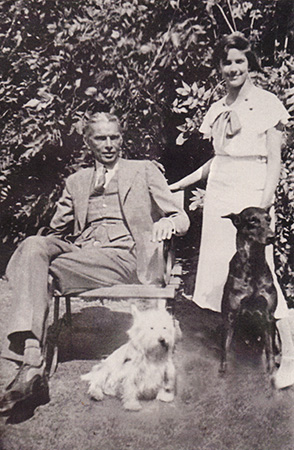
Top: Dina Wadia; above: in her younger days with father Mohammad Ali Jinnah
During her chat with Whitehead she had referred to her father ringing her from Delhi to say "We’ve got it!” when he won the Muslim League’s demand for Pakistan. Within a year of Independence, Jinnah died and Dina went to Pakistan for the first time to attend her father’s funeral in Karachi. Mother of Nusli and Diana, within a few years of marriage Dina had separated from her husband.
After Dina’s passing away, the foreign office in Pakistan sent Nusli "deepest condolences on behalf of the people and government of Pakistan,” as reported in the media. Known to share a close mother-son bond, in an interview with The Times of India in 2008, Nusli had said, "I speak to my mother once a day no matter where I am.”
Having spent some time at the palatial mansion, South Court on Mount Pleasant Road in Bombay, which her father had built in 1936 when he was in charge of the Muslim League, she was keen to return to it. At the time of Partition, the Indian government declared Jinnah House, as it was popularly known, as "evacuee property” maintaining that Jinnah had willed the house to his sister Fatima. From 1948 to 1982 the property was leased to the British Deputy High Commission whilst successive Pakistan governments requested that they be permitted to open their consulate there.
In 2007, Dina moved the Bombay High Court claiming South Court cannot be classified as "evacuee property” and that it should be handed over to her as his sole legal heir, since she wanted to spend her last years in this mansion. The government insisted that Dina’s petition is not maintainable and is barred by prolonged and unexplained delay. According to her, Jinnah’s will was not probated by the Bombay High Court and therefore had no effect in law. As argued by her counsel Fali Nariman in court, Jinnah, as a Khoja-Shia, was not governed by Muslim succession law, but by Hindu customary law (his grandfather Premjibhai "Meghji” Thakkar was a Hindu of Lohana caste who had converted to Islam, states Wikipedia) under which the daughter is entitled to intestate succession. A verdict is yet awaited in the matter.
The last time Dina visited Pakistan was in 2004 in the company of Nusli, and grandsons Ness and Jeh. In the antiquities room at Jinnah’s mausoleum were some photographs that caught her eye: Dina standing with Jinnah and his sister Fatima; another of Ruttie; and a third of her father dictating a letter. She specially requested for copies of these three photographs. In the visitors’ book she had made an entry, "May his dream for Pakistan come true.”
◆ ◆ ◆
From the archive