
In Memoriam
Mirza’s modesty
Died: Dastur (Dr) Peshotan Hormazdyar Mirza, 72, High Priest of Udvada; on June 26, 2016 in Bombay following complications arising from renal cancer.
"Soft-spoken, humble and noble” were the three attributes in the High Priest that all the six speakers admired at the condolence meeting convened under the auspices of the Athornan Mandal at the Banaji Atash Behram hall on July 9, 2016. Out of respect for the orthodox priest, the audience sat with their heads covered throughout the meet that started and ended with the recitation of three Ashem Vohus.
"Soft-spoken, humble and noble” were the three attributes in the High Priest that all the six speakers admired at the condolence meeting convened under the auspices of the Athornan Mandal at the Banaji Atash Behram hall on July 9, 2016. Out of respect for the orthodox priest, the audience sat with their heads covered throughout the meet that started and ended with the recitation of three Ashem Vohus.
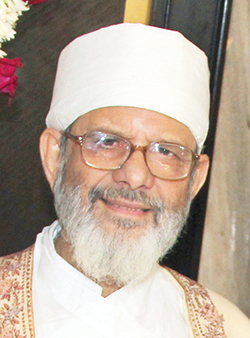
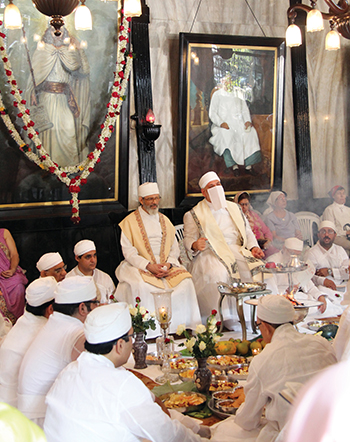
Dastur (Dr) Peshotan Mirza (above) and performing jashan
at the 10th World Zoroastrian Congress
"His untimely demise has left a void… I would always respect him as an elder brother,” stated Dastur Khurshed Dastoor of Udvada recalling in an emotionally charged voice that when he had taken his son to meet him soon after his navar, Mirza told the youngster that "I was not able to attend your navar but I will certainly attend your maratab.” Dastoor appreciated that despite Mirza being nearly 20 years his senior, "he never had an ego problem.” During their sojourns together they would discuss issues concerning the community and religion. In fact he had impressed on Dastoor that even if they had differences of opinion they should resolve never to cause mental agony to one another. "He fulfilled his role and duties as a High Priest and despite ill health would attend the meetings and jashans of the Udvada Anjuman,” observed Dastoor.
A condolence letter from Dastur (Dr) Kaikhusroo JamaspAsa that was read by the evening’s master of ceremonies Ervad Cyrus Darbari commended Mirza’s "yeoman service to the sacred Iranshah” and his guidance to the community in all religious matters and to the Bombay Parsi Punchayet (BPP) on the issue of dakhmenashini. Also referred to was Dastur (Dr) Firoze Kotwal’s tribute which had appeared in the Jam-e-Jamshed of July 3 where Kotwal who had taught the young Mirza at The M. F. Cama Athornan Institute (MFCAI) remarked that "tradition, orthodoxy and pious conduct combined to make him a priest of high standing with a reputation for sincerity and for holding his views despite the many pressures on him to change.”
He could infuse "the best of religion into science and the best of science into religion,” commented the chairman of the Athornan Mandal Ervad Nadir Modi who felt Mirza with his doctorate in chemistry reminded him of another scholar priest Ervad (Dr) Minocher Karkhanawalla. "In every way (Mirza) led an exemplary life. He was modesty personified and humility is the sign of greatness,” declared Modi who stated that the High Priest lived up to his name for Mirza means the son of a King and Peshotan means a person who has a probing mind.
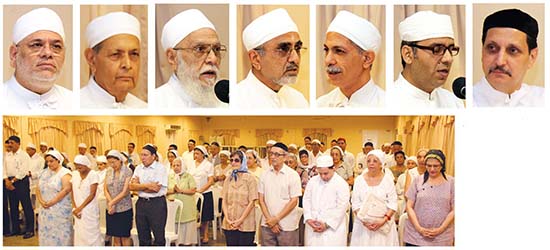
Above (from left): Dastur Khurshed Dastoor, Ervads Nadir Modi,
Asphandiar Dadachanji, (Drs) Parvez Bajan and Ramiyar Karanjia,
Cyrus Darbari; Yazdi Desai; audience at the condolence meet
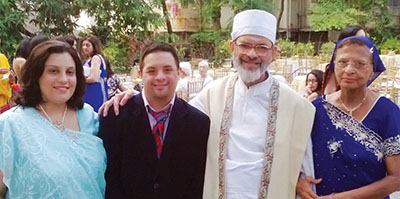
(From left): Aban, Darayus, Dr Peshotan and Mahrookh Mirza
Having "rushed to Peshotan for his guidance on religious issues” from the time the World Alliance of Parsi Irani Zarthoshtis (WAPIZ) was formed in 2005, its trustee and BPP chairman Yazdi Desai described him as "a quiet …dignified person. He would listen more than speak. He was very strong in his convictions and yet he never attacked or spoke adversely, even slightly, against anybody. He was stern yet kind.” He had impressed Desai with his "simplicity of logic, dissection of issues.”
Among Zoroastrian priests familiar with the 72 chapters of the Yasna, crossing the 72nd milestone is referred to in Gujarati as "bohtéri poori kidhi.” It is the same age when Mirza progressed from the physical to the spiritual realms, stated Ervad Asphandiar Dadachanji, vice president of the Athornan Mandal and panthaky of the Vachaghandhy Agiary which being in proximity to Mirza’s Bombay residence was the one he frequently prayed at. He would be invited to speak at the annual functions of the Agiary when he would talk lucidly and at length. To remind him that he was exceeding his time limit, Dadachanji had forewarned him that he would pull his dagli, a gesture Mirza had accepted in the right spirit!
Although he had sound scriptural knowledge he could not pursue his interest in Avesta Pahlavi "because of his weak eyesight,” mentioned Ervad (Dr) Parvez Bajan who, being a student of Mirza’s father Dastur (Dr) Hormazdyar, was a regular visitor at the family home. "He was a shining jewel of the Sanjana tolo (clan), having descended from the lineage of Bahman Kaikobad Sanjana, the author of Qisse-i Sanjan,” that was written in 1599.
"Unlike his father who was stern and strict,” Peshotan had a "benign smile and there was gentleness even in Peshotan’s anger,” revealed Ervad (Dr) Ramiyar Karanjia who too had studied under Hormazdyar for nearly 10 years. But both father and son had a similar "hearty, innocent, child-like laugh.” Instead of counting "the years in Mirza’s life it should be measured by the life he has put in those years,” added Karanjia, recalling how the unassuming High Priest would "treat the poor and the trustee in the same manner… He had the serenity and equanimity (witnessed) in a saintly person.”
Condolence letters had also come from the Federation of Zoroastrian Associations of North America (FEZANA) that commended his being "a fantastic combination of religious fervor and technical excellence” and Shahpur Captain, chairman of the World Zoroastrian Organisation.
Ervad Soli Dastur of Florida wrote a moving tribute explaining how Mirza had "left an indelible mark on my heart” with his "ever willingness to help me out and… generous gift of very rare books.” Through life’s many travails, he kept his smile and faith in Ahura Mazda. "He helped me to understand some of our prayers like Sanjana Tandoorasti and its three additional parts, the ‘kha kha, gha gha’ prayer we Sanjana mobeds recite with the navjotee... He also gifted me a copy of the Vernahede book containing explanation of the prayer ‘kha kha gha gha.’”
With his "stoic silence he battled many challenges in life with never a bitter word except a prayer for all,” lauded BPP trustee Noshir Dadrawala whose condolence message referred to Mirza’s "principled life.” He further commented on his "deep learning and lighthearted humor,” having experienced it on a trip to Iran, a land with which both of them had deep ties. In later years Mirza would annually accompany Zoroastrian pilgrims from India to Iran to give them religious and historical insights on their fatherland.
Mirza had spent several years in Iran where he worked as documentation scientist at International Draxon Industries. In Bombay he was general manager, technical services, at Dai-ichi Karkaria Limited and also lectured in chemistry at St Xavier’s College.
The High Priest had received his priestly training at the Seth Sorabji Manekji Damanwala Madressa in Udvada and the MFCAI. Known to be mischievous as a child, Peshotan would frequently be reprimanded by his strict father. On being ordained as a navar, maratab and samel (advanced priestly inquest), he performed higher liturgical services and offered boi at the Iranshah. After his Secondary School Certificate examination he studied at St Xavier’s College in Bombay and earned his BSc, MSc and PhD in chemistry from the Bombay University. Simultaneously he studied Avesta Pahlavi and Iranian history at Sir J. J. Zarthosti Madressa and Mulla Firoze Madressa. He was appointed Dastur of the Iranshah Atash Behram on May 13, 2004 on the demise of his father, served as trustee of the Athornan Mandal and Udvada Anjuman, member of the research committee of The K. R. Cama Oriental Institute, and managing committee of the MFCAI and its ex-students’ association, involving himself with the refresher courses for priests and workshops for behdin pasbaans conducted annually.
On behalf of the Mirza family, daughter Aban thanked the congregation for "the prayers and support and love shown to us. My father, till the end, had thought he could come out of (the illness)… To me he was my best friend. I could tease him, irritate him and argue with him… He would get angry with me when I got zero in math… Dad was my world.”
At community fora, Mirza would emphasize: "For our small community to open its doors to conversion/acceptance is to inevitably toll our own death knell. The converts will outnumber the true Parsi-Irani Zarathushtis and they will dictate to us based upon what they will add from their own religions, customs and traditions. Our survival does not depend upon numbers. It depends upon unity within the community and in continuing to practise the time-tested rituals, customs and traditions as we have inherited these since countless generations and upon which our survival depended till today.”
The benign priest is survived by his wife Mahrookh, daughter Aban, son Darayus, brother Rohinton, and sisters Vira Rohinton Munshi and Meher Khurshed Dastoor.
◆ ◆ ◆
From the archive