
Cover Story
The poet photographer
Photographs taken half a century ago by Adil Jussawalla serve as a valuable archive
In addition to being a poet, contributing articles to newspapers and magazines and writing fiction, few know that Adil Jussawalla has been an avid photographer as well. "I was always interested in photography,” he says. "I started at the age of 12, when my Aunt Gool gave me a Baby Brownie camera which resulted in an early shoot of the Sinhagad Fort.” Several relatives helped him on his way by lending/gifting him cameras: his parents, a Kodak Box Camera with a light yellow filter; his mother, a folding camera; his uncle, a Rolliflex; and his brother, Firdausi, a 35 mm Canon as well as an Olympus point and shoot camera. On December 31, 1957, his father gifted him a Rolliflex with a 3.5 Planar Xenotar lens and a built-in exposure meter, with the hope that this would also help him with his architectural studies in England. "The camera was confiscated by the customs at Tilbury,” says Adil, "and later sent back to Bombay when I could not pay the duty of, I think, £100 (Rs 10,000). It languished in Bombay for almost two years before my mother brought it back to me when she visited England in 1959. I was distraught to be without a camera and my cousin Furdoon, came to my rescue and lent me his.”
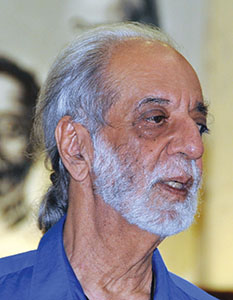
Photographer and poet Adil Jussawalla
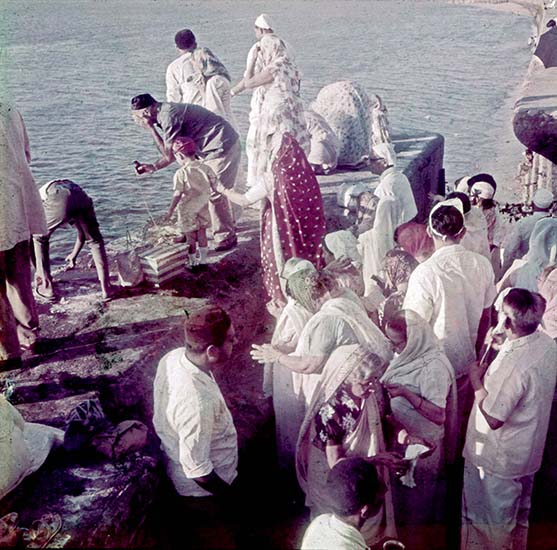
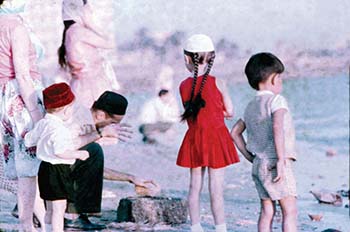
Elderly and young Parsis at the Avan roz parav prayers at Marine Drive
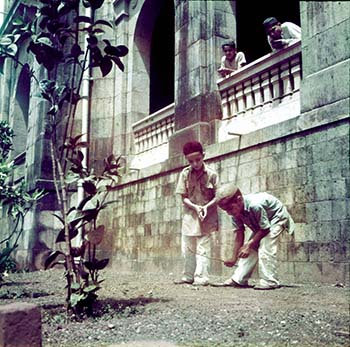
The M. F. Cama Athornan Institute’s students playing gilli danda
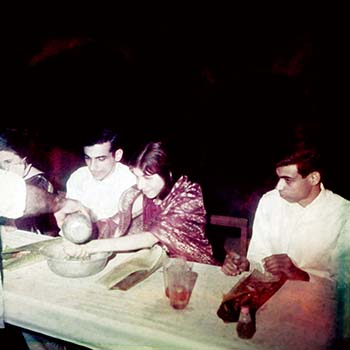
Washing hands after partaking of a lagan nu bhonu
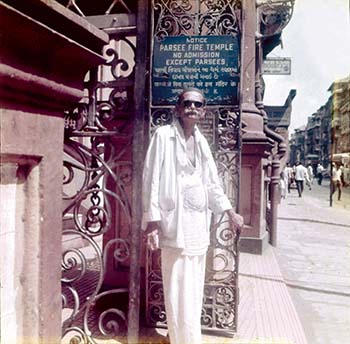
Parsi outside the Anjuman Atash Behram
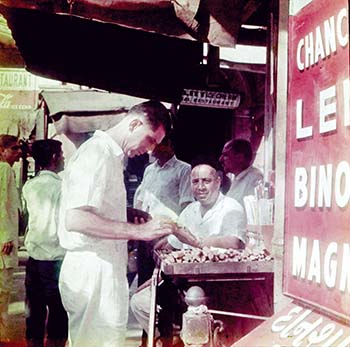
Sandalwood shop outside the Dadysett Agiary
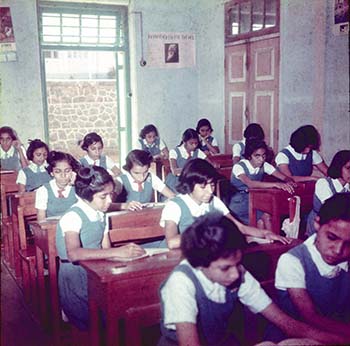
School students
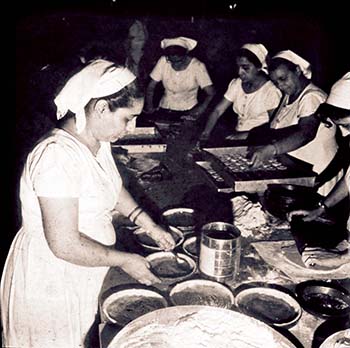
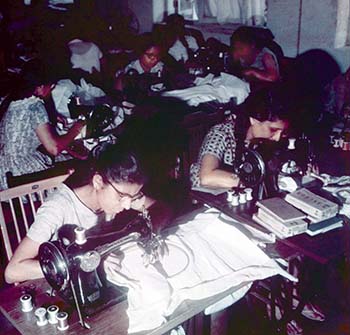
Women preparing meals and embroidering at the Sir Ratan Tata Institute
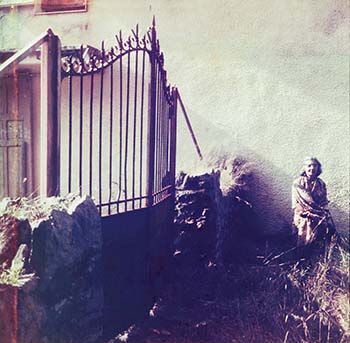
Adil Jussawalla’s mother Mehera
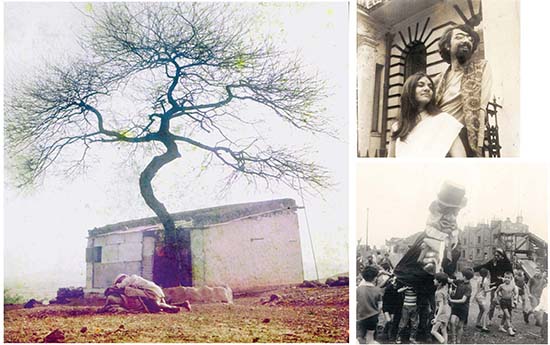
Clockwise from above: roadside scene; Farrukh Dhondy with wife Mala Sen on their wedding day;
the Bread and Puppet Theatre group in London
The camera became a part of his personality and, slung over his shoulder, accompanied him everywhere, much as he would have earlier carried a book or a bag. Many of these photographs were taken in 1967 when he was in India for five months. "The journey of the Zoroastrian diaspora,” says he, "has never been comprehensively traced from Persia to other places. I was particularly interested in the possible routes the Persians took to come to India. No one seems to have documented the trajectory of the Persian/Zoroastrian traders and refugees, some of whom went as far as China.”
In 1967, Jussawalla thought that he could interest National Geographic and whet their appetite with some of his photographs to commission a photo-essay on this subject. He sent them the photographs but the project did not materialize. However, Jussawalla wryly admits that using the name of National Geographic "opened doors to various institutions to which entry would otherwise have been difficult.” There are photographs of women working at the Ratan Tata Institute (RTI), of the J. B. Petit School and the M. F. Cama Athornan Institute (MFCAI) in Andheri. Jussawalla was always interested in the play of light and dark, and hence it was no surprise that he was very attracted to fire. A kindly priest at the Fasli atash kadeh at Marine Lines allowed him to shoot a few photographs. Some of these have been published in the Science Today issue of September 1984 to illustrate an article, "Parsis: The Dying of the Light.”
Jussawalla recollects being late for the appointment at the MFCAI and had to face a very irate Dr Peshotan Anklesaria, the principal at that time, who complained that all the rituals had already been completed. However, he was extremely helpful and pulled out the students from their classes and had a replay for the photographer’s benefit. At the J. B. Petit School, he remembers being surprised that girls were being taught chemistry, contrary to the view that they should only be taught the humanities. He assiduously took photographs of flasks over Bunsen burners; "I was hoping that some of the flasks would burst, but nothing dramatic happened,” jests Jussawalla.
The National Geographic name also opened doors to the home of the Wadia shipbuilders’ family who allowed him to photograph some of their paintings of ships. "I had to be interviewed by the patriarch of the Wadia family who was 90, almost blind and had to be carried into the room on a chair supported by four people. But he was very kind and granted me permission to go ahead.”
There are several photographs taken in London as well, some of the writer Farrukh Dhondy and other friends. It would, however, be inaccurate to say that Jussawalla’s interest was restricted to Parsi subjects. There are several photographs of the Bread and Puppet Theatre, a group which created larger than life size puppets to amuse the children in the slums and poorer parts of London. Jussawalla remembers taking photographs of a rehearsal of Kathakali dancers who visited London in 1967. "I used a slow-shutter speed to get all the actions in motion whirling on camera.” In 1970, when he was in Kerala, Jussawalla went to Kerala Kalamandalam, a Kathakali training center in Cheruthuruthi and took photographs of dancers once again and even wrote a text. These were sent to an agent who lost them.
Particularly interesting is the shoot Jussawalla undertook in April 1962 at the ancient caves in Ajanta and Ellora. It was also the one he enjoyed the most. "I gave the photographs as well as the negatives to Matthieu Fosse who had a gallery at Ballard Estate in Bombay as they would be better preserved in his archives rather than at my flat. Though he did not use them, he has my permission to do so in whichever way he thinks, as long as they are duly acknowledged.” One of the most moving photographs, taken on a road outside Poona is of a stark and barren landscape with a leafless tree and a young exhausted boy fast asleep.
Through his sensitive and perceptive photographs, Jussawalla shows that poe-try is not only expressed in words.
◆ ◆ ◆
From the archive