
“Outward looking stance”
Dr Naushad Forbes, current president of the Confederation of Indian Industry, is optimistic about growth in the economy and highlights what must be done to overcome roadblocks
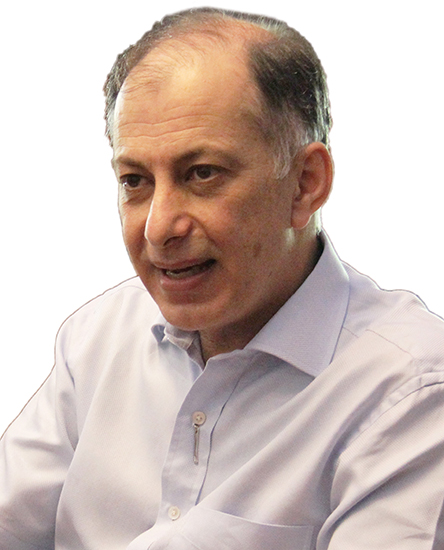 organization comprised of American and Indian companies, which aims at strengthening commercial ties between the two countries), he states in an email to Parsiana. The Congressmen and businessmen present responded very positively. "We had an excellent interaction with a group of think tanks, and a free and frank discussion ranging from the economy, reforms in India to the upcoming US election,” he informs.
 Forbes believes that the government’s industrial policy has its focus on the required areas. Earlier, on May 20, 2016, speaking to Parsiana in the conference room in the office block of the Kasarwadi plant of FM on the outskirts of Poona, he singles out land reforms and states that these are steps in the right direction. The proposed introduction of goods and services tax (GST) is beneficial. "No one knows the timing though,” he states, permitting himself a smile, alluding to the various false starts this enactment, first proposed by the United Progressive Alliance, has had in the last three years.
"I would like to see more flexibility on the labor front. Companies need to be able to build flexibility (of hiring and firing) within their frameworks, to ensure that skills are regularly upgraded,” he states. These modifications, says Forbes, will specially boost the textiles and electronic assembly industries. Forbes believes that a growth rate of about eight to nine percent in the economy is necessary to create jobs in the manufacturing sector. Dr Naushad Forbes: favors flexibility
All praise for Modi’s "Make in India” program that exhorts overseas companies and countries to use India as a manufacturing base, Forbes specifies two things he would like to see done better: removal of the many impediments to smooth working of the program at the local, national and regulatory level and the addition of a "sunset” clause for the many schemes launched as part of "Make in India.”
Manufacturing matters
The share of the manufacturing sector in the Gross Domestic Product (GDP) of the country is about 16%, Forbes says. The current and previous governments have enunciated a desire to grow the share of manufacturing to 25%, "an achievable target,” he emphasizes. For that to happen, "manufacturing has to grow at a faster rate than the overall GDP growth rate,” and faster than the services sector. "The manufacturing footprint in the country has to double in six years’ time,” he states. To make this a reality, "a lot of change is required in many areas.” We have already started to see a pick-up in certain sectors, he states, up-beat about growth in the farm equipment and vehicles sectors.
While he believes that the thrust at the top levels of the government is good, "inter-ministry coordination is sometimes lacking.” Quoting an example from his company’s experience, he mentions that the ministries of commerce and finance are debating on what the duty rate should be for one of their imports of heavy equipment. Six months on, they have not reached a conclusion.
Forbes believes that there is "scope for similar increases in the services sector.” He quotes that in the last five years, jobs for vehicle drivers have seen the largest growth in the NCR (national capital region) alone. "People have not figured out how to increase productivity in the services sector,” he states, citing construction services, contract labor, hospitality and housekeeping as areas where productivity must increase.
Competing globally
The CII president is bullish about India’s ability to compete globally in the manufacturing space, especially in areas where sophisticated technology is involved, or in projects that involve high levels of engineering. "Bharat Forge competes very effectively in the global market,” he notes. He lists medical technology, specialty chemicals, pharmaceuticals and any other project-intensive field as areas that India can excel in.
The Chinese economy is "doing alright,” according to Forbes. "There is no question of it slowing down…” Looking at the BRICS countries (Brazil, Russia, India, China and South Africa) specifically, he feels that "all five countries are very different and have different strengths.” South Africa’s widespread industrial base, created to be self sufficient in the days when on account of apartheid they were under sanctions from other countries, has stood them in good stead. That country is now focusing on retail business and encouraging startups, he says. Russia is facing a bit of trouble, he states gingerly, on account of the fall in oil prices. Similarly, in Brazil the economy is reeling under the recent devaluation of the Real vis-à-vis the US dollar.
"I am no Luddite,” avers Forbes, referring to English workers who destroyed machinery which they believed was threatening their jobs, in the early days of the Industrial Revolution. His home company FM has been on the forefront of engineering technology, owning patents for 20 products and processes. Welcoming of the increased usage of robotics in the manufacturing sector, Forbes, who has been a lecturer and consulting professor at Stanford University from 1987 to 2004 where he developed courses on technology in newly industrializing countries, notes "employment increases when robotics are used.”
CII imperatives
The soft spoken Forbes has "two specific and one general task” that he wishes to see through in his tenure as president of CII. A votary of an "outward looking stance,” he believes "we need to facilitate more access for Indian businesses to foreign opportunities.” To this end, the CII has spearheaded visits of Indian trade delegations to Russia, Iran, Indonesia and Mexico in the current quarter.
The second item on Forbes’ to-do list is to advocate a bringing together of the country’s higher education and technology policies. A believer that "research should be carried out within higher education institutions” in the country rather than in independent research organizations, he states that this makes eminent sense, and this is how it is done in advanced nations. Design needs to be a key selling point for engineering products if India needs to compete globally. Commending the work done by the Godrej group, Titan and the Mahindra group, he rues that companies that focus on innovation are "too few and need to be more widespread.” Indian firms must get into areas that are design intensive, like aerospace and electronic hardware.
The third (and the general) item on his priority list is to generate thought papers and points of view on specific economic and commercial issues from within CII. "We are putting in structures to set up and provide these points of view.” The country needs to be more analytical in its approach to finding solutions to problems, according to the industrialist. Forbes avers that the Confederation which he leads as president till March 2017 is "in good health.” The leader elaborates that each of the committee members has a role to play for a year or two, "in developing the mission of the Confederation.”
Not overly concerned about the current unemployment levels in the country (1.7 percent in rural and 3.4 percent in urban areas, according to The Indian Express of February 20, 2016 quoting from the latest edition of a biennial survey conducted by the Ministry of Statistics), Forbes feels that the greater issue that needs to be tackled is disguised unemployment. "Look at the informal services sector in this country,” he points out. "Why does a local paan shop (betel-nut vendor) need two helpers?” he queries. There is an absence of good jobs in the country, he believes.
"We were in a time warp,” explains Forbes of the period before liberalization and economic reforms began in the early 1990s. "Take the case of average import tariffs, they were at 200%,” he says, shaking his head. "Today we are at five percent … In the backdrop of the years of three percent growth rates, five and six percent were considered reasons for celebration … Now the public wants more.”
Walking us to his office in the library-cum-museum on the first floor, the 56-year-old business leader reveals that he moved into this area when he gave up his previous office for an incoming senior executive. Glass partitions enclose his work space, beyond which are panels depicting the history and growth of the FM business, biographies of key personnel, including those who were instrumental in setting up the company in its early days. Nooks in this airy space house memorabilia, newspapers, technical magazines and novels as well as cozy meeting places. A machine that was one of the first products rolled out at that plant occupies pride of place in the museum.
Of the group founded by his father Darius with J. N. Marshall and now run by brother Farhad and himself as co-chairmen, Naushad mentions that their award winning HR (human resource) practices have been instrumental to attract and retain "committed, loyal and hard working” employees. The factory at Kasarwadi is being dismantled and moved to a new location in nearby Chakan spread over 50 acres, and will very soon house only the corporate offices of the group. Forbes who calls his family "all important” and his "moral compass” started at FM in 1987 working on worker negotiations towards a wage agreement and clearing overdue orders, after his PhD on Technical Entrepreneurship in India.
"We aspire to be a multinational with Indian roots,” shares Forbes. Confirming that the steam systems business generates 20% of its business from overseas markets, Forbes envisages that in 10 years, this business will generate 50% of its revenue internationally. As a "developed company in a developing country,” FM is updating their vision statement to reflect their aspirations. "The core values of the group (FM family spirit, integrity, innovation and entrepreneurship, and value delivery to customers, members and society, as per their website) that we cherish will not change,” reveals Forbes. A visioning exercise will be completed in the next few months.
"I consider myself to be a Parsi, and an active member of the community, more than a devout Zoroastrian,” declares Naushad. Commenting that his views are entirely liberal, he says he believes that choices should rest with the individual: "anyone who wishes to should be able to join the religion, children with either parent a Parsi should be able to be raised as Parsis if their parents so choose, and individuals should be able to decide their own funeral arrangements.”
Forbes wishes there were "more new Zoroastrian entrants,” in industry. The issue is one of newer role models, he says, reiterating that Zoroastrian youth needs newer people to look up to. "Entrepreneurship is driven by hunger,” he quips, continuing that there is not enough hunger within the community, referring to the overall lack of zeal in the youth.
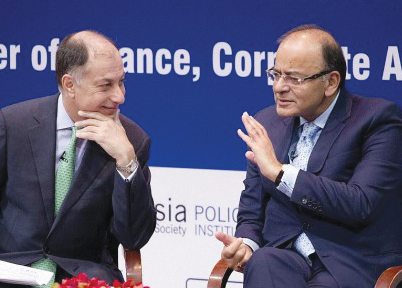
Forbes with finance minister Arun Jaitley Photo: Outlook magazine
The charter of CII includes interaction with thought leaders, enhancing efficiency and competitiveness in Indian industry and identification and delivery of corporate citizenship programs. With over 8,000 members, of whom half are from the services sector, the Confederation has 66 offices in India and nine overseas as well as institutional partnerships with similar organizations in 106 countries.
Two key positions of leadership in CII are president and president-designate. For 2016-17, Forbes holds the position of president while Shobana Kamineni, executive vice-chairperson, Apollo Hospitals Enterprise Limited is the president-designate.
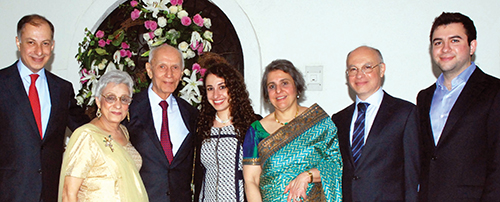
Darius Forbes, founder of the group continues to be associated in an honorary capacity on policy matters. For Parsiana’s golden jubilee issue of November 7, 2013, Darius wrote, "Being a minority community has in many ways benefited us. With a low profile, we have used our wealth to benefit our community members and others,” a thought that is the spirit behind the FM Foundation whose core principle is "to give in a manner which promotes sustainability of a project,” as per the Group’s website. Naushad reiterates: "We don’t just write a cheque to a charitable organization. We get actively involved.”
A write-up from the company describes how the 30-bed hospital on the premises of the Kasarwadi plant came into existence. On his way to work one day, Darius witnessed a road accident and carried the victims to a hospital in his car. Realizing the need for medical care in the vicinity, he founded a dispensary on the Kasarwadi factory premises in 1973 which has today become the Shehernaz Medical Centre, named after his wife’s sister. The fully equipped hospital provides medical aid to the employees of FM, their families and the residents of nearby communities. Each patient pays a token fee of Rs 5 only for admission.
Revealing the latest CSR (corporate social responsibility) activity of the Group, a note received by Parsiana speaks of their involvement in a helpline manned by tele-counsellors to guide students or parents on career choices, which went live in May 2016. Callers can communicate in English, Hindi and Marathi or write in too. "So far, there have been more than 85,000 website visits from across the state and 2,500 + calls have been answered till date,” states the note.
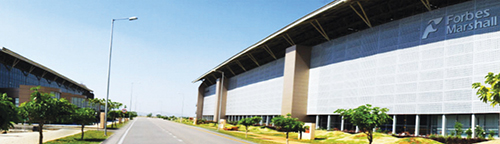
New facility at Chakan