
Zoroastrians Abroad
Considerable connections
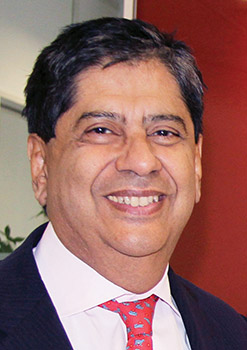
The GQ UK’s list of 100 Most Connected Men in 2016 that names "Britain’s finest collaborators, alliance builders and thought leaders,” includes Sarosh Zaiwalla (pictured), senior partner of Zaiwalla and Company Solicitors. "These are the independent minds forging a newly connected world,” notes an article in the May issue of GQ (formerly Gentlemen’s Quarterly), an international monthly magazine focusing on fashion, style and culture for men.
 The list that does not have any ranking and has 80% new names each year has chosen people based on their networking ability and philanthropic activities. Zaiwalla is among the three Indian origin professionals featured in the list, the other two being Rishi Saha, head of public policy at Facebook UK and Samir Desai, director at Funding Circle. Zaiwalla is among the six individuals included in the category of "law, science and academia.” The maximum number of 42 names are found under "culture, art and food,” with the lowest count of four showing up under "marketers, public relations and spinners.”
"We are all connected by default — in fact we’re over connected. That’s why the crucial thing today… is ‘social health,’” notes the GQ article quoting Julia Hobsbawm, visting professor of networking at London’s Cass Business School. As is further explained by Hobsbawm whose networking business, Editorial Intelligence, has collaborated with GQ to compile the "Most Connected Men” list, "There’s a new way of surviving and thriving going on which recognizes that networks are lateral and latticed.” She identified three crucial factors that contribute to good social health: building and growing networks; treating one’s diary with the same care as one’s body; and making time for reading every day to expand one’s knowledge base.
 Born and raised in Bombay, Zaiwalla qualified as a solicitor from London and went on to reportedly become the first Indian to establish a law firm in the city in 1982. Over the course of his illustrious career, Zaiwalla has represented several high profile names, including Indira Gandhi’s family, the Dalai Lama, Benazir Bhutto, the ruler of Dubai, Tchenguiz brothers and the Chinese government. He is reputed to have been involved in over 1,200 international energy, maritime and construction arbitrations in London and worldwide either as a solicitor, counsel, party-appointed arbitrator or sole arbitrator.
Representing Iran’s largest private bank, Bank Mellat in its highly-profiled litigation with the European Council, Zaiwalla’s firm had successfully challenged the ruling, whereby the European Court of Justice upheld the decision in 2013 that Bank Mellat did unfairly have sanctions placed upon it by the European Council (see "Confidence in the court,” Zoroastrians Abroad, Parsiana, July 21, 2013).
Full of respect for the British judiciary, Zaiwalla was quoted in an article in the Financial Times of April 14, 2016, forwarded to Parsiana by Dr Venkat Iyer, senior lecturer at the University of Ulster, UK: "We won the Bank Mellat case against the British government. Six out of nine Supreme Court judges had the courage to say that the government of their own country had acted unlawfully and irrationally — and that says a lot about the independence of our judges.” The case is due to come up before the UK’s Commercial Court this October to assess the Bank’s losses.
The reputed solicitor had reportedly also been contacted by the Saddam Hussein regime in 2001 when they wanted to challenge the "no-fly zone” policy imposed a decade earlier. He advised them to make their case at the International Court of Justice, Zaiwalla told Financial Times. Later when the Iraqi regime wanted to sit down with Britain to discuss resolution of the situation, the message was once again sent through Zaiwalla. Had a deal been struck, a million lives and nearly $ 3.5 trillion could have been saved, believed the legal diplomat, a firm advocate of "one world, one mankind.”
The list that does not have any ranking and has 80% new names each year has chosen people based on their networking ability and philanthropic activities. Zaiwalla is among the three Indian origin professionals featured in the list, the other two being Rishi Saha, head of public policy at Facebook UK and Samir Desai, director at Funding Circle. Zaiwalla is among the six individuals included in the category of "law, science and academia.” The maximum number of 42 names are found under "culture, art and food,” with the lowest count of four showing up under "marketers, public relations and spinners.”"We are all connected by default — in fact we’re over connected. That’s why the crucial thing today… is ‘social health,’” notes the GQ article quoting Julia Hobsbawm, visting professor of networking at London’s Cass Business School. As is further explained by Hobsbawm whose networking business, Editorial Intelligence, has collaborated with GQ to compile the "Most Connected Men” list, "There’s a new way of surviving and thriving going on which recognizes that networks are lateral and latticed.” She identified three crucial factors that contribute to good social health: building and growing networks; treating one’s diary with the same care as one’s body; and making time for reading every day to expand one’s knowledge base.
Born and raised in Bombay, Zaiwalla qualified as a solicitor from London and went on to reportedly become the first Indian to establish a law firm in the city in 1982. Over the course of his illustrious career, Zaiwalla has represented several high profile names, including Indira Gandhi’s family, the Dalai Lama, Benazir Bhutto, the ruler of Dubai, Tchenguiz brothers and the Chinese government. He is reputed to have been involved in over 1,200 international energy, maritime and construction arbitrations in London and worldwide either as a solicitor, counsel, party-appointed arbitrator or sole arbitrator. Representing Iran’s largest private bank, Bank Mellat in its highly-profiled litigation with the European Council, Zaiwalla’s firm had successfully challenged the ruling, whereby the European Court of Justice upheld the decision in 2013 that Bank Mellat did unfairly have sanctions placed upon it by the European Council (see "Confidence in the court,” Zoroastrians Abroad, Parsiana, July 21, 2013).
Full of respect for the British judiciary, Zaiwalla was quoted in an article in the Financial Times of April 14, 2016, forwarded to Parsiana by Dr Venkat Iyer, senior lecturer at the University of Ulster, UK: "We won the Bank Mellat case against the British government. Six out of nine Supreme Court judges had the courage to say that the government of their own country had acted unlawfully and irrationally — and that says a lot about the independence of our judges.” The case is due to come up before the UK’s Commercial Court this October to assess the Bank’s losses.
The reputed solicitor had reportedly also been contacted by the Saddam Hussein regime in 2001 when they wanted to challenge the "no-fly zone” policy imposed a decade earlier. He advised them to make their case at the International Court of Justice, Zaiwalla told Financial Times. Later when the Iraqi regime wanted to sit down with Britain to discuss resolution of the situation, the message was once again sent through Zaiwalla. Had a deal been struck, a million lives and nearly $ 3.5 trillion could have been saved, believed the legal diplomat, a firm advocate of "one world, one mankind.”
◆ ◆ ◆
From the archive