
In Memoriam
Bastion of bridge
Died: Farsos Homi Dastur, 87, national and Far Eastern bridge champion, and founder member of the Bombay Contract Bridge Association (BCBA); in Bombay on January 26, 2016 following complications caused by a stroke.
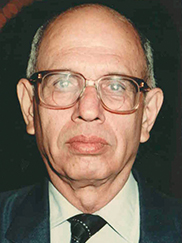 "Farsi (as Farsos was known to his family and friends) is a legend in the field of bridge, first in Bombay and then nationally,” noted Prof (Dr) Bomsi Wadia who had participated in the Bridge Olympics seven times. Like all good bridge players Farsi had a mathematically logical brain, a quick, accurate response and a cool head. However, Farsi stood apart because of his "code of ethics and fair play,” observed Wadia who had worked with Farsi on the Ethics Committee where "I would always be impressed by his evaluation and would swing my vote with him in a close call thanks to his assessment. I have never regretted this myself.”
Dastur had represented Bombay at the first unofficial National Bridge Championships in Calcutta, mentions his daughter Manek Ranji, sharing the highlights of his mastery of the game. "He had the unique achievement of winning the Far Eastern title in the first World Par Event. In the Winter National Championship, the blue riband of Indian Bridge, he won five championships and was runner-up six times. He won the Singhania (National Board-A-Match) event three times and was runner-up twice. In the grueling Holkar Trophy for pairs’ event he had two wins. He won the Lalbhai Trophy for National Mixed Pairs event (with wife Homai) once and was runner-up once. He also had several wins in the National Masters event and Tolani Grand Prix Tournaments. He was virtually invincible in the Bombay Bridge Circuit, winning the Senior Monsoon League six times in a row, besides winning countless open tournaments.”
"Farsi (as Farsos was known to his family and friends) is a legend in the field of bridge, first in Bombay and then nationally,” noted Prof (Dr) Bomsi Wadia who had participated in the Bridge Olympics seven times. Like all good bridge players Farsi had a mathematically logical brain, a quick, accurate response and a cool head. However, Farsi stood apart because of his "code of ethics and fair play,” observed Wadia who had worked with Farsi on the Ethics Committee where "I would always be impressed by his evaluation and would swing my vote with him in a close call thanks to his assessment. I have never regretted this myself.”Dastur had represented Bombay at the first unofficial National Bridge Championships in Calcutta, mentions his daughter Manek Ranji, sharing the highlights of his mastery of the game. "He had the unique achievement of winning the Far Eastern title in the first World Par Event. In the Winter National Championship, the blue riband of Indian Bridge, he won five championships and was runner-up six times. He won the Singhania (National Board-A-Match) event three times and was runner-up twice. In the grueling Holkar Trophy for pairs’ event he had two wins. He won the Lalbhai Trophy for National Mixed Pairs event (with wife Homai) once and was runner-up once. He also had several wins in the National Masters event and Tolani Grand Prix Tournaments. He was virtually invincible in the Bombay Bridge Circuit, winning the Senior Monsoon League six times in a row, besides winning countless open tournaments.”
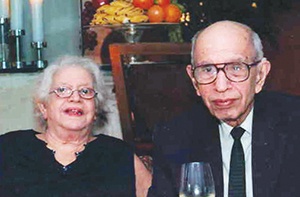
Farsos Dastur (above and alongside) with Homai
In one particular year, he won four championships – Team of 4, Open Pairs, Mixed Pairs and Board-A-Match – in the same year. This achievement (a golden Grand Slam) is unique and probably will never be duplicated, supplemented Wadia, recalling that Farsi’s involvement in the game commenced in the 1950s. When studying in the US Farsi had been tutored in the game by the renowned Charles Goren and had even won a National Inter-University Board-A-Match event in USA. On his return to Bombay he started the Progressive Bridge Club, "definitely the first in Bombay and probably in India,” which was dissolved a few years ago. He was the first tournament director of BCBA and thereafter directed many tournaments. Besides serving on the Technical and Development Committee of the Bridge Federation of India, he also served on the National Laws Commission and Master Points Committee. Farsi was a regular at the Cricket Club of India and the Bandra Gymkhana too. "He will be remembered more at the Willingdon Club where he was present every evening (including bank holidays and Sundays) solving arguments. Homai and he have donated his bridge books and literature to the Willingdon Club,” added Wadia.
"The heart has gone out of the game. And now we live on our memories,” wrote another national level bridge player Dr Jehangir Kohiyar, recalling his association of nearly 45 years with his Willingdon Club bridge companions Homai and Farsi, although the latter played more on the High Stake tables. In a condolence letter to Homai, Kohiyar noted, "I can’t tell you how empty the Card Room feels without you both. He was such a fine man, soft-spoken but firm in his opinions. And you were both such good bridge players, each in your own right. I am sure we all learnt a lot of our bridge from you…” According to Kohiyar, "When I first started coming to the Club in 1970 the Card Room used to be full with some 60 players and now it is difficult to form even one or two tables!”
Farsi’s "quiet kindness” surfaced in unexpected ways. Recently his niece Gulserene Dastur learnt that at the Club Farsi even made time to daily play a hand or two or talk to one gentleman suffering from Alzheimer’s when "many of his old friends shied away from playing or sitting with him.”
Both his nephews, Adi and Nadir Godrej, credit their uncle with cultivating in them an interest in bridge. As wrote Adi, chairman of the Godrej Group,"I learnt a lot from my mama (mother Jai Godrej’s brother) Farsi when I was a young boy. He was only 14 years older than me. He was an extremely well educated and accomplished person. He was a superb bridge player.” To Nadir, managing director of Godrej Industries, "Farsi Uncle was always very friendly and easygoing. He was very intelligent and like most of mother’s family he was very good at mathematics.” After his schooling at St Andrew’s in Bombay, he completed his BSc in pharmacy and masters in pharmaceutical chemistry from The University of Michigan in Ann Arbor. "He was a very principled person and thanks to his character and intelligence he rose to head Wyeth Laboratories in India,” added Nadir. He ultimately retired as director of planning and coordination from John Wyeth and remained on the board for years thereafter. Having played with Farsi at a Family Bridge Competition at the Club, Nadir reminisced, "It was a wonderful experience learning from such a brilliant and seasoned player. I sincerely hope he finds a good foursome in heaven!”
In addition to bridge, Dastur enjoyed watching cricket and tennis, and solving crosswords. "Deeply loved by the family and just as much by the staff who worked for him,” Ranji remarked that "his departure has left a void at home where we all lived together… His life echoed the pillars of the Zoroastrian religion i.e. good thoughts, good words, good deeds as you never heard a negative remark or angry tone of voice from him.”
The popular bridge player who was cremated is survived by his wife Homai and daughter Manek Khushroo Ranji.
◆ ◆ ◆
From the archive