
Business
Challenges for the Chamber
By opening new chapters and reviving old ones, the World Zarathushti Chamber of Commerce will endeavor to strengthen the global body
"If you have an opportunity be catalysts. More than money, youngsters want good counsel. They want a lot of hand-holding. Our objective is to give assistance” to upcoming entrepreneurs, said Minoo Shroff, outgoing president of the World Zarathushti Chamber of Commerce (WZCC) at the annual general meeting (AGM) of the global body convened at The International Centre in Goa on December 19, 2015.
Having completed his two terms of three years each, Shroff was not eligible for reelection. He appreciated that during his tenure there was no dissent and the WZCC members were "most supportive and cooperative.” Realizing though that differences could arise at any time, he advised, "Get over them with a smile and leave the hall shaking hands. Let us hope this culture continues.”
There were around 60 members attending the AGM of whom over 20 had come from North America and Iran, including Rohinton Rivetna who conceived WZCC and Alayar Dabestani, their first honorary member. They sat through the entire morning deliberations in stark contrast to the AGMs convened by public companies where many of those present leave the premises once the dividend is declared, observed Shroff.
Having completed his two terms of three years each, Shroff was not eligible for reelection. He appreciated that during his tenure there was no dissent and the WZCC members were "most supportive and cooperative.” Realizing though that differences could arise at any time, he advised, "Get over them with a smile and leave the hall shaking hands. Let us hope this culture continues.”
There were around 60 members attending the AGM of whom over 20 had come from North America and Iran, including Rohinton Rivetna who conceived WZCC and Alayar Dabestani, their first honorary member. They sat through the entire morning deliberations in stark contrast to the AGMs convened by public companies where many of those present leave the premises once the dividend is declared, observed Shroff.
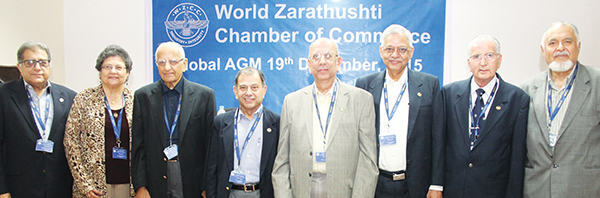
(From left) Rustom Engineer, Katayun Kapadia, Minoo Shroff, Edul Daver,
Adi Siganporia, Yazdi Tantra, Pheroze Kharas and Parviz Varjavand
"One of the constraints in North America is distances” which makes it difficult for members to regularly attend chapter meetings, stated global vice president Bomi Patel who too was stepping down. "There are a few chapters like Houston, New York and Chicago which are quite active… We are trying to reactivate more chapters,” he added. The Los Angeles chapter was revived in 2014 and the one in British Columbia in 2015. Lauding Shroff for taking WZCC to new heights, he appreciated the dynamic WZCC corporate secretary Behroze Daruwalla who has been "like a mother to all of us on the board of directors and stern” when required.
Commending the president for having "empowered all team members,” Daruwalla who was earlier based in Houston publicly thanked her predecessor Zarine Commissariat for urging her to take over the mantle of corporate secretary and mentioned that the WZCC journey has "helped me grow.” Referring to Shroff as a "mentor par excellence” she explained how their board meetings would be conducted on Skype every quarter with "guidance floating freely” from the directors representing the seven regions. "Our center point of contact is the chapter chair. If you don’t hear from him, you are at liberty to bug him.” Goading the members to "support and communicate,” so that the board could better serve the members, Daruwalla jested, "We Parsis talk a lot anyway.”
Recommending members to visit the WZCC website, "to put yourself on the system,” she reasoned, "it is easier to tap someone. Members go out of the way to help.” Keen to see different chapters start the WE (Women’s Entrepreneurs) wing, she noted, "Our Parsi Zoroastrian women need a little push/confidence to step out.” She also mentioned how the global as also the Indian constitution of WZCC has been amended "to bring in clarity and detail instead of leaving it open” with greater chapter-wise empowerment. Giving credit to the staff members of WZCC India office, Aspi Antia and Zarine Khan, Daruwalla stated, "Today we are here because of their support.”
The new global team of office bearers taking charge of WZCC include president Edul Daver, vice president Yazdi Tantra, corporate secretary Adi Siganporia, treasurer Katayun Kapadia. The board will include Neville Shroff of Hong Kong, Pheroze Kharas of India, Rustom Engineer and Natalie Gandhi of USA, Nauzer Manekshaw of UK, Parviz Varjavand and Dr Bahram Partovi of Iran, Porus Guzder of Middle East, Jimmy Medhora of Australia and Homi Italia of Canada. "The vision and goals of WZCC are in very safe hands,” declared Daruwalla.
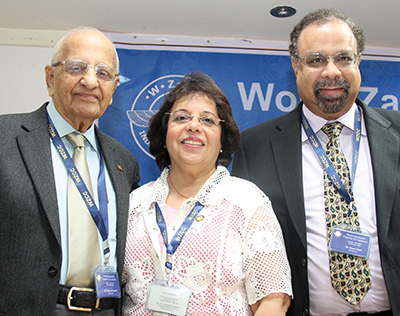
From left: Minoo Shroff, Behroze Daruwalla and Bomi Patel
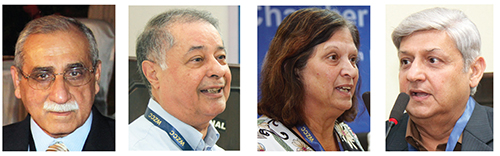
From left: Rohinton Rivetna, Alayar Dabestani, Nilufer Darukhanavala and Capt Percy Master
Before the end of the day, the new board already had in place a Power Point presentation outlining the issues and objectives before them. "We need chapter chairs and directors to be champions, working with responsibility and accountability,” stated Daver. Hoping to expand their reach they were planning to develop a jobs portal that would list every opening they are aware of and conduct seminars in India to acquaint members of the schemes available under the Canadian government. Their India specific goals include enrolling the younger generation of prominent Parsi industrial families, holding trade fairs to showcase Zoroastrian entrepreneurship, team up with World Zoroastrian Organisation by adopting a village and providing solar energy/clean drinking water to get good exposure for WZCC. For the US and rest of the world (ROW) they would like to convene a North American business conference, publish a business directory including therein a list of mentors and bring out an Elders’ White Paper that documents the government benefits available to the aging population.
"Today the average age in this hall is 60 years. We want people aged 30, 40 or 50 years,” stressed Siganporia who felt the "initiative has to come from the youth.” He quoted eminent jurist Nani Palkhivala who opined that Indians suffer from "a diarrhea of words and constipation of ideas,” and added that WZCC suffers from "constipation of action and diarrhea of suggestions.” Nilufer Darukhanavala of Illinois stated that "encouragement needs to come from parents and then children will take off.” "Parents don’t want to lend their name or security, or let the children loose. They are standing in the way of progress of the community. It has become a demographic and sociological problem, for the parents are unwilling to give even simple collaterals,” stated Shroff.
In the context of India’s economy growing at seven percent, Shroff commented, "The lifting of sanctions will open a great panorama of business… The slumbering elephant is now walking… We don’t move fast enough…” The richest man in India whose wealth stands at $ 23 billion is Dilip Shanghvi, founder and managing director of Sun Pharmaceuticals, mentioned Shroff referring to other high net worth individuals like Ajay Piramal whom he mentored; Uday Kotak who is tremendously innovative; Azim Premji who has impacted lakhs of school and university students; "the new kid on the block Ronnie Screwvala who is empowering hundreds of thousands of villagers” following his Walt Disney transactions that generated tremendous wealth; and WZCC India president Capt Percy Master who "gave up his job at the right time” to start Master Shipping that has become "the most (supportive) voracious and prolific advertiser in the Parsi Press.”
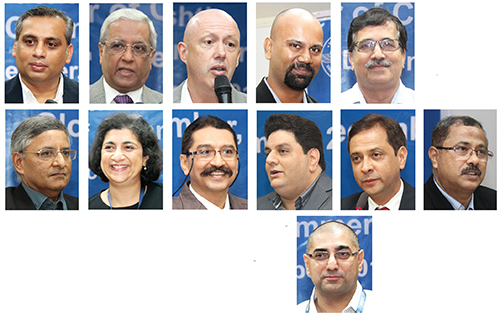
1st row from far left: Ashton Godinho, Dilip Salgaocar, Wilfried Theissen, Jervis Pereira and R. S. Kamat
2nd row (from left): Kirit Maganlal, Zarine Kharas, Feroze Sethna, Khushru Minocherhomji, Hoshang Jalejar, R. Kamat;
(alongside) Umeed Kothavala
"Never never never give up,” Shroff quoted Winston Churchill’s mantra for success, whilst advising entrepreneurs "not to be deterred by initial failures.” Loans from banks are now easier to obtain and especially MUDRA (Micro Units Development and Refinance Agency) extends loans without collaterals, he informed prospective entrepreneurs. "You have opportunities which our forefathers never had.” Shroff quoted a verse, "A man is not old when his hair turns grey/ A man is not old when his teeth decay/ But a man approaches his last last sleep/ When his mind makes appointments which his body cannot keep.” He ended with the words, "I see a great future for this community if we take to enterprise.”
The next AGM is expected to be held in Hong Kong or UK and the one in 2017 could be held in Bangalore, offered Zarine Kharas, partner of Red Fork Bistro in Bangalore who was keen to open a WZCC chapter in Bangalore and also host the AGM. "We are trying to promote new chapters in India,” assured Master, "We would be most willing to help new chapters.” He revealed that they were also planning to open chapters in Surat and Navsari where young Zarathushtis want to start out on their own but "we should not open chapters and then let them lie dormant.”
Goa beckons entrepreneurs
The first panel on "Opportunities for Investment in Goa” which was organized by R. S. Kamat, director general of the Goa Chamber of Commerce and Industry saw participation from Ashton Godinho, chief executive officer (CEO) of Goa Investment Promotion and Facilitation Board, Dilip Salgaocar, chairman and managing director of Geno Pharmaceuticals, Wilfried Theissen, managing director of Putzmeister Concrete Machines Private Limited and Jervis Pereira, director of Goa Information Technology Innovation Centre (gitic).
"To make Goa a preferred and aspirational investment destination and to make business a pleasure” is the aim of the state with a population of 1,500,000, 87% of whom are literate, with a per capita income of Rs 1.93 lakh, as per statistics shared by Godinho. Besides facilitating Rs 25,000 crore of new investment, they hope to create 50,000 jobs in the next five years in the thrust areas of research and development, information technology, pharmaceuticals and biotechnology, integrated educational hubs, tourism, light engineering, agro based and food processing industries, aviation, aerospace and defence. Since Goa faces scarcity of land, they are willing to declare even agricultural land as an "investment promotion area” so long as the investor pursues the activity originally contemplated.
The first panel on "Opportunities for Investment in Goa” which was organized by R. S. Kamat, director general of the Goa Chamber of Commerce and Industry saw participation from Ashton Godinho, chief executive officer (CEO) of Goa Investment Promotion and Facilitation Board, Dilip Salgaocar, chairman and managing director of Geno Pharmaceuticals, Wilfried Theissen, managing director of Putzmeister Concrete Machines Private Limited and Jervis Pereira, director of Goa Information Technology Innovation Centre (gitic).
"To make Goa a preferred and aspirational investment destination and to make business a pleasure” is the aim of the state with a population of 1,500,000, 87% of whom are literate, with a per capita income of Rs 1.93 lakh, as per statistics shared by Godinho. Besides facilitating Rs 25,000 crore of new investment, they hope to create 50,000 jobs in the next five years in the thrust areas of research and development, information technology, pharmaceuticals and biotechnology, integrated educational hubs, tourism, light engineering, agro based and food processing industries, aviation, aerospace and defence. Since Goa faces scarcity of land, they are willing to declare even agricultural land as an "investment promotion area” so long as the investor pursues the activity originally contemplated.
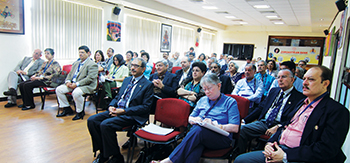
Members present at the WZCC AGM
With a turnover of Rs 200 crores, with Rs 180 crores coming from the domestic sector, in the next five years they wish to reverse the situation at Geno Pharmaceuticals, stated Salgaocar whose company manufacturing tablets, capsules, liquids and ointments has a presence in 20 countries of the world and every state in India except Himachal Pradesh. When he joined the family’s small potassium permanganate plant in 1972 it was a sick unit but once he was able to promote it as a joint venture, the fortunes turned. Today they have a staff strength of 700, 95% of whom are local Goans whom they are happy to retain for they "can adapt to changes in the industry.” They may have low production costs but since they operate in only one shift for want of adequate public transport, they are unable to compete with the prices and research facilities of multinational corporations in developed countries. Although Goa receives 100 inches of rainfall in a year, the state faces water shortage and insufficient power, Salgaocar added.
"We have our own well. We harvest rain water. There is no official water line coming to our industry,” stated Theissen whose German company manufactures heavy machinery for the construction industry. For the 300 people employed in their manufacturing unit in Goa the company provides private transport. They have an additional sales staff of 200 all over India. They invested in assets, human as also machinery, and started manufacturing on a 15 acre plot of land. Being a loss making concern, until last year they didn’t pay any taxes. "If you find the right people to work for you, you don’t want to move out of Goa,” commented Theissen who revealed that their staff turnover is less than five percent. There is difficulty though in finding skilled people, said Theissen who himself is on a five-year contract visa which has to be renewed every year, a time consuming administrative chore. He was happy though with the export incentive in the form of a three percent government grant on the full value of investment.
Whilst Goa is associated with holIday and parTy, the IT (information technology) sector exists in the midst of it all, providing "365 days of innovation,” mentioned Pereira. Referring to the several IT connected firms that have made their presence felt in Goa, he named Zedos, Karma Films, Plugzee, Homedroid, Patekar.com providing innovative services. The ‘Govantage,’ according to Pereira, comes from less traffic congestion, a work-life balance, workforce loyalty and being design conducive. If an entrepreneur wants to start operations in Goa, among the organizations that can help are gitic, Confederation of Indian Industry, Centre for Incubation and Business Acceleration, said Pereira before concluding, "We have fun in Goa and have fun doing IT!”
Overcoming challenges
Four of the six panelists were directly or indirectly connected with the food industry in the afternoon session on "Overcoming challenges for growth in a competitive business environment.” Directly involved were restaurateur Kharas and Feroze Sethna, manufacturer of soft drink concentrates, flavoring essences, instant china grass, jelly crystals and spices under the name of Feroze Foods and Flavours. Additionally involved with consumables were Kirit Maganlal, the founder and CEO of Magsons Super Centre which runs 12 departmental stores in Goa and Khushru Minocherhomji, founder of dial-a-meal, Suxes Strategic Solutions and Suxes Hospitality Solutions Pvt Ltd, and Hoshang Jalejar, founder of Spenta Travels and Tours Private Limited who had also facilitated the bookings of those attending the WZCC AGM in Goa. Also on the panel was Rajkumar Kamat, promoter of E. P. Kamat Group. To enable the audience "to learn what they have been through,” anchor Umeed Kothavala, CEO of Poona based Extentia Information Technology, urged the participants to focus on how they have successfully managed to "compete with or without creativity” over several decades.
Four of the six panelists were directly or indirectly connected with the food industry in the afternoon session on "Overcoming challenges for growth in a competitive business environment.” Directly involved were restaurateur Kharas and Feroze Sethna, manufacturer of soft drink concentrates, flavoring essences, instant china grass, jelly crystals and spices under the name of Feroze Foods and Flavours. Additionally involved with consumables were Kirit Maganlal, the founder and CEO of Magsons Super Centre which runs 12 departmental stores in Goa and Khushru Minocherhomji, founder of dial-a-meal, Suxes Strategic Solutions and Suxes Hospitality Solutions Pvt Ltd, and Hoshang Jalejar, founder of Spenta Travels and Tours Private Limited who had also facilitated the bookings of those attending the WZCC AGM in Goa. Also on the panel was Rajkumar Kamat, promoter of E. P. Kamat Group. To enable the audience "to learn what they have been through,” anchor Umeed Kothavala, CEO of Poona based Extentia Information Technology, urged the participants to focus on how they have successfully managed to "compete with or without creativity” over several decades.
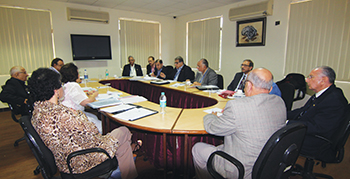
Board meeting in progress
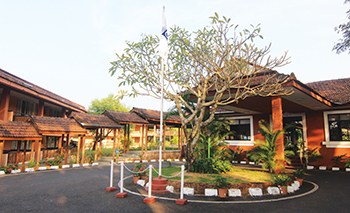
The International Centre in Goa: venue of the meet
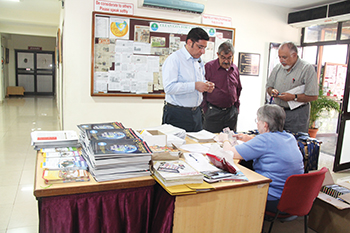
Registration desk at the venue
Feroze Foods was started by Sethna’s father Soly in 1972 when there was no competition. "When Rasna came in the market as big players with the same presence,” Feroze Foods had to struggle in the absence of resources. Ultimately they diversified to manufacturing concentrates for the aerated water industry with Kala Khatta and Jeera Masala being their top selling items. Since they lacked the tools to manage a manufacturing industry they had to "change the way we thought” and learn from professional insights. "Vision without action is just a dream. Action without vision just passes the time. Vision with action can change the world,” he reminded the audience.
Competing with nearly 100 restaurants in the vicinity, Kharas mentioned that "Opening a restaurant is easy… You are motivated to open, the energy levels are high…Sustaining and giving the same quality of food for 15 years; delivering without feeling tired is what we can attribute our success to,” more so since they have to operate within rules and regulations which fall in the grey area. Starting as a four-table eatery under the name of Daddy’s Deli, Kharas said, "The challenge lies in letting people know you exist. Social media can be good and not-so-good because it is not forgiving… It’s not about winning an award one night. I need laurels from my customer every day to run my business.” She would not like to consider franchise arrangements because she is convinced the experience of eating at her restaurant cannot be replicated. For the same reason she is not unduly worried about secrets from her kitchen leaking out for she knows that recipes are now freely available online.
Minocherhomji has been an entrepreneur for the last 18 years, initially running an IT/management solutions company before he started dial-a-meal under the banner of Suxes Hospitality. "Competition has come to our rescue.” With a growing number of restaurants and consequent demand for home delivery "our numbers have grown” by three or four times. Competition though has "adversely affected and ruined our human resource planning like taking away our delivery boys” since business giants like Food Panda are able to offer salaries he can’t match. They have 89% turnover of delivery boys.
"Acquiring a customer, retaining and delighting a customer spell profit,” reminded Maganlal who believed that online competition is huge since they do not have to bear the real estate cost or inventory cost. Knowing that all customers prefer "the touch and feel experience,” at Magsons they try to work within their strengths, more so since they enjoyed the first mover advantage for 15 years. "Competition grows every business and keeps the leadership spirit alive,” he added and considered Goa a unique territory where McDonald and Walmart have yet not arrived although Big Bazaar is expected to open its first store soon. "Running a business is like running on a treadmill. If you want to grow you have to fasten your pace.”
When Jalejar started Spenta Tours in 1987, he launched school picnics which were not touched by any travel agent then. "I always feel healthy competition, not copying, is good. It keeps us on our toes. Tourism has seen plenty of changes, political ups and downs.” He is not sure how he will be able to fend against e-tourism. To compete with big companies Spenta focuses on "giving value for money” with personalized service. In the initial stages, a kitchen would accompany the group by train until they evolved to give their customers a taste of different restaurants. "Struggles/blockages/difficulties teach many lessons,” he is convinced. "Nothing can compare with word of mouth publicity,” he has learnt. Whether there is cancellation from his end or the customer’s end, he believes in giving full refund.
Fiberglass doors, fabricated aluminum and construction related products are the three areas on which the Kamat Group has been focusing realizing that "depending on one company was not enough.” When doing business in Goa they found that they could "focus on quality, service and customer relations.” They were able to withstand competition from the unorganized sector delivering goods that looked similar to theirs but did not match in quality. To Kamat, his most important asset is his "100 manpower base. You may have the best of strategy; focus on the culture within your organization,” he advised, convinced that there is a high correlation between employee retention rate and customer retention rate. To expand, they decided to increase their geographical boundary and go into newer customer segments. Moving out of Goa and other tier two cities where they were in direct touch with the owners where credit was not an issue and progressing to tier one cities like Bombay and Poona, they felt the impact of "credit terms when going out of our comfort zone.”
The entrepreneurs are giving back to society in different ways. Whilst Maganlal has started a school for special children, opened a Senior Citizens Park and has replaced plastic bags with paper bags made by destitute children and jail inmates, Sethna has used his premises on his farmhouse as a school for adivasi children. Kharas realizes that as bulk generators of waste, the restaurant industry has to ensure that dry and wet waste is segregated carefully and reaches its rightful destination, prompting her to spearhead a waste management program. Jalejar, Minocherhomji and Kamat recognize the contribution made by the employees to their success and feel motivated to reward them in different ways.
As summed up Siganporia: "There are three types of managers – those who make things happen, those who watch things happen and others who wonder what happened!”
A report of the evening session will appear in the January 21 issue of Parsiana.
◆ ◆ ◆
From the archive