
Events & Personalities
Vulture chicks starve
A Gazette notification issued by the union ministry of family health and welfare on July 17, 2015 mandates that diclofenac, the painkiller drug that is fatal for vultures, can now be sold only in single use vials of 3ml for treating humans. It was earlier being sold in multi-use 30ml vials and there were fears of these being diverted for veterinary use after the Drug Controller General of India banned its use on animals in 2006. Carcasses of cattle containing the drug consumed by vultures had led to mass deaths of the scavenger birds, virtually decimating their numbers.
The Bombay Natural History Society (BNHS) along with the UK based Royal Society for the Protection of Birds are operating four vulture breeding centers in India and working to create "vulture safe zones” free from diclofenac, a BNHS spokesman told The Indian Express (IE) of August 28, 2015.
The Bombay Natural History Society (BNHS) along with the UK based Royal Society for the Protection of Birds are operating four vulture breeding centers in India and working to create "vulture safe zones” free from diclofenac, a BNHS spokesman told The Indian Express (IE) of August 28, 2015.
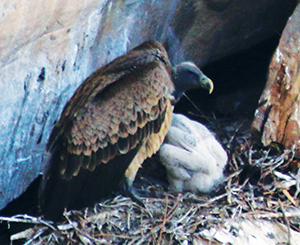
Vulnerable vulture chicks
In its issue of August 3, IE had reported that the Maharashtra Forest Department along with ELA Foundation (a nongovernmental organization), has filmed distressing evidence of chicks of the critically endangered white-rumped vultures in the Western Ghats dying of starvation. To ameliorate this, the Maharashtra government has planned "vulture restaurants” to provide diclofenac free cattle carcasses for them to feed on, especially during the breeding season, in winter. The digital trap cameras with daylight and infrared night vision were installed by expert mountaineers in vulture nests on tall trees and inaccessible cliffs in the Western Ghats. Observations, which lasted from March to May 2015, recorded the sad loss of seven chicks, barely two or three months old, that had died in May after waiting for 10 days for their parents to bring back food for them. "While the adult vultures can stay without food for a few months, the chicks need to be fed,” ornithologist Dr Satish Pande revealed to IE. A total of 14 chicks had been found in 17 active nests surveyed on March 15 this year, at the commencement of the study.
◆ ◆ ◆
From the archive