
Events & Personalities
Diclofenac still sold
Though the sale of the drug diclofenac was forbidden in India over a decade ago, a study published on September 1, 2020 by the quarterly, peer-reviewed journal Bird Conservation International (BCI) has shown that veterinary pharmacists in India continue to sell the non-steroidal, anti-inflammatory medication. "Despite the ban, it is still being found in certain rural markets,” Homi Khusrokhan, former president of Bombay Natural History Society (BNHS), told Parsiana on September 25. Under a five-year project that ended in 2017, members of a research team from five international organizations and universities, including BNHS, visited pharmacies and asked for drugs to treat their injured cows, buying the first drug that was offered, according to the 17-page report available on BCI’s website. Reportedly, in five Indian states surveyed in 2017 alone, the medication was being offered by 10 to 46% of pharmacists, stated the study.
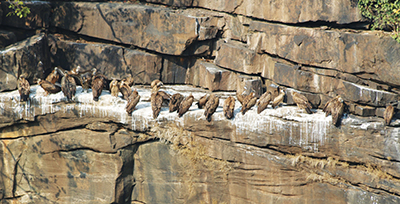
A committee of vultures at Panna Photo: N. K. Rajput
In the early 2000s, the widespread use of the drug for treating cattle was discovered to be decimating the Asian Vulture after entering the birds’ food chain through the carcasses of cattle administered the drug. Reportedly, this caused 99.9% of white-rumped vultures and 97% of long and slender-billed vultures to be wiped out. Soon India, along with neighbors Pakistan, Nepal and Bangladesh banned the drug for veterinary use.
The lead author of the study, Dr John Mallord, quoted in mid-day (MD) of September 10, stated that as the sale of diclofenac for veterinary use is illegal, they had been open about the reasons for the survey and stated that they were vulture conservationists, the pharmacists would have been unlikely to offer them the drug. "We had to pretend to be livestock owners so we could get an unbiased picture of its availability.”
MD quoted Chris Bowden, program manager of Saving Asia’s Vultures from Extinction, as stating that in India the vulture populations "either continue to decline, or, at best are stable, but at low levels and not yet showing signs of recovery.”
Other organizations that participated in the study were The Royal Society for the Protection of Birds’ Centre for Conservation Science, Bird Conservation Nepal, International Union for Conservation of Nature, Bangladesh and the University of Cambridge.
◆ ◆ ◆
From the archive