
History
“I met a real tiger”
Reminiscing about a police officer in an era of prohibition, smuggling and blood stained criminals seeking protection
"We would first see his photo in the paper, then dad would return unshaven with red eyes as a consequence of not sleeping for several nights,” Adil Bhesadia tells us animatedly about his late father Coover Dinshaw Bhesadia, who retired in August 1978 as assistant commissioner of police (ACP), crime branch. Harking back to the 1960s and ’70s, when smuggling of gold, imported goods and alcohol were rampant, Coover was decorated and fêted for having apprehended smugglers.
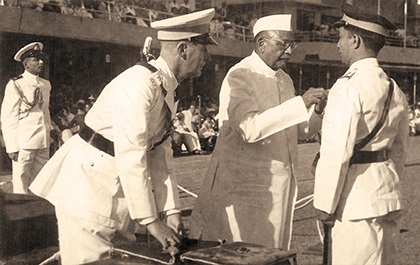
Coover Bhesadia being decorated by Governor Sri Prakasa
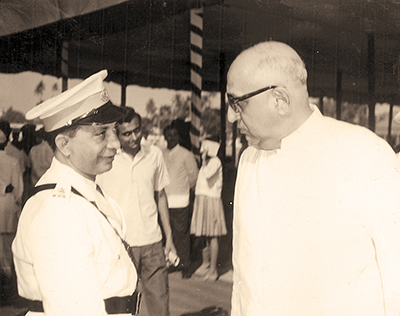
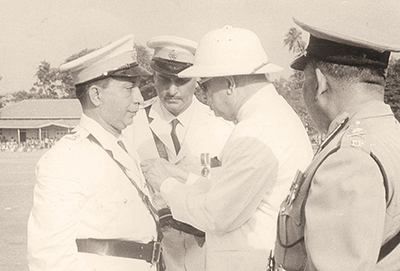
Coover Bhesadia with coroner H. J. Chinoy;
(right) Bhesadia being decorated by Governor P. V. Cherian
Some of the large hauls he was recognized and awarded for were intercepting the smuggling of 2,000 gold guineas, 1,000 tolas of gold (which is equivalent to 10 kilos), several cartons of various brands of Scotch whisky, retrieving 77 gunny bags drowned off the creek in Bombay of four and eight annas valued at Rs 2,04,818, silver ingots valued at Rs 29,54,000, gold biscuits, wrist watches worth Rs 40 lakhs in 1967, Japanese nylons and smuggled textiles of radiant yarn, among other illegal imports.
All this information is gleaned from Memoirs of C. D. Bhesadia, an album put together by Inspector P. L. Patil, a junior of Coover and an admirer. Several letters of high-ranking police personnel acknowledging Bhesadia’s contribution, photographs of pinning medals and bars to his uniform, adorn the album. Pictures of Ambassador and Fiat cars of that period; dhows, boats in which hauls were transported; cabinets where the contraband was stashed, cart one back to that era.
Dr Deepak Rao, Bombay Police historian, wrote his PhD thesis on Evolution of Bombay Police Force (1661-2000) i.e. just prior to the East India Company entering the country as traders in Bombay. In it he mentions that those days, one percent of the total contraband was given as reward to the team. Coover’s success lay in his network of informers, whom he rewarded handsomely as he led a seizure almost every alternate week. Rao related how Coover, whose pet name was Cooji, specially cultivated kohlis (fisher folk) who also roamed the seas from where most of the smuggling took place. Rao says Coover was so well integrated with the kohlis that he attended their family, religious and even social functions. One khabari (informer) who specifically stands out is Miguel Kohli who assisted in several seizures, Rao expands. Another modus operandi was to sit endlessly but relentlessly waiting for a tip-off at the Kayani restaurant in Dhobi Talao. The restaurant phone rang, was passed to him, he had a conversation for a few seconds and left instantly.
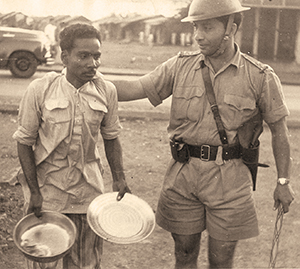
Catching a thief
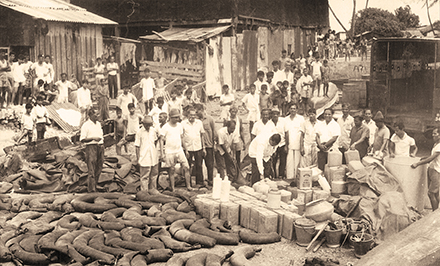
Illicit liquor raid at Dharavi
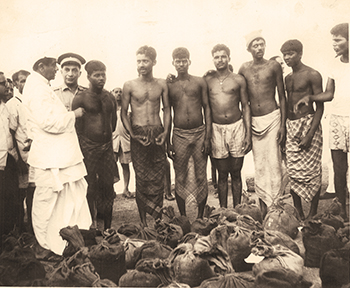
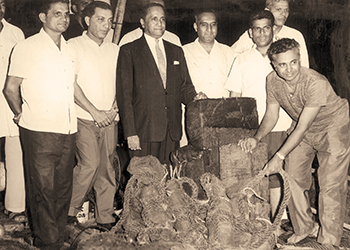
Bhesadia with koli divers who retrieved coins from the bottom of the sea and
(right) with seizure of gold and wrist watches
Rao authoritatively quoted dates, designations and data about the Police force and informed Parsiana of four Parsi Commissioners of Police (CP) in Bhesadia’s time when the "majesty of law still existed.” In fact, the first ever Indian CP in 1947 was Jehangir Sorabji Bharucha, followed later in quick succession by K. D. Billimoria, J. P. Nagarvala and later K. J. Nanavatty.
Coover got admission in the Indian Police Service and the Indian Air Force. He chose the Police as one of the reasons, Adil reveals, was that the family man did not want frequent transfers. Born on August 20, 1920 in Nargol, where he also schooled, he joined as sub inspector (SI) in 1942 at the age of 22. Coover’s career trajectory began as Selection Grade SI in 1956, after passing a qualifying exam, then as inspector of police in 1961 with an accelerated promotion as ACP of greater Bombay unit (crime branch) in 1969 and retired after eight years in 1977. He passed away on February 4, 1986.
Bhesadia was ACP (Social Legislation, Criminal Investigation Department, Bombay) in 1971. Rao apprised Parsiana that in the early 1970s, anti-goonda legislation was termed Social Legislation which dealt with black marketing, eve teasing, family disputes, domestic violence, etc. Arvind Patwardhan has dedicated his book Mee Mumbaicha Police (I represent Bombay police) to his colleague Coover, and has written a detailed chapter on him.
The police officer attended St Xavier’s College in Bombay but was rusticated for taking part in anti-British protests. History researcher Rao mentioned that Anglo-Indians joined the Police force as sergeants of police whilst Indians of all other communities joined as SIs, the first batch being recruited as early as 1913.
Real life drama at home
Cooji’s wife Jeanie (née Jokhi) aged 92 recalled how criminals would ring their doorbell at two and three in the morning — some with blood spattered shirts, some with ears torn off — seeking "his” protection. The proud spouse said they knew that if anyone would help, it would be this "feared but fearless, humane police officer.” Even in the middle of the night, the officer would extend himself for anyone in difficulty.
Jeanie also recounted how she would skirt the issue of calling him from within as he was most often not at home "Hoon é loko né té kem kahoon? (How could I tell them that?)”, as she was alone with a toddler son. Adil added how ladies would also come home to seek his mother’s intervention either at Marine Lines or their later abode at Worli, pleading to put their husbands into prison as they were being harassed with the men’s illicit activities beyond their capacity to bear! Being after the big fish alcohol smugglers, the officer gentleman would scold the small fry who peddled a bottle or two and admonish them not to expand their illicit activities.
Cooji’s wife Jeanie (née Jokhi) aged 92 recalled how criminals would ring their doorbell at two and three in the morning — some with blood spattered shirts, some with ears torn off — seeking "his” protection. The proud spouse said they knew that if anyone would help, it would be this "feared but fearless, humane police officer.” Even in the middle of the night, the officer would extend himself for anyone in difficulty.
Jeanie also recounted how she would skirt the issue of calling him from within as he was most often not at home "Hoon é loko né té kem kahoon? (How could I tell them that?)”, as she was alone with a toddler son. Adil added how ladies would also come home to seek his mother’s intervention either at Marine Lines or their later abode at Worli, pleading to put their husbands into prison as they were being harassed with the men’s illicit activities beyond their capacity to bear! Being after the big fish alcohol smugglers, the officer gentleman would scold the small fry who peddled a bottle or two and admonish them not to expand their illicit activities.
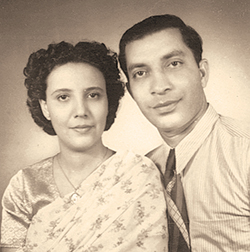
Jeanie and Coover Bhesadia
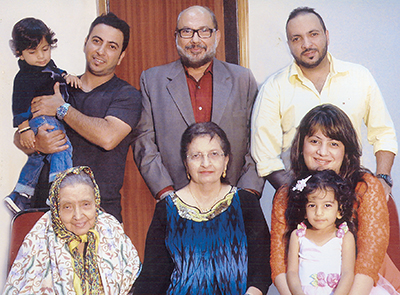
Seated l to r: Jeanie, Yasmin, Razmie, with child Ziya.
Standing l to r: Khorzad holding Kehaan, Adil and Naushad
Adil recounted a story about gangster Gawli being summoned to the Byculla police station as he was known to extort money. In a fit of bravado, Gawli snatched away the official cap of the SI issuing the summons and challenged "himmat hai toh idhar aao” (come to me if you have the courage to retrieve the cap). Through pre-arranged coded whistle communication, Gawli was caught and thrown into the police van on that occasion. Adil informs us that Gawli was considerably reformed on his release from imprisonment, came and met Coover and acknowledged "mala wagh bhétla” (I met a real tiger), as he thought most police personnel were afraid of him.
One more incident detailed by the son was how gold used to be smuggled on the Bombay-Goa highway in jackets with secret recesses. The smugglers, having found out that Bhesadia was on the case, decided to thwart him, by rolling hot tar barrels onto his path from a hillock to intercept his car as it weaved its way up the path. The well connected detective, informed of this in advance, ordered the police posse to take another route through the mountains and caught the smugglers’ leader off guard. Adil says he and his mother never knew what Coover was up to till after the coup was either completed or reported. It is no wonder that Jeanie suffered a nervous breakdown and Adil remained unaware despite threats to kidnap the schoolgoing St Xavierite.
On one occasion, the SI wanted to keep personal watch over a case and took up position in a Parsi colony. He patrolled the same beat for the entire day to nab the unlawful activity taking place around there. A vigilant lady in the baug called the police station to complain about an unknown shady looking character loitering near her home since that morning. When the police arrived, the complainant was livid as the police saluted this "miscreant” instead of arresting him, until the real reason unfolded!
An admirer of ex-prime ministers Indira Gandhi and Jawaharlal Nehru, the official was in favor of retaining the Maintenance of Internal Security Act which permitted indefinite detention of individuals to counter foreign-inspired sabotage, terrorism, subterfuge and threats to national security. The Conservation of Foreign Exchange and Prevention of Smuggling Activities Act, to erase underground movements was also brought in by Gandhi, which the law keeper thought should be retained.
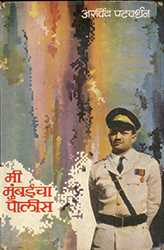
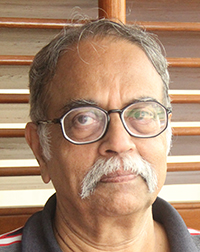
Deepak Rao and cover of Mee Mumbaicha Police
The man behind the uniform
Coover, a terror for smugglers and bootleggers who scampered away when his car was seen, would leave home at times wearing one brown and one black shoe while preoccupied with his work, Adil laughingly told Parsiana adding he was "a friend, joker and very pally with all of us at home.”
Fond of cricket, Cooji was a right hand batsman and left hand bowler. Later in his career, unable to make time for leisure, he chose to commit whatever free time he could muster, to pray muktad at his ancestral home in Nargol, as he was an ordained priest. A staunch Zoroastrian, he had deep roots in Nargol where the house still stands, modernized with a swimming pool and library. The only child has preserved it as a salute to tradition.
Adil relayed how his father believed that the seeds of corruption were laid by the British. Early on in his police career, when they cracked a thievery case, Coover was asked by the British police officer "… did you get the money?” Initially, Coover did not understand the question, but when it was repeated, he flung the retrieved gold chain at the officer and walked out. Adil was never pressurized to join the police force as "dad knew what was coming… Today, join them? — Never.”
Coover, a terror for smugglers and bootleggers who scampered away when his car was seen, would leave home at times wearing one brown and one black shoe while preoccupied with his work, Adil laughingly told Parsiana adding he was "a friend, joker and very pally with all of us at home.”
Fond of cricket, Cooji was a right hand batsman and left hand bowler. Later in his career, unable to make time for leisure, he chose to commit whatever free time he could muster, to pray muktad at his ancestral home in Nargol, as he was an ordained priest. A staunch Zoroastrian, he had deep roots in Nargol where the house still stands, modernized with a swimming pool and library. The only child has preserved it as a salute to tradition.
Adil relayed how his father believed that the seeds of corruption were laid by the British. Early on in his police career, when they cracked a thievery case, Coover was asked by the British police officer "… did you get the money?” Initially, Coover did not understand the question, but when it was repeated, he flung the retrieved gold chain at the officer and walked out. Adil was never pressurized to join the police force as "dad knew what was coming… Today, join them? — Never.”
◆ ◆ ◆
From the archive