
Focus on foreign funding
How to deal with government restrictions and controls pertaining to donations received from abroad was the theme of a two day seminar by the Centre for Advancement of Philanthropy
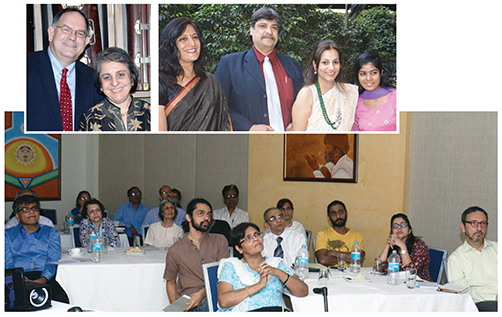
One particularly sensitive area is the general mistrust of foreign funding for NPOs. This is not only in India where the inflow of foreign funding is controlled under the Foreign Currency Regulation Act (FCRA) but also in other parts of South East Asia (SEA), particularly in China, the academician noted. NPOs functioning in countries with federal systems of government often bear the brunt of being controlled on two or three levels. As a result, dealing with government agencies has become a full time job and an inordinate amount of time is spent in providing legal compliances. Observed Sidel, "Restrictions on the flexibility and the role of foreign foundations is being imposed to such an extent that they have been questioning whether they have a long term role to play in that country. They often face restrictions for approvals for the transfer of funds and generally governments have no objections to their working in areas like healthcare or education but are reluctant to allow them to function in the sphere of advocacy."
Several attendees mentioned the difficulty NPOs faced to function in India. The process for registration is often long and tedious and the FCRA registration can only come into effect three years after registration. Sidel was happy to note that in some countries "registration requirements were dropping" but persons in the audience cynically remarked that this was only a ploy to bring more organizations under the net of control.
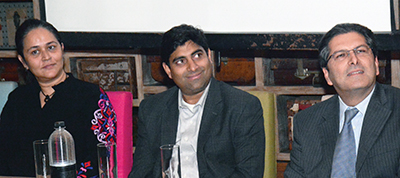
Panel of experts (l-r): Ingrid Srinath, Deval Sanghvi and Bahram Vakil
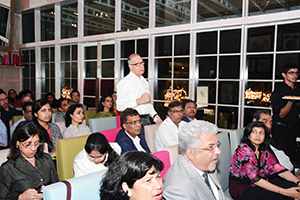
A section of the audience
The recent introduction of Section 135 of the Companies Act was also discussed wherein 2% of the pretax profits are to be spent for Corporate Social Responsibility (CSR). Between Rs 18,000 to Rs 20,000 crores is expected to be collected and spent for this purpose from about 16,000 companies, noted CAP chief executive officer since inception, Noshir Dadrawala. There has been a mushrooming of middlemen to advise corporates on where and how to spend their money. This new amendment was viewed as both a challenge as well as an opportunity for the sector but it was generally agreed that the money would move to softer options rather than issues of advocacy. As Darius Forbes put it succinctly in his Chairman’s Note, "It is one thing to legislate but it is the implementation and enforcement that often reduces good legislation to a joke or even makes it counter-productive."
Introducing Sidel, Dadrawala reminisced, "When he was the program officer of the Ford Foundation 15 years ago, he was generous to a fault and took risks to support innovation. When once, on his way to Bangalore airport, he was caught in riots and where everyone else was taking shelter Sidel was a keen observer of what he considered civil society in action. In addition to being a researcher and an academic, he is an exceptionally warm human being."
CAP provides legal, advisory and management solutions to NPOs, social entrepreneurs, donors, grant-making foundations (Indian and foreign) companies and their CSR units.
CAP was founded by the late H. T Parikh, late R. R. Chari, late Russi Lala, amongst others and Forbes who is also their chairman emeritus. Rati Forbes is the current board’s chairperson.
Meher Gandevia-Billimoria, with 14 years of experience in the sector, looks at operations and program, growth and impact while Tina Vajpeyi is a senior member of the team who complements Dadrawala’s legal expertise with her financial acumen. The core team also includes other management consultants who work on a part-time basis offering their professional expertise.
"What can CAP do better?" was the question raised at the end of the evening. They obviously seem to be doing an excellent job as the panel of experts comprising Deval Sanghvi (CEO, Dasra), Ingrid Srinath (CEO, Hivos India Advisory Services) and Bahram Vakil (founder partner of AZB and Partners) felt that they should just continue doing what they have been doing for the last 28 years but try to enlarge their reach even as far as other countries in SEA which could benefit from CAP’s experience in the field.
The second day, a think-tank session was organized by CAP on self-governance. The discussion revolved around "Transparency and accountability and improving reporting standards in NPOs." There were participants from a number of leading NGOs (nongovernmental organizations) in India. This was to counter a comment: "All NGO are frauds," made by a very senior and responsible minister to a delegation of representatives from the non-profit sector. One wonders if he ever ruminated on the fact that if governments did their jobs efficiently and effectively there would be no need for NGOs or NPOs in the first place. The very existence of 3.3 million NGOs in India, one for every 400 citizens, speaks much for the functioning of the government in India.
Sidel recommends transparency and full and factual disclosure through self-regulation, formulation of internal policies, code of conduct, statements of principles and standards of practices. But this is easier said than done. What and how much to disclose is a debatable point. As one of the participants commented, "Where does disclosure end and nudity begin?" How do NGOs manage to fulfill the requirements of the laws of their countries, the needs of individual grantees and in addition invest further time and energy in formulating standards of transparency and providing further information to the public at large? Very often the demands of both the law and the donors are unreasonable. "How can I provide the names and the addresses of the beneficiaries if I am dealing with street children? How do I maintain the secrecy of my patients who are HIV positive, alcoholics or drug users if I am compelled to provide details? How do I provide all the information required by my donors and the government as well as meet with the requirements of transparency and disclosure without increasing the head count or purchase of new computers given the scenario where NPOs are required to keep administrative expenses to the minimum?"
On a more difficult scale are the problems of accreditation, rankings and ratings. It was observed that most donors do not want to do a full scale due diligence and would be happy to rely on a rating agency. Donors do not want to read and assimilate information, they prefer ranking which is the easy way out. The Indian Institute of Corporate Affairs has produced a list of 102 sanitized NGOs. But the basis of this list is at best arbitrary. How are NPOs or NGOs to be rated? Surely one cannot apply a corporate rating system to the not for profit sector? Measures like "return on investment" and "measurement of impact" are generally anathema to NGOs. "How do we evolve a mechanism to prove how effective we are?" Most of the audience agreed that it would be impossible to put all NGOs engaged in different sectors and performing difference services under the same measuring yardstick. Advocacy organizations may suffer because they spend more in terms of human resources. Newer organizations may be at a disadvantage compared to older ones.
It was concluded, "What is necessary is to speak about your accomplishments and not your activities. It is not important to scale up from five villages to 50 villages...what is important is to inform people what you have accomplished in the area you are working and how you have improved the quality of life."
The problems facing the NGOs, however, are several and critical as the song, which ended the seminar, suggested, "we can only make it better if we try."