
Books
Human rights for children
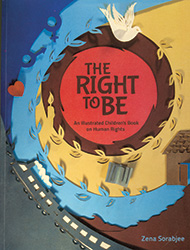
The Right To Be. An Illustrated Children’s Book on Human Rights by Zena Sorabjee. Published in 2013 by Vakils, Feffer and Simons Private Limited, Industry Manor, Appasaheb Marathe Marg, Prabhadevi, Bombay 400025; email: info@vakilspublications.com; website: www.vakilspublications.com Pp: 164. Price: Rs 350.
Few concepts have become the subject of as much contestation in today’s world as human rights. The reasons are not far to seek. In the first place, although the idea of human rights and the intentions behind their propagation are noble, the concept has often either been distorted for ideological reasons or manipulated to achieve political ends. Secondly, there is an inevitable vagueness about the concept which lends itself to huge differences in interpretation and therefore to arguments about its usefulness and relevance.
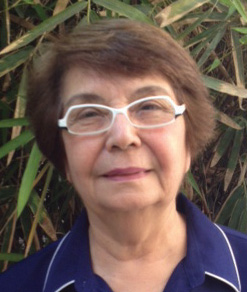
Zena Sorabjee: passionate plea
Such is the wariness and cynicism attached to human rights that the term has, in some societies, become positively toxic as a subject of policy debate. Part of the problem lies in the fact that there is no real consensus on the scope of particular rights, especially where they are couched in fairly general terms, as they usually are in documents which lay down international standards. The other — very real — problem is that rights often clash with each other, with potentially alarming consequences. A typical example of such clash is between the right to liberty and the right to equality: to what extent can, for example, a private club be allowed to discriminate against, say, women when it comes to membership? Or, to take a more prosaic but highly topical example in Bombay, how justified would a private housing society be in keeping out people with particular culinary preferences?
Despite these challenges, the idea of human rights remains a powerful article of faith globally. Recent decades have seen a proliferation of instruments underlining the importance of human rights and expanding the boundaries of the concept. Foremost among these is, of course, the Universal Declaration of Human Rights (UDHR), adopted by the United Nations shortly after the end of the Second World War. The UDHR forms the focus of this simple but highly inspiring book aimed at children.
Despite these challenges, the idea of human rights remains a powerful article of faith globally. Recent decades have seen a proliferation of instruments underlining the importance of human rights and expanding the boundaries of the concept. Foremost among these is, of course, the Universal Declaration of Human Rights (UDHR), adopted by the United Nations shortly after the end of the Second World War. The UDHR forms the focus of this simple but highly inspiring book aimed at children.
Zena Sorabjee, a leader of the Baha’i community and an educationist, makes a passionate plea for a better understanding – and, more importantly, absorption — of the spirit of human rights from a very young age. "As we allow the understanding of human rights for all to become part of our character,” she argues, "it would lead to the making of moral choices which would indicate a mature, upright human being displaying a rectitude of conduct.” This is a cri de coeur with which few will disagree.
Towards this end, she discusses each of the key Articles in the UDHR with a story, either one made up by herself or based on real life cases (for example, when she discusses the right not to be discriminated against, she uses the example of Rosa Parks, the black American woman, and her fight against the segregation policies of the southern US states — a fight which culminated in a landmark legal victory for all Afro-American people). Each chapter ends with a series of activities for the young reader: these are intended to deepen their understanding of the topic and to encourage them to put their thoughts into action.
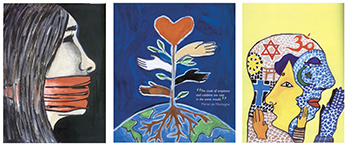
The book is richly illustrated with drawings contributed by young artists chosen from a Bombay-based charity, Aseema Foundation, which works with underprivileged children in the slums and the streets of the city. Inspiration for the book also comes from a school that Sorabjee founded in Tripura some years ago. Her passion for human rights and her belief that human rights can produce transformative results come through very strongly in the pages of the book.
It is to be hoped that Sorabjee will, with her commitment and her talent, turn her attention, sooner or later, to writing about human rights for a slightly more mature audience — the college-going youth of India — whose understanding of human rights, on current evidence, often tends to be either too idealistic or too cynical. Clearly, the task would pose serious challenges, not least in negotiating the minefield of moral and ethical dilemmas which underlie any thoughtful analysis of the subject.
◆ ◆ ◆
From the archive