
A brave new world
An inclusive outlook has brought about progressive changes, uniting the Zoroastrians of North America
The late 1960s saw the start of Zoroastrian societies in the USA and Canada, when a large number of Zoroastrians immigrated to these two countries, first as students and then as professionals. These immigrants were mostly young and determined to make a future in the new country. They not only left their families behind but also many societal constraints. They were ready to think for themselves in a way that would make their new Zoroastrian society successful, irrespective of what the norms were in the country of their origin. Very early they started calling themselves Zoroastrians or Zarathushtis as opposed to Parsis and in that very act, they chose a more inclusive stance. There is not a single Association in North America which has the name Parsi in it, in spite of the fact that Parsis are a majority in most of the associations.
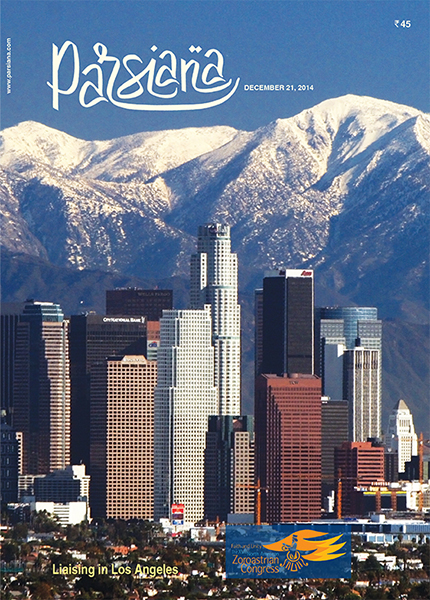
Cover: Los Angeles skyline with San Gabriel mountains in the background Photograph courtesy: Wikipedia
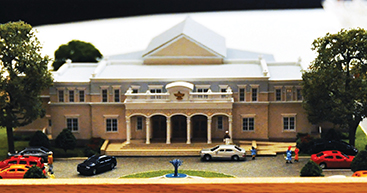
Model of proposed dar-e-meher in New York
Contact with Iranian Zarathushtis who also started to immigrate about the same time reinforced this idea. Because they called themselves Zoroastrians it was easy to unite with Iranian Zarathushtis. The commonality of religion superseded ethnicity, even though there were significant differences in language, food and even some ways of thinking. The stage was set for an inclusive spirit. Our small numbers at the beginning required inclusiveness, it was more important to be with other Zoroastrians than to harp on differences such as orthodox versus liberal. The immigrant generation learnt to ignore these differences and worked together to establish themselves in North America. That did not mean that North American Zoroastrians (NAZs) never debated these matters but these debates were never so divisive that the society became non-functional.
Initially there were two models, the conservative one which looked to the society of the mother country as one to imitate as completely as possible (in terms of rituals, interfaith marriages and acceptance of children of interfaith marriages) and the progressive one which looked to the mother country’s norms as rough guidance but which had to be modified if necessary to keep the NAZ society together and functioning. By the 1970s, the generation that had come here as students were starting families and since at least 25% of the families were interfaith the trend was towards a greater percentage. It was soon realized but not always accepted that the conservative model would not work; it would be divisive and suicidal if it was adopted. When associations in North America started forming, their membership was open to all interfaith spouses. An amazing thing happened; the non-Zoroastrian spouses started to play leading roles in the associations without changing the Zoroastrianness of the associations. Far example, in ZAGNY (Zoroastrian Association of Greater New York), Nancy Daruwala helped start religion classes for children and also served on the board of directors. So the progressive model was working!
Children of interfaith marriages are accepted as Zoroastrians and their navjotes performed irrespective of whether the father or mother is a Zoroastrian. Initially there were only a few priests willing to do that but their numbers have grown. Navjotes of children of interfaith marriages are common; it is up to the parents to decide whether to have the navjotes done. Why is this so well accepted in North America as opposed to the situation in India? North America being a more open minded society, this fact does influence our general thinking. For the performance of navjotes of interfaith children, there is no question of discriminating based on which parent is a Zoroastrian.
Changes in the Zoroastrian priesthood in North America are slow but our priests have come a long way. It has been a pleasure to see the priesthood evolve from a fairly conservative group somewhat at odds with the general thinking of the Zoroastrian community here, to a priesthood which is very much in sync. This change has been internal, not forced by the community. Led by a few brave priests, the North American Mobed Council (NAMC) has taken some very sound positions. These positions were arrived at after long, multiple debates at NAMC meetings.
In the year 2000 the Council essentially defined as to who can be a Zoroastrian by taking the following positions:
Parsi is a race.
Zoroastrianism is a religion.
The term "Parsi” applies to the descendants of the original migrants who left Iran to settle in India to preserve the Zoroastrian religion.
A "Parsi” is a person born of both Parsi parents who has an inalienable right to practice the Zoroastrian religion.
A "Zoroastrian” is a person who believes and follows the teaching of Zoroaster.
It is recognized that "Zoroastrianism” is a universal religion.
It is further recognized that a Zoroastrian is not necessarily a Parsi.
This is an extremely wise step as far as the NAZ society is concerned. It paves the way for creating a fully consecrated fire temple in North America as it makes it possible to have a non-restricted fire temple and removes any doubts as to who can enter and worship. The only restriction is financial because it is necessary to support at least two full-time priests to serve the fire.
The influence of NAZs of Iranian origin has also been significant. Early on they took a more liberal stance than Parsis on most issues, and provided and reinforced the progressive model. The very fact of working with Zoroastrians who had different customs, rituals and festivals showed Parsi Zoroastrians that Zoroastrianism is not a monolithic religion or society and it is okay to be different and still be Zoroastrian.
The matter of performing the navjote of persons who are not born of at least one Zoroastrian parent has been the most divisive, especially after the navjote of Joseph Peterson in 1983. Ervads Noshir Hormazdiar and Dr Kersey Antia who performed the navjote were ostracized by many preists who refused to perform any ceremonies with them. These two brave priests continued to serve the community. There was a time in ZAGNY when Hormazdiar was the only priest performing religious ceremonies of the association (as opposed to private ceremonies) because all priests were invited but if Hormazdiar accepted the others would not accompany him. Things have changed today. Hormazdiar is often the preferred priest among the younger generation because of his progressive views.
The matter of accepting individuals born into other faiths was discussed at a session at the 16th North American Zoroastrian Congress hosted by ZAGNY and IZA (Iranian Zoroastrian Association). At the end of the session an instant poll of the audience, the majority of them over 55 years old and mostly the immigration generation, indicated that acceptance of such individuals was okay. This has been a slow change in attitude but there is no mechanism for acceptance of such individuals and there will probably be none for some time. At present the Zarthushtrian Assembly started by Ali Jafarey (and a few others) is the only NA association that officially performs the navjotes of individuals of other faiths.
The changes in NAZ society, though revolutionary to Zoroastrians in India, are a product of an evolutionary process. Policy changes have followed changes in the society and are a confirmation of what has evolved. This process is the result of brave individuals taking steps towards what they believe is right, facing push back by those who are against the changes, but in that process convincing society of the wisdom of their choices. I have named only a few names but many individuals have been brave enough, farsighted enough and caring enough to move forward and lead the progressive model.
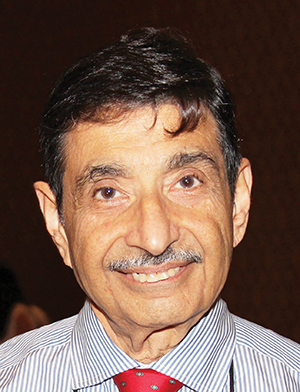 Founder member and one of the past presidents of the Zoroastrian Association of Greater New York, Dr Lovji Cama is currently chair of the Education, Scholarship and Conference Committee of the Federation of Zoroastrian Associations of North America. Besides serving as trustee of the Arbab Rustam Guiv Darbe Mehr in New York, Cama who has earned a doctorate in chemistry from the Columbia University has organized religious education classes for children and summer camps for the youth for about four decades.