
Events & Personalities
Judicial dilemmas
With the government of India passing the National Judicial Appointments Commission Act, 2014 to change the system of appointment of judges to the Supreme Court (SC) and the High Courts, it is imperative to also change service conditions to attract the best talent from among lawyers and judges to occupy the high echelons of the judiciary, writes former Solicitor General of India and Advocate General of Maharashtra Tehmtan Andhyarujina in an incisive article which appeared in The Indian Express (IE) of October 9, 2014. Two vital changes that need to be implemented concern the remuneration and the retirement age of judges, both of which need to be recalibrated upward.
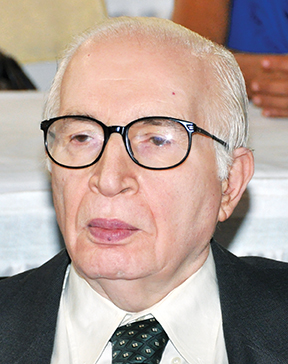
Tehmtan Andhyarujina: attracting talent
Judicial salaries have been "niggardly,” Andhyarujina states, adding that for 36 years after the Constitution came into being in 1950 judicial salaries remained unrevised. They were initially increased in 1986 and again in 1998. At present the Chief Justice of India earns Rs 1,00,000 per month while other SC judges receive Rs 90,000. Chief justices of High Courts also draw Rs 90,000 per month; other judges in their courts are paid Rs 80,000. Despite the perquisites that judges are entitled to, these salaries have become unrewarding for attracting to the bench lawyers who command a good practice. No longer do lawyers take up judgeships as a matter of honor. Ironically, law firms today offer fledgling law graduates higher salaries than those received by judges, notes the jurist.
Andhyarujina quotes the late eminent jurist Hormasji Seervai who had opined: "It may be said that we are a poor country and cannot afford to pay high salaries to judges. I would like to record my opinion that only an extremely wealthy country can afford the luxury of an ill-paid judiciary, and that the greatest sufferers of an ill-paid judiciary would be the union and state governments, because today the biggest litigant in India is the state. The correct remedy is to make a judicial career sufficiently attractive for lawyers of the highest standing.”
Winston Churchill’s take on the subject has also been quoted: "The service rendered by judges demands the highest qualities of learning, training and character. These qualities are not to be measured in terms of pounds, shillings and pence according to the work done,” Churchill wrote. "A form of life and conduct far more severe and restricted than that of ordinary people is required from judges and though unwritten, has been most strictly observed. They are at once privileged and restricted. They have to present a continuous aspect of dignity and conduct. The bench must be the dominant attraction to the legal profession, yet it rather hangs in the balance now, and heavily will our society pay if we cannot command the finest characters and the best legal brains which we can produce.”
In India another major deterring factor is that High Court judges have to retire at the age of 62, while those in the SC continue until the age of 65. Andhyarujina observes that at the time of retirement judges are in full possession of their faculties but are constitutionally prevented from active legal practice. High Court judges may practice in the SC for three additional years if they so desire, but for retired SC judges the only options are holding positions given to them by the government, seeking to be arbitrators or giving opinions. Since the average tenure of a SC judge is a mere four to six years, even the ablest ones do not have the time to master the law and acquire the knowledge required to fulfill their roles, Andhyarujina states. He suggests that the retirement age of High Court judges be extended to at least 65 years and for SC judges to 70 years.
◆ ◆ ◆
From the archive