
Events & Personalities
Nariman's voice heard
"The grand old man of the Indian bar Fali S. Nariman” is apparently not content to play a passive role as member of the Rajya Sabha, it was reported in The Indian Express of July 26, 2004. On July 23 he introduced two bills in the Upper House containing radical proposals to reform the judiciary. To better assess the performance of courts and tribunals and suggest remedies for their backlog, Nariman had proposed the publication of judicial statistics. The Judicial Statistics Bill, 2004 "will go a long way towards demystifying the law and the administration of justice,” he added.
In the other Bill introduced by him on the same day Nariman suggested an amendment to the Constitution in order to raise the retirement age of High Court judges from 62 to 65 which will be the same as that of their Supreme Court counterparts.
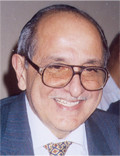
Nariman: do and dare
Being private member’s bills, "Nariman’s suggestions are unlikely to be enacted unless the Government adopts them,” mentions the Express article. An editorial in the next day’s Express recommended, "The government must adopt Nariman’s judicial statistics bill aimed at greater judicial transparency... Everybody is aware of the crisis of pending cases — the backlog today is believed to be over six crore. Yet nobody knows what these cases are about, the names of the judges hearing them, the number of hours taken on them, the adjournments granted, the intervals between the filing of each case and their hearing, and numerous other details that would have provided an insight into the reasons for their inexorable delays that have come to scar the system...”
A month later Nariman was again in the news, this time for being among the select three members of the Rajya Sabha who dared to stand up and speak up. Independent members Dr P. C. Alexander, former governor of Maharashtra, Bimal Jalan, former governor of the Reserve Bank of India and Nariman caused a furore in the Upper House when they broke away from the majority to refuse to acquiesce in the agreement between the government and the opposition to pass the budget without any discussion. According to a report in The Times of India of August 27, 2004, "Nariman was the first to protest, focusing on the suspension of Question Hour.” Nariman perceived the act to be "an infringement on the right of members like me. There are 70 members comprising of independents, nominated ones and of smaller parties who do not have any voice in Parliament. In the entire session, no meaningful discussion has taken place so far. I strongly protest.”
The Lok Sabha which has the final say on budget, raced through the Finance Bill, declaring it to have been passed within mere 30 minutes. Apparently in the Lok Sabha, speaker Somnath Chatterjee and Prime Minister Manmohan Singh expressed similar concern. Chatterjee warned that if parliamentary democracy is not allowed to function it could "degenerate into dictatorship which will be nothing but disaster.” Insisting that the government had done its best to seek the opposition’s cooperation Singh maintained, "We have to be prepared for the consequences of what is happening in Parliament.”
◆ ◆ ◆
From the archive