
Comment
“Why I opt for cremation”
With dakhmenashini not functioning properly and a family comprising members of mixed faiths, it is logical to opt for an alternative method
A recent Parsiana survey (December 2013) showed that as many as 28% of Bombay Parsis preferred cremation over dakhmenashini at Doongerwadi. Perhaps, the figure will soon rise to 50% or even more. Why have so many devout practising Zoroastrians begun to avoid traditional dakhmenashini even though they know of the difficulty in finding priests (so-called ‘renegade’ priests) willing to perform all the prayers and rites at private venues as Doongerwadi facilities are only available to those taking the dakhmenashini route.
No vultures have been coming to Doongerwadi since the past 10 to 15 years. They have now become an endangered species for various reasons! The idea of establishing an aviary for vultures under a netting over one of the dakhmas is favored by some but will be a non-starter until an easy and acceptable method is developed to determine which corpses should go to the dakhma with the aviary and which should not, depending on which ones have traces of diclofenac or other drugs that would harm the vultures. The trustees of the Bombay Parsi Punchayet (BPP) are not doing anything to improve the solar reflectors, or replace them with some other method which would be effective throughout the year since they are themselves divided on the issue. In fact, some of them are vocal about the very idea of solar desiccation which does not work in the wet monsoon days and bloated bodies are sometimes disposed of in mass graves dug alongside the dakhmas to avoid the nuisance of stench. This is unacceptable to many.
No vultures have been coming to Doongerwadi since the past 10 to 15 years. They have now become an endangered species for various reasons! The idea of establishing an aviary for vultures under a netting over one of the dakhmas is favored by some but will be a non-starter until an easy and acceptable method is developed to determine which corpses should go to the dakhma with the aviary and which should not, depending on which ones have traces of diclofenac or other drugs that would harm the vultures. The trustees of the Bombay Parsi Punchayet (BPP) are not doing anything to improve the solar reflectors, or replace them with some other method which would be effective throughout the year since they are themselves divided on the issue. In fact, some of them are vocal about the very idea of solar desiccation which does not work in the wet monsoon days and bloated bodies are sometimes disposed of in mass graves dug alongside the dakhmas to avoid the nuisance of stench. This is unacceptable to many.
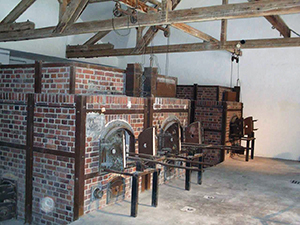
Visual of a crematorium (for representation purpose only);
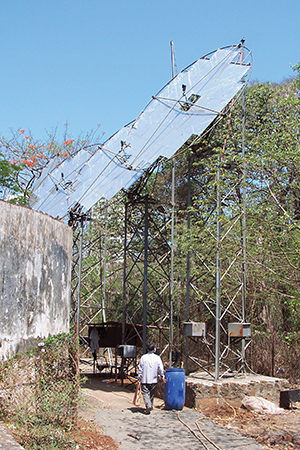
Solar panels at Doongerwadi
The number of interfaith marriages among Parsis in Bombay is already at 40% and likely to increase in the coming years. Parsis find that their non-Parsi partners are not too happy at the idea of disposal by vultures or solar panels, and prefer other systems like burial or cremation with which they are familiar. Moreover, they are aghast at the idea of having to sit in separate enclosures at the time of prayers at Doongerwadi, or not being permitted there at all. Personally, I would not like my non-Parsi grandchildren (with whom I have always enjoyed chatting and playing) to be excluded or made to sit separately when the time comes to part forever. The funeral must always be a family affair, even if the family comprises persons of mixed faiths.
As a Parsi, I would gladly have settled for the dakhmenashini route, but I have decided to avoid it for the reasons mentioned above. I must now either decide whether to choose burial or cremation which are commonly practiced all over the world. Alternate systems like cryomation, promession and resomation are only available on a very limited and experimental scale in US and some European countries, but not yet in India.
Traditionally Zoroastrians have been advised not to use either burial or cremation as it is believed that the former pollutes the earth, while the latter pollutes fire.
According to modern ecological science, with burial all pollutants are gradually converted into the soil and become fertilizers which actually promote growth. Natural decomposition ultimately works for the good of the environment. It does not pollute the earth as the early Zoroastrians believed. India is full of burial grounds reserved for different communities. The drawback of this is that useful land gets locked up in cemeteries. Most countries allow graves to be reused after some years. Burial grounds for Parsis in India are called aramgahs and are to be found in many towns and cities such as New Delhi, Nagpur, Poona, Madras, etc. The Parsi population being small, such sites are generally available on a permanent basis.
Cremation is increasingly preferred all over the world. The Pope is reported to have permitted it for Catholics since 1963. The Jews reportedly burnt down their first crematorium as they preferred burial. Zoroastrians, often called "fire-worshippers” are advised to avoid cremation as it shows disrespect to a beneficial creation like fire — just as smoking by a Zoroastrian is deemed as being disrespectful to fire. Cremation is regarded as contaminating fire with dead matter. It is a moot point whether fire can ever be contaminated. As an environmental scientist myself, I have always understood that fire can destroy even the most toxic chemicals in the world. Fire purifies everything.
Emission of carbon dioxide and other greenhouse gases occurs because fuel is used in incineration (coal, oil, gas, wood or electricity) and in today’s world carbon emission is feared as a cause of global warming and climate change. However, the Parsi community being small, carbon emission would not cause a serious problem. Also attempts are now being made to reduce emissions by using LPG (liquid petroleum gas), CNG (compressed natural gas) or better still biogas produced from community waste.
A crematorium is operated at about 600°C and takes about two hours to consume a body. However, it requires much fuel for operation and with only one or two deaths per day in Bombay, it would not be economical to have a unit working only for Parsis. The crematorium needs to be shared with members of other communities. An attempt is being made in Bombay to share with Parsis a municipal crematorium and its prayer hall facilities at certain hours so that their geh sarna ceremony can also be performed at the site, as many Parsis consider these prayers as important.
When the time comes, I would like to be cremated after geh sarna prayers are recited. The ashes should be taken to Poona where an aramgah reserved for Parsis exists near Koregaon Park. I have paid to reserve three places for my family in this aramgah where our ashes will be deposited.
Why ashes? Why not direct burial? I could have chosen direct burial if I was living in Poona, but as I live in Bombay it would require the body to be taken to Poona after securing police clearances which might be time consuming. I wish there was an aramgah in Bombay! By burying ashes I cannot be accused of polluting the soil (although, as I have said earlier, no pollution occurs).
A marble tablet will be fixed over each grave with a suitable inscription. The traditional dakhmenashini system leaves no trace of the individual consigned to the dakhma, whilst cremation followed by burial of the ashes would provide an everlasting spot which my family can, hopefully, visit once in a while – and lay flowers!
 Prof Soli Jal Arceivala is an MS from Harvard and is a civil engineer by profession. A distinguished member of the American Society of Civil Engineering and Fellow of the Institution of Engineers (India), he was formerly chief of environmental health, United Nations/World Health Organisation, South East Asia region and has been director of the National Environmental Engineering Research Institute, Nagpur.
◆ ◆ ◆
From the archive