
Travel
In harmony with nature
Piran Elavia acquaints his clientele with local customs, habits, culture, artifacts and living conditions when he takes tourists to the North-East states
"I went to Assam (the area where the Bodo tribals live) a week after the 26/11 terrorist attack on the Taj Mahal Palace Hotel in Bombay. There was a lot of apprehension on my parents’ part and of all my friends,” reveals tour operator Piran Elavia in an easy tone. The equanimous proprietor of Kipepeo — the Swahili word for butterfly — adds: "That was my first visit (in 2008) and I knew this was what I wanted to do — to be in the outdoors and promote the Bodo (pronounced boro) people.” For his enterprise, the 34-year-old lepidopterist chose the word Kipepeo from an African initiative in 60 villages to preserve butterflies and their natural surroundings. Elavia arranges tour trips to North-East India, another region aflutter with butterflies.
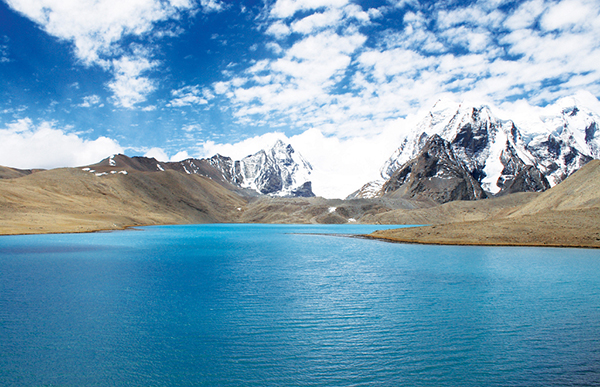
Gurudongmar lake in Sikkim
Kipepeo offers personalized or customized tours, adventure tourism, cultural trips and experiences of trekking, river rafting and caving. "Caving is walking and swimming in caves,” he expands. "You walk to the caves for about half an hour and explore (the) inside for three or four hours.” He cautions that a longer time inside would be difficult because of the high humidity, fatiguing even for the fittest. The nature lover puts clients up in three star hotels, tents, or in home stays for those who want to learn experientially on his tours. Base camps are also set up for the adventurous.
On his trips, he acquaints his clientele with local customs, habits, culture, artifacts, and living conditions. He talks with ease about the tribes in Meghalaya such as Khasi and Garo or the Naga Angani and Ao tribes. He also operates in Assam and Arunachal Pradesh. Of the traditional ‘seven sisters’ of the North-East he says Manipur, Tripura and Mizoram are inaccessible — partly on account of lack of proper transportation and partly because people there are not keen on inviting outsiders. The Bodos do not feel Assamese and consider themselves distinct from them. The Assamese are Vaishnavites whilst the Bodos are Bathou tribals who are earth-centric with some Hindu customs but do not observe Diwali and Dassera.
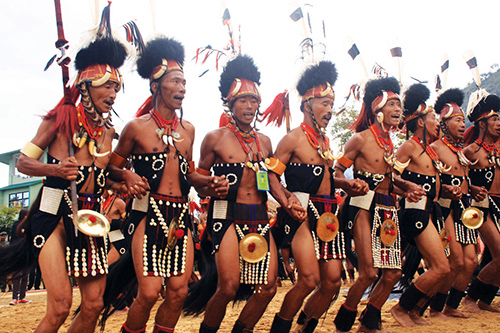
Dancers at the Hornbill festival in Nagaland
Festival fiesta
Elavia builds his tour calendar around the festivals of the region. For the Hornbill Festival 16 Naga tribes come together to worship the bird. The state government has succeeded in stopping the use of hornbill feathers and beaks as part of their ceremonial costumes, replacing them with artificial plumage and fiber-glass beaks, in its continuing efforts to change the mindset of people. The locals also sell artifacts — necklaces, earrings of beads and stones, woven shawls, wrap-arounds and jackets during the festival. The eager promoter describes the Nagas as "skillful weavers” who excel in the art.
Some of the other festivals of the region revolve round the onset of spring like the Assamese Bihu festival in mid-April which features music specific to the area, where tribals dancing and singing in their dialect invite audience participation. Similarly, in Arunachal, the Myako (me-uh-ko) and Apatani (uppe(r)-taani) tribes have a month long dance festival beginning mid-March. They also have local games like shot put with stones, pole climbing competitions and other sporting events. In Sikkim Elavia has experienced the Pam Labsol festival in end-August with cham dances, when the tribals wear masks like their Tibetan neighbors and dance both vigorously as well as with a gentle, swaying motion. This festival, dedicated to goddess Khanchen dzonga (commonly known as Kanchenjunga), is held at the renowned Rabong monastery in Pemyangtse.
Elavia builds his tour calendar around the festivals of the region. For the Hornbill Festival 16 Naga tribes come together to worship the bird. The state government has succeeded in stopping the use of hornbill feathers and beaks as part of their ceremonial costumes, replacing them with artificial plumage and fiber-glass beaks, in its continuing efforts to change the mindset of people. The locals also sell artifacts — necklaces, earrings of beads and stones, woven shawls, wrap-arounds and jackets during the festival. The eager promoter describes the Nagas as "skillful weavers” who excel in the art.
Some of the other festivals of the region revolve round the onset of spring like the Assamese Bihu festival in mid-April which features music specific to the area, where tribals dancing and singing in their dialect invite audience participation. Similarly, in Arunachal, the Myako (me-uh-ko) and Apatani (uppe(r)-taani) tribes have a month long dance festival beginning mid-March. They also have local games like shot put with stones, pole climbing competitions and other sporting events. In Sikkim Elavia has experienced the Pam Labsol festival in end-August with cham dances, when the tribals wear masks like their Tibetan neighbors and dance both vigorously as well as with a gentle, swaying motion. This festival, dedicated to goddess Khanchen dzonga (commonly known as Kanchenjunga), is held at the renowned Rabong monastery in Pemyangtse.
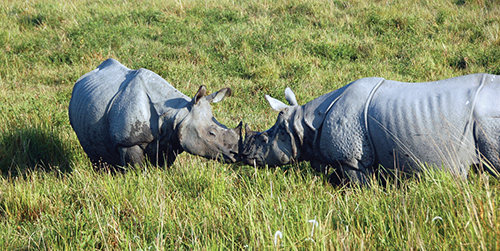
One-horned rhinoceros in Kaziranga, Assam
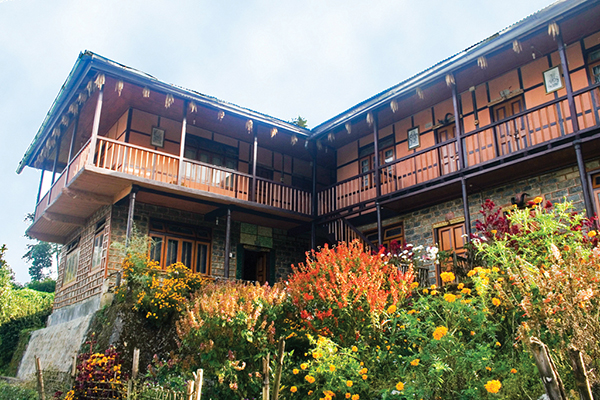
Homestay in Sikkim
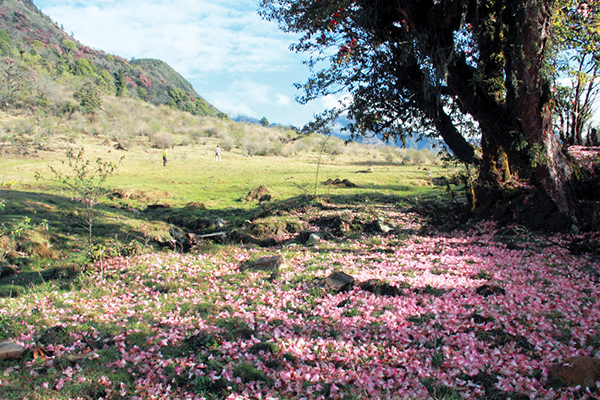
Meadow of rhododendrons in Sikkim
Elavia’s tourist patrons are mostly from metro towns like Bombay, Delhi and Bangalore. He laments that the North-East being geographically far, travel can be expensive for a family of four. He has some international clients as well, partnering only with like-minded travel operators. One can arrange activities in the North-East region only from mid-October to May as the monsoons make it virtually impossible to travel there during the rest of the year. Elavia advertises by word of mouth, via the social media and through his website www.kipepeo.in or on piran@kipepeo.in
His dream is to encourage conservation along with commercialization. "Development need not be against conservation. The two can go hand in hand,” he reiterates. "I thought of this tourism venture so I could provide (the locals with) economic benefits… as well as remove the veil of ignorance.” For two years the fervent naturalist worked as a volunteer in the Bodo area wherever there was need, as the "culture belongs to them and they get no economic or social benefits. They have to fight for their culture, language, basic needs, medical attention, roads…”
The tour planner also takes trips to Kaziranga National Park, home to the Indian one-horned rhinoceros. In the tourist hub of Darjeeling, where only hotels are on offer, Elavia promotes home stays. He also recommends stays in villages on the outskirts of the hill station — anything to be in harmony with nature.
Scouting young
As a young boy scout at the Don Bosco High School, Elavia learned to experience adventure. He travelled with his parents Khurshid and Parvez from a young age to national parks, going hiking and trekking. The sudreh-kusti wearing youth’s yen for village tours and interaction with the locals stems from that early time. He proudly states that his mother did a course in mountaineering and both parents are fit enough to join him on his expeditions even today.
As a young boy scout at the Don Bosco High School, Elavia learned to experience adventure. He travelled with his parents Khurshid and Parvez from a young age to national parks, going hiking and trekking. The sudreh-kusti wearing youth’s yen for village tours and interaction with the locals stems from that early time. He proudly states that his mother did a course in mountaineering and both parents are fit enough to join him on his expeditions even today.
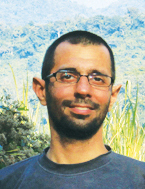
Piran Elavia, adventure tourist operator
After overcoming their initial shock when he quit his job with Reliance Retail, his parents supported him. Elavia started his own venture after taking a sabbatical to work for four months with a non-government organization, Manas Mauzigendri Tourism Society in Assam. A student of Hassaram Rijhumal College of Commerce and Economics, he subsequently attended Seneca College, Toronto, Canada to graduate in logistics and supply chain management. His leanings, however led him to his current work though he admits he made no money the first two years. But he has confidence in his product and service. "I know how to go about it.”
The adventurer is a liberal Zoroastrian, who has no objection to inter-religious marriages and believes religion is a matter of personal choice. He is not a regular agiary visitor — going only on special occasions. His wife Persis is a physiotherapist. The outdoors man takes his parental duties earnestly when in town, juggling his time round two-year-old son Rohaan’s schedule. When out of town, Khurshid and Parvez assist Persis to look after the lad as the family lives together. Piran returns to Bombay for two or three weeks even when he is based in Assam or Darjeeling for months at a time.
Elavia refers to the fierce Bodo agitation which lasted from 1999 to 2003 and explains that "you hear only negative things about these people. They are actually very warm and hospitable. No hatred, no animosity. This (his first visit) was a life-changing experience for me.” And, he hopes, for his customers as well.
◆ ◆ ◆
From the archive