
50TH ANNIVERSARY
Religion and reflection
In times of crises, let the inner voice guide your actions
All members of my Forbes family were born in Bombay. I was just six months old when my father/mother decided to shift to Madras. My father had qualified as a lawyer and practiced in Bombay. He had a flair for local languages and was fluent in reading, writing and speaking Hindi, Marathi and Marwari — in both the "Modi” and "Devnagiri” script. In early 1926 he was approached by the officers of the Bombay High Court when the Madras High Court had requested help from someone who had the skills to translate official documents from the vernacular into English, all official records and business at that time being restricted to English only.
As it was an attractive offer and my parents were raising a family of three children, my father accepted the offer and travelled to Madras to set up a home for the family. My mother and my two elder sisters five and two years old, with me, an infant, travelled and joined our father in early 1927.
As it was an attractive offer and my parents were raising a family of three children, my father accepted the offer and travelled to Madras to set up a home for the family. My mother and my two elder sisters five and two years old, with me, an infant, travelled and joined our father in early 1927.
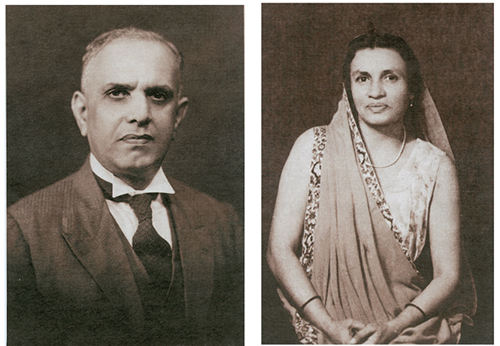
Parents Minocher and Dolat Forbes.
So my sisters and I grew up in Madras. We went to the local convent school, The Presentation Convent in Royapuram -- an area where most of the Parsis of Madras stayed since the fire temple, dharamshala and club were all conveniently located. Since it was an English medium convent school run by Catholic missionary nuns, we mainly spoke English, with a smattering of Gujarati with our parents.
This was all very well until I migrated to the Madras Christian College School, a famous reputed high school some three miles from Royapuram and at that time located in a large complex exactly opposite the Madras High Court where my father had his office. It was at this stage that my identity as a Parsi posed an enigma to all. None of my classmates understood me when I said I was a Parsi! What does that mean, came the immediate retort! They were mainly Christians, Hindus and Muslims. Never heard about a Parsi! I was also teased by the Hindu boys, as a "Parsi Mutton Khao!” and my father’s Mancherji Chirsedji Forbes’ initials M.C. — got a nickname of Darius Mutton Chop (MC).
I owe it to my parents, both father and mother and to my exemplary school with its renowned headmaster K. Kuruvilla Jacob and assistant headmaster Reverend R. S. Michael, who laid the basic values of my life and career of which I am so proud. Their impeccable honesty and integrity are classic examples of values one can imbibe. It’s sad that children in these last two decades have missed out reading or learning classics like Shakespeare, Dickens, Homer’s Iliad and thereby identifying with characters and distinguishing the good from the bad. I was lucky to have some of the most learned teachers. Amongst the Indian classics, none better than our worthy Dr Sarvapalli Radhakrishnan, the former President of India and the vice chancellor of the Benaras University during the brief period I was a student there. His books on philosophy and culture are classics on their own and worth studying in one’s adolescent age.
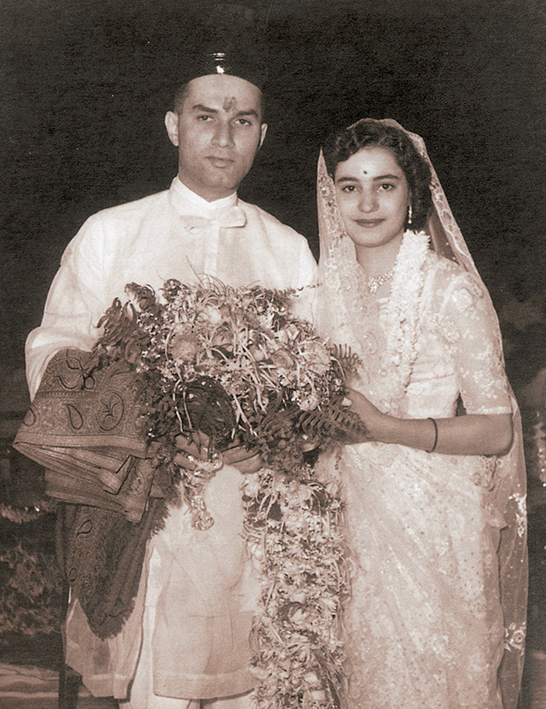
Darius and Maharookh on their wedding day
"Religion is the heroin of the masses,” said Karl Marx. When I was unable to share thoughts on my being a Parsi, in desperation I asked my father, ‘What is a Parsi?’ Religion, said my father, is a very private and personal matter. One should avoid emphasizing and discussing. It gets linked to God, and that kindles emotions for an unknown projection. My father advised that I should learn to think and feel that God is not one who exists in places of worship but is in the inner self of every human being. When faced with conflicting thoughts, if each of us make time to reflect, if we lend a moment to listen, our "inner voice” gives us the answer! So God is in everyone, you don’t need to travel nor seek Him elsewhere.
Later in life, I met a group known as "Moral Rearmament” — a movement started around the turmoil and strife of World War II. It was a tragic period of tremendous upheaval, hatred and misery when friends turned against friends and there was bitterness all around. This called for human reflection and understanding. The reflection or "listening” to God — to our inner voice within — was a miracle solution to the prevailing bitterness and hatred.
I was still an adolescent when the war was raging. We, as a family, spent almost every summer holiday in Bangalore. It had a handful of Parsis and since my mother’s aunt was married and settled in Bangalore, we had an anchor whom we visited each year. A peaceful Parsi community, content and satisfied with the local agiary and its respected mobeds, had a tragic awakening one year. A family who had recently come into some wealth left by ancestors was persuaded to build a Tower of Silence. Hell broke loose; emotions rose to the extent when erstwhile "friends” meeting in the agiary came to fisticuffs (!) and the high regard for a mobed plummeted. Bangalore Parsis were never the same again. It was the ignorance of their 2,000-year-old dogmas that caused this upheaval.
We see this repeated in other Parsi punchayets, whether in Bombay or Poona. Should our great, centuries-old faith be allowed to be infected with the "heroin of the masses” to build on theories which ruin everyone? We as a microscopic community need to build on our ancestors’ strength by promoting growth economically, commercially and with healthcare for all.
Being a minority community has in many ways benefited us. With a low profile, we have used our wealth to benefit our community members and others. We have benefited from a rich heritage and with a new generation of well educated boys and girls have a great future to look forward to. The current glitter of a media led hype will fade and India will provide a leadership second to none. It is necessary for us to encourage our youngsters educated abroad to return and contribute their learning to build and create a great India.
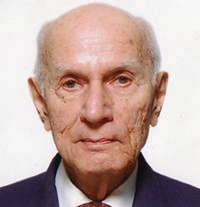 As chairman emeritus of the Forbes Marshall Group with an annual turnover of Rs 6,000 million in the field of steam engineering and process control instrumentation, Darius Forbes continues to be associated with the firm in an honorary capacity on policy matters. He is a specialist in energy conservation and in the use of process steam and fuel. A founder director of the Centre for Advancement of Philanthropy and also of the Bombay Community Trust, he is a past president of the Mahratta Chamber of Commerce and Industry and other educational institutes.
◆ ◆ ◆
From the archive