
Choice Cantonese
The Royal China, India restaurant has franchises in Bombay and Delhi which cater to high-end customers
"It is harder to please the same person a 100 times. The challenge in Bombay is that," says Neville Vazifdar, director of Royal China (RC), India that has two upmarket restaurants in Bombay, one in Delhi and an upcoming one in Poona. Specializing in Cantonese food for the last 10 years RC believes in the adage ‘the proof of the pudding is in the eating.’ Vazifdar would rather "the food speaks for itself," preferring to maintain a low profile as "I am a very quiet person."
"We know the market and have a consultant from London sending out chefs from Hong Kong and London. Cantonese cuisine is different from Chinese cuisine in it that it has stronger flavors. We have not Indianized the food — no chicken Manchurian or haka noodles. We have adapted to the Indian palate by offering more sauces." He claims Indians do not relish dry, bland food. There is an equal emphasis on vegetarian and non-vegetarian fare.
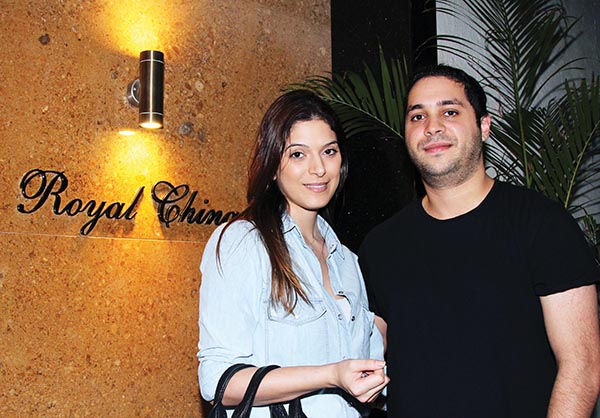
Michelle and Neville Vazifdar (Photo: Jasmine D. Driver)
Sourcing ingredients is becoming easier, observes the director who buys the freshest and the best. Formerly, RC imported a container of goods every two to three months. Young entrepreneurial Indians observed what was needed and folded in to fill the vacuum, saving them this cost and time today. "Now most things of high quality standards are available here and imports are done six to eight months apart. A container of starch (special flour), some sauces, specialty items only are shipped in." The young man specifies, "Meats also are not imported any more. Prawns come straight from the farms, vegetables from special markets. We also have the option of returning items if not to our satisfaction."
In his profession, the icing on the cake is the fact that "I am always surrounded by happy, joyful customers, new faces and diners," with a cheery reason for revelry. Not that there are no irate customers. The proprietor narrates how temper tantrums sometimes take an ugly turn, such as one customer protested by slopping oily, chilly sauce around his table. Another refused to pay the levy of a dish on the menu (after happily consuming it), claiming it was exorbitant. When pointed out that the price was mentioned on the menu, his retort was — "Who looks at the price?"
Menu, service and atmosphere broadly define ‘fine dine.’ And RC has all three to classify it so. However, the criteria of daily or weekly menu change and seasonal menu to cater to ingredients at their peak of freshness are two defining classifications which are not realized by RC for being termed fine dine. "We welcome everyone, I would like to think. I don’t categorize myself as a fine dine. I would probably slot myself as dining for family," says Neville.
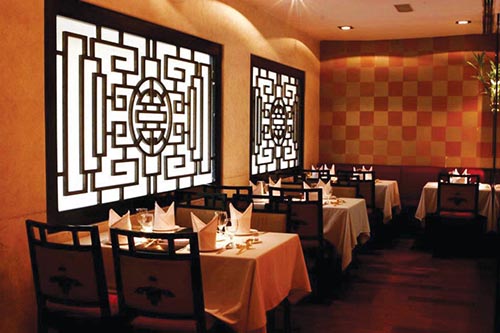
A mixed basket of goods
Started by his father Phiroze, 10 years ago, Neville mentions that through RC his dad wanted to introduce Bombay to "authentic Cantonese food…Chinese food is economically viable because you share from one dish as opposed to say, Italian food, which is mostly pre-plated." He believes their restaurant does well because of quality food and ethical practices whilst "all else are languishing away."
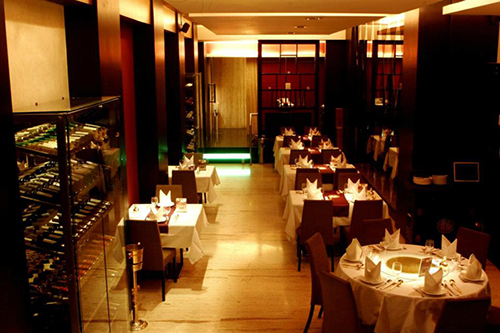
Interior of Royal China at Bandra
People today are knowledgeable and know their dim sum from their momos. "Rice and noodles are the most ordered and main courses are more popular than appetizers and hors d’oeuvres," rattles off the young entrepreneur.
RC has a take-away menu and offers free home delivery for a minimum order of Rs 1,000 with a 45-minute lag time. The menus — in the restaurant and take away are similar in price and range. "Take-away rates are the same, however,we run voucher promotions for take-away which in effect is a discount on the next order," he expands. The fish dishes are by far the priciest where red snapper, garupa and pomfret are perennials. Squid, sea bass, basa are also offered on their menu. These range from Rs 525 for squid to Rs 1,950 for most others which are stated to be a different kettle of fish in culinary excellence. Crab and lobster dishes are also at the pricier end. Dim sum is another popular item on the menu. It is served steamed or fried; there is vegetarian and cheung fun style as well. All varieties of meats are tabled — poultry, lamb, tenderloin, pork and of course seafood and fish. Desserts have five or six options — with the popular tiramisu and pastry also on offer but not on the take-away menu. Vazifdar mentions that Peking Duck is popular with groups — where the pricing of one whole bird is Rs 3,200. Soups range from Rs 285 to Rs 550. The average cost of non-fish dishes is about Rs 550.
Neville manages all the operations with wife Michelle (née Michael) "doing all the fun stuff" he says referring to her managing the correspondence and back office details. Ten years ago "there was less corruption," declares Neville who believes it is one of the prices to pay for growth. The restaurateur envisages stymied growth in the future, especially in Bombay due to out-priced land and real estate prices. Payments for renewal of the liquor license too are increasing, making it more and more difficult and expensive.
The soft-spoken Neville says the only memory he would like to forget is of two or three employees who he had to part with because they got into drugs or alcohol and were unable to serve any more.
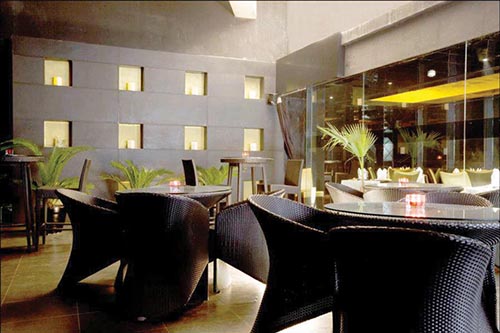
A view of the Delhi Royal China
"Hard work, no tomfoolery, try and keep everything as per the book, build a reputation" are some of the traditional Zoroastrian principles Neville lives by. Twice he mentioned that "we (Parsis) are seen as cleaner business people… we need to do justice to that image. That is what has given us the reputation and we must try and keep it. When authorities come for inspection, they know not to look too hard because I am a Zoroastrian. I must live up to this reputation. We must aim to project ourselves to justify what people think of us."
He recommends this business to young Zoroastrians "so long as it is not done for fashion, for then it will not last. Unless confident and you look at it as a business and not as a hobby, go ahead… Develop a brand." He convincingly says: "Be proud of your ancestry. Aim to do the best. Build a reputation. Be clean and a good person to do business with."
Brought up in the UK, he finished his schooling at Millfield Senior School, Somerset and graduated from Regent Business School, London. Drawn to the hospitality business from childhood, Neville made a proactive career choice, and learnt on the job. There is no other profession he would like to pursue, he says categorically. The family runs two country home hotels in the UK. Mother Sherna (née Chothia), also from Bombay, is not involved in the hotels. The senior Vazifdars live mostly in London.
Neville wants to navjote his offspring. However, he is convinced that the progeny of Zoroastrian women married outside the community, cannot. "In fact they (the women), should not go inside the agiary," he states. Sister Michelle is spared this, as she is married to Yohan Zavaray Poonawalla in Poona.
Not one to rest on his laurels, all the awards RC has received are displayed at the entrance — the Times of India Times Food Award in the category of Best Chinese cuisine from 2010 to 2013; Mouthshut Awards for Best Dim Sum and Best Chinese Cuisine for 2012 and the Citibank Zomato Restaurant Guide Award for Asian and Oriental cuisine, 2012. The spotless damask table cloths and the eight-page menu also make you realize why RC gets these.