
Joining forces
Representatives of various fire temples in Bombay have banded together to oppose new municipal levies
In his Chairman’s Message in The BPP Review (March 2013) outlining the reasons for convening the meeting, Dinshaw Mehta noted, "As you are aware the new regime of calculating property taxes based on capital value is going to be the death knell of cheap subsidized housing in South Bombay with the taxes projected to increase 20 to 40 times the present levy. We have filed our objections and appeals against this draconian increase but time alone will show the future trend.
"However what was most disturbing was the news that our agiaries and atash behrams were being treated as commercial premises and capital value and consequent property taxes were computed on that basis. We were aghast to be informed that our most prestigious and revered Wadiaji Atash Behram at Princess Street would ultimately have to pay property taxes to the tune of Rs 60 lakhs per year as against the present taxes of a few thousand.”
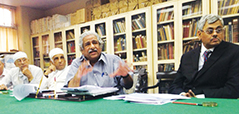
"Everyone is agitated,” opined Mehta addressing the gathering. Calculating property tax on the basis of "capital value is horrendous,” more so as the tax is levied with retrospective effect for the last three years. The valuation is as per the 2010 calculations. For the time being the tax is double, but after five years (of which three are over) the amount due increases exponentially. In the case of commercial or residential properties the landlords can collect the increased outgoings from the occupants. "In an agiary who do you collect the amount from (assuming the premises have not been let)? How are we going to sustain the agiaries?” queried the chairman.
Mehta noted that fire temples were exempt from municipal taxes but if part of the premises were "let out, the exemption is not valid.” He observed that "nearly all agiaries” rented or leased shops, residences or other premises to supplement their income. "Under Section 143 (1) of the (Mumbai Municipal Corporation) Act exemption from General Tax is admissible to the buildings and land or portions thereof exclusively occupied for public worship or for charitable purposes,” notes the BMC website. The exemption can be availed by trusts or societies "registered with the Charity Commissioner under the Public Trusts Act, 1950 and/or a society registered under the Co-operative Societies Act, 1960. The property however must be for the "exclusive use (of) public worship or charitable purposes and no rent (must be) derived from the property whether such rent is or is not applied exclusively to religious or charitable purposes,” the website notes.
When the municipal authorities were questioned on the tax, they replied, "‘Amhaalaa kaahi maahiti naahi (we don’t know anything)…’ We should immediately file an appeal,” Mehta advocated. For each individual trust to file an appeal in the courts would be "very expensive. We should form an association and register it.” Registration assists when dealing with authorities, he observed. Mehta advocated filing the appeal even before the registration formalities were completed so as not to waste time. "As an unregistered association you can file an appeal. It is important the process starts.” In the meanwhile he urged all the representatives to file protests against the new levies even if they have made payment. Objections are to be filed within 21 days of "receiving the notice” and before March 31, 2013. Receipt of notice could be interpreted as when the notice was brought to the attention of the concerned trustees rather than the day it was delivered. A draft of a letter drawn up by Mehta and Farrokh Kavarana, a trustee of the H. B. Wadia Atash Behram at Princess Street stating, "We dispute and do not agree to the said capital value arrived (at) by you,” was circulated to the representatives. The last date for payment of taxes has been extended to June 30, 2013, but Mehta noted that the BPP had no intention of paying the enhanced levy. The BPP manages two adarians and one dadgah.
The BPP had earlier "filed appeals for every colony, other property. We did not realize” the tax burden on agiaries. It was only when Kavarana told him the Atash Behram would be taxed Rs 60 lakhs after 2015 as versus Rs 38,000 at present (it was Rs 12,000 under the old scheme), that Mehta became aware of the magnitude of the problem.
The new tax levy is applicable only for Bombay. Mehta says he was surprised that all the various political parties passed such a legislation. He advised consulting trustees of churches, mosques, temples to see if they also contemplated challenging the levy.
"Collective action”
Godrej Fanibanda who represented the Langrana (Godiwalla) Agiary behind the BPP offices informed the gathering that the Catholic Sabha intended to challenge the new levy. Fanibanda had spoken to them from the BPP boardroom during the meeting.
One of the representatives stated his trust had not received the notice for the new levy so how could they file an objection before March 31? Inquiries and requests for copies of the notice from the BMC elicited a response that no copies would be handed over but would be mailed.
"Write that you have not received the notice,” advised Bomi Hansotia, representing the Karani Fire Temple at Cusrow Baug.
Aramaiti Vachha who represented the Sorabji Thoothi Agiary at Walkeshwar stated the BMC notice claimed that the fire temple had a first floor and priest quarters. "There is no first floor and no priest quarters,” she told the gathering.
Hansotia advised the representatives to state mobed "rest rooms not residence” in their property returns.
Lawyer Homiar Vakil of Mulla and Mulla who represented the Cawasji Banaji and Anjuman Atash Behrams at Charni Road and Dhobi Talao, the Aslaji Agiary at Grant Road and the B. C. Batlivala Agiary at Tardeo said the Bhikha Behram well between Churchgate and Flora Fountain had been valued at one crore rupees (US $ 181,818).
Structural engineer Rustom Balsara who represented the N. C. Narielvala Agiary at Dadar questioned how the BMC could put a valuation on the fire temple property as money is realized "only when you sell.” An agiary "is forever.” It could not be sold as commercial and residential premises could be. He also noted where shops and dispensaries were on the trust property, only that portion of the property should be subject to the capital value, not the entire estate.
Hansotia recommended the proposed association of fire temples should have the "broadest” possible objectives so that if any crisis arose in future or any representation had to be made to the government, the body could do so. Mehta observed that people often questioned the motives of the BPP and alleged they wanted to gain control of other trusts’ property. "The BPP is not always viewed positively. We don’t want to step on anyone’s toes. We do not want to interfere in the working of any agiary (but) collective action is far better.”
Hansotia: It "carries more weight.”
Mehta noted the municipal corporators had "very cleverly” exempted slums and premises of less than 500 sq ft from the purview of the capital tax system. These removed two large blocs that could have opposed the new levy.
A resolution was unanimously passed to form an association and to oppose the levy. A working committee comprising Behram Ardeshir of Dadyseth Charity Trust, Balsara, Hansotia, Aspi Driver and Percy Dalal of Seth S. S. Kappawala Agiary, Fanibanda and Vakil was formed.
As the meeting disbanded BPP trustee Khojeste Mistree drew Mehta’s attention to the new mobed scheme for which a policy paper was released in end March 2013 (see "BPP Mobed Amelioration Scheme,” pg 38). Mehta announced that effective April 1 this year, the mobed assistance scheme would be launched whereby each full-time mobed all over India working in a fire temple would receive a monthly subsidy of Rs 10,000. Athornan children attending madressas would also receive an allowance. The BPP has earmarked Rs 2.5 crores for the scheme and has received a further donation of one crore rupees from a trust managed by former BPP trustee and noted solicitor Ervad Burjor Antia. The total amount envisioned is four crore (US $ 727,727).
Mehta approximated there are between 300 to 400 full-time mobeds all over the country. Fifteen percent of housing would be reserved for full-time priests. When asked what would happen in the event the clergymen cease to practice mobedi, Mehta pointed out that of the 20 flats at the Mobed Building at Doongerwadi given to mobeds on condition they would pray at Doongerwadi, only two occupants do so. "What do we do?” The only saving factor was that the BPP was housing Zoroastrians, he added.
Others attending the meeting were Behram Sethna from Ashburner and Bai Soonabai Hirji Agiary, Farokh Siganporia and Jimmy Siganporia from Mazgaon Anjuman Agiary, Sam Gotla and Dilbur Patel from F. N. Patel Mazgaon Agiary, Kersi Ichhaporia from the H. D. Saher Agiary Trust, Homi Ranji from Ranji Agiary, Barjor Tarachand from Anjuman Atash Behram, Yasmine Sanjana from Bai P. D. M. Vatcha Agiary, Adi Engineer from N. C. Narielvala Agiary, H. H. Santoke from Ustad Saheb Behramshah Shroff Dar-e-Meher, Adi Banajee and B. E. Gandhi from Banaji Limji Agiary, G. B. Bhumgara from Soonabai Hirji Agiary, Dara Mehta from M. J. Wadia Agiary, Kaizad Hazari from Batliwala
Anjuman Agiary, Ratan Lalkaka from Saher Agiary, Mehli Colah from J. D. Amaria Sodawaterwalla Agiary and Godrej Dotivala from Bai Avabai Wadia Agiary.
The Bombay Parsi Punchayet (BPP) issued a white paper on a comprehensive mobed amelioration scheme (MAS) on March 26, 2013. The objectives of the scheme are "to make mobedi a more attractive profession, to encourage boys from athornan families to study in either of the two madressas in Bombay, to encourage qualified priests to work as fulltime mobeds, to help the mobeds improve their educational and social standing in society.” "Already, it is becoming increasingly difficult for high rituals like the Pav Mahal Kriyas to be performed as there are very few priests willing to undergo the austere and hard life required to perform these complex ritual, for which the strict laws of ritual purity must be observed as per the tenets of the faith.”
The scheme’s first phase which is to start from April 1, 2013 will assist madressa students, pav mahal kriya karnar mobeds, retired mobeds and full time mobeds.
"From April 1, 2013 onwards each student will receive in their bank account Rs 2,500 per month and his parents will receive Rs 7,500 per month, so long as the student continues to study in either of the two aforesaid institutions.
"From April 1, 2013 onwards, all such students having undergone the full navar ceremony that is who qualify as a samporna navar, will be given a onetime gift of Rs 50,000 and on completing the martab ceremony, will be given another appreciation reward of Rs 1,00,000 upon qualifying as a fully trained samporna martab.
"If a young madressa educated boy, wishes to study Avesta, Pahlavi and/or Zoroastrianism at University level, then greater financial incentives will be provided to him...
"The boy upon becoming a full time mobed saheb after ten years, it is envisaged will receive an accumulated sum of monies with accumulated interest amounting to a tentative sum of over Rs 15 lakhs, at the end of ten years.”
In phase two the BPP will include full time mobeds in agiaries all over India, around 200 mobeds working full time in agiaries but previously were engaged in secular activities, mobeds who enroll for further training, and chasniwallas.
"If all the above categories of mobed sahebs and chasniwallas are taken on board for financial assistance, then the scheme will require about Rs 6 crores of funds every year, a tall target indeed, as the same will have to be serviced with a huge corpus to generate that kind of income, each year.”
"This project will be monitored using modern management techniques in order to ensure that the monies are not given to undeserving cases, nor to those priests who may become lazy and choose to slack off from performing the daily rituals.”
"The BPP Board also plans to give accommodation on a priority basis to deserving young priests in need of housing, provided that they have worked as full time priests for ten years, in Bombay.”
"In conclusion, for the first time in this generation an ambitious scheme such as ours has been put together by the trustees of the BPP for the long-term sustained amelioration of the Zoroastrian clergy. We seek your support.”
Anjuman Agiary, Ratan Lalkaka from Saher Agiary, Mehli Colah from J. D. Amaria Sodawaterwalla Agiary and Godrej Dotivala from Bai Avabai Wadia Agiary.
BPP Mobed Amelioration Scheme
The Bombay Parsi Punchayet (BPP) issued a white paper on a comprehensive Mobed Amelioration Scheme (MAS) on March 26, 2013. The objectives of the Scheme are "to make mobedi a more attractive profession, to encourage boys from athornan families to study in either of the two madressas in Bombay, to encourage qualified priests to work as fulltime mobeds, to help the mobeds improve their educational and social standing in society.”
The Scheme’s first phase which was to start from April 1, 2013 will assist madressa students, pav mahal kriya karnar mobeds, retired mobeds and full time mobeds. "Already, it is becoming increasingly difficult for high rituals like the pav mahal kriyas to be performed as there are very few priests willing to undergo the austere and hard life required to perform these complex rituals, for which the strict laws of ritual purity must be observed as per the tenets of the faith.
"From April 1, 2013 onwards each student will receive in their bank account Rs 2,500 per month and his parents will receive Rs 7,500 per month, so long as the student continues to study in either of the two aforesaid institutions.
"From April 1, 2013 onwards, all such students having undergone the full navar ceremony that is who qualify as a samporna navar, will be given a onetime gift of Rs 50,000 and on completing the martab ceremony, will be given another appreciation reward of Rs 1,00,000 upon qualifying as a fully trained samporna martab.
"If a young madressa educated boy, wishes to study Avesta, Pahlavi and/or Zoroastrianism at University level, then greater financial incentives will be provided to him...
"The boy upon becoming a full-time mobed saheb after 10 years, it is envisaged will receive an accumulated sum of monies with accumulated interest amounting to a tentative sum of over Rs 15 lakhs...”
In phase two the BPP will include fulltime mobeds in agiaries all over India, around 200 mobeds working full time in agiaries but previously were engaged in secular activities, mobeds who enroll for further training, and chasniwallas.
"If all the above categories of mobed sahebs and chasniwallas are taken on board for financial assistance, then the scheme will require about six crore rupees of funds every year, a tall target indeed, as the same will have to be serviced with a huge corpus to generate that kind of income...
"This project will be monitored using modern management techniques in order to ensure that the monies are not given to undeserving cases, nor to those priests who may become lazy and choose to slack off from performing the daily rituals.
"The BPP board also plans to give accommodation on a priority basis to deserving young priests in need of housing, provided that they have worked as full-time priests for 10 years, in Bombay.
"In conclusion, for the first time in this generation an ambitious scheme such as ours has been put together by the trustees of the BPP for the long-term sustained amelioration of the Zoroastrian clergy. We seek your support.”