
Cover Story
“Independent and impartial advice”
Advocate general of Maharashtra Darius Khambata talks of the need for reform in the community and the judiciary
In a curious way maybe Zoroastrianism has become hostage to fortune and property,” says Darius Khambata who was appointed advocate general (AG) for Maharashtra this March. He spoke to Parsiana on September 19 at his Gamadia Road residence. "The concept of Parsi Zoroastrian has no place in Zoroastrianism,” said the congenial and soft-spoken attorney. The notion of Parsi came into being much later and appeared in trust deeds drawn up 150 to 250 years ago. "It has nothing to do with the religion.”
"Zoroastrianism is a religion conceived by Ahura Mazda… It is selfish and arrogant to think God conceived such a great religion only for a single people. This demeans Zoroastrianism. Well-meaning Zoroastrians should open their mouths and speak. The concept of Parsi Zoroastrian has no place in the religion.” Zoroastrianism existed much "before the concept of Parsi came into being.”
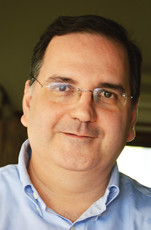
Darius Khambata: Need for rational debate
In the historic case of Petit vs Jeejee-bhoy, the two-member bench of the Bombay High Court, Justices Dinshaw Davar and Frank Beaman had ruled that a Parsi is defined as one born of both Parsi parents, or of a Parsi father, or Zoroastrians from Iran who migrated to India in the past 200 to 300 years. The ruling distinguished between Parsi and Zoroastrian and observed that "Zoroastrianism not only permitted but enjoined conversion.” However after coming to India there had been few, if any, recorded cases of conversion. There was "a practice not to convert. It was a practice built out of historic circumstances. Some argue that the practice somehow altered the religion. It would be a travesty if one termed it a tenet of the religion,” Khambata observes.
The judgment focused on the workings of the trusts created by community members. While some earlier trust deeds stated the beneficiaries to be Parsi Zoroastrian others used the nomenclature Zoroastrian. It is "an accepted principle of interpreting” a trust deed by comprehending what the settlor would have intended when forming the trust, clarifies Khambata. He or she would "never have contemplated a case of a non-Parsi Zoroastrian” availing of an agiary or baug. Thus the restriction on entry or use "is because of the will of the settlor,” and not on account of the religion.
"If someone created a trust for the benefit of Zoroastrians today, the same interpretation would not follow,” he remarks. The judgment of Davar and Beaman "is not applicable” after the coming into existence of the Indian Constitution in 1950. Today people are conscious of the fact that there are thousands of Zoroastrians existing outside of India, says Khambata. He attributes the survival of Zoroastrianism after the Arab invasion to the last Zoroastrian monarch Yazdegird IIIsupposedly opting for death rather than conversion. "Hypothetically if a Zoroastrian descendent of his comes to Mumbai he would have to be denied entry to a fire temple since he would not be a Parsi Zoroastrian” as defined by Davar and Beaman. This shows how absurd the position is. Davar-Beaman held Parsis "to be a caste, nothing to do with true Zoroastrianism. To perpetuate caste and exclude all outside the caste is anti-Zoroastrian and certainly unconstitutional after 1950. Parsis should not shelter behind minority rights. We are driving away good-believing Zoroastrians. Why? To what end? I do, however believe that both sides of the debate are well-meaning and sincere. It is only a question of educating people.”
Asked what the chances of success were if a Parsi woman married to a non-Parsi were to challenge the Davar-Beaman judgment today, Khambata opined, "I think after the (introduction) of the Constitution it would be very difficult to argue that race and caste comes from the father and not the mother… There is (also) no good moral reason for saying so… I don’t understand what underlies (these beliefs). It can’t be anything to do with our religion.” When high priests have been asked to cite scriptural sources to substantiate their claims of male superiority, they have cited "a few stray paragraphs from the Vendidad” which apply equally to men and women, Khambata states. Nothing is cited from the Gathas in which Ahura Mazda revealed the tenets of the religion to Zoroaster, he adds.
"If several hundred years later (after Zoroaster) wise men came together and wrote down the practices to be followed — the Vendidads — there is no reason why wise men today cannot reappraise the practices (especially) those that are oppressive… no religion can perpetuate a pernicious practice. Nobody is calling for a move towards mass conversion… Let people who want to share in the light of Ahura Mazda share it,” Khambata elaborates.
"The (present) trustees should ask themselves if the settlor would have wanted his trustees to give membership to all Zoroastrians in today’s world of globalization and enlightenment… If in doubt, the trustees can always move a cy pres application in the courts allowing benefits to all Zoroastrians, not only Parsi Zoroastrians. I have not heard of any other (non-Parsi) trust administering a religious place barring entry to persons belonging to that religion.” The Saklat vs Bella Privy Council judgment also empowers the trustees of a fire temple to admit a non-Parsi into its precincts.
The subject should be debated "rationally and calmly to encourage serious thinking on how to include rather than exclude (co-religionists). Zoroastrianism is not a monopoly” of the Parsis, states Khambata. He is concerned at the "tenor of the debate” in the community which is "becoming very personal and vicious. We are an enlightened enough community to have a debate where we agree to disagree.” He bemoaned debates "at the level of deliberate ignorance…in the land of the blind the one-eyed man is king.” Placing the blame for ignorance of the religion on the oft quoted excuse that the "prayers are in an alien language does not behoove any of us.” He noted a number of prayer books with English translation were available "if one made an effort.” He cited Amazon as one source to locate books (flipkart.com is another — editors). Dastur Maneck Dhalla’s books "are easy to read…there is enough easy literature available” both by Indian and foreign scholars. "If people debate it cannot be at a level of ignorance. Ninety percent of the debate is ill informed… All sorts of dogmas alien to our religion” are brought in. "If you don’t read a book like (Dhalla’s) and you go to the atash behram then you are interested in the ritual, not the religion.”
Khambata "blames worthy members of our community who could dispel” erroneous notions "but chose not to do so.” He believes that "if Parsis want to save Zoroastrianism let them put their hands in their pockets and build a new agiary” where all Zoroastrians can enter. When told of the phenomenal costs this would entail allowing for real estate prices in Bombay, Khambata retorts, "It’s a matter of money and property. That is why I said the religion is held hostage to property.”
In a private trust restrictions on entry can be placed; for example admission may be granted only to red-haired followers of a religion. For a public trust, "different conditions apply. In a public trust beneficiaries are members of the public or a section of the public… The duty of the trustees is to ensure all sections of the beneficiaries can enjoy the benefits. Under our Constitution discrimination is not tolerated… The Davar-Beaman judgment was delivered long before our Constitution.”
When asked why no Parsi woman married to a non-Parsi has challenged the judgment even after a 100 years, Khambata opined, "It’s very difficult for an individual to fight a system. That is what the establishment knows.” There is also the matter of a public controversy. In the end, "people are reconciled” to the status quo. Perpetuating a pernicious system drives well-meaning people away from the faith, he observes.
He visualizes the focus of Zoroastrianism "in the next 20 to 30 years” shifting from India to "other places. Our community will be left in a very anachronistic position. History,” he predicts, will record that "the keepers of the flame ultimately destroyed it.”
"A useful purpose”
While refraining from commenting on the ongoing tussle between the Bombay Parsi Punchayet (BPP) and Jamsheed Kanga and Homi Khusrokhan in the "renegade” priests’ matter, Khambata believes mediation "serves a useful purpose…The mediator does not decide anything. He or she only gives parties a forum to settle their disputes in a scientific way.” The process "draws people together” and also permits the mediator to listen to each party separately. This prevents embarrassment to either side and lessens the chance of a battle. "Communication is good for settlement. Areas of commonality can bring parties together,” the AG notes.
He believes mediation is especially helpful in "matrimonial and family disputes.” In community disputes, "the issues go beyond the parties to the dispute. They should not see it as a personal matter,” he advises. (In the priests’ case, for example, the issue involves the rights of trustees and the judgment affects the entire community — editors)
Section 89 of the Code of Civil Procedure allows a judge to refer parties to either mediation or arbitration but with their consent. Arbitration is akin to a full trial but without all the prolonged court formalities. The arbitrator need not be a lawyer or a former judge, merely someone the parties agree to. The arbitrator is "unfettered by procedural rules but fettered as it were by fairness,” explains Khambata.
"Unfortunately there is no time limit,” he admits when asked if the mediation or arbitration process is time bound. (In the "renegade” priests’ matter the Supreme Court ordered mediation over a year ago. Talks are still on — editors)
"The legal system does not deliver justice fast enough. All problems stem from that.” If disputes were decided by the courts in three to four years, the incentive to settle would be greater. While settlements result in great cost and time saving, Khambata notes, "Very few matters get settled.” That is why the courts started mediation. But there are limits to mediation. Today a defendant is confident his or her case will continue for 10 to 15 years. Plus the courts don’t grant actual costs. If the plaintiff were reimbursed costs, people may refrain from engaging in an activity that may result in a court case, the lawyer remarks. "The system is too soft on litigants.”
Khambata notes clients sometimes get upset if they see their lawyer being friendly with the opposing party’s advocate. "Lawyers are not meant to fight each other. They have to fight for their clients. If a lawyer wants to be dishonest he will not do it in front of you.” He feels a friendly relationship between lawyers of opposing parties provides "a safeguard” in that neither will try to do the other party in. Also, when promises are given, they are more likely to be kept as the lawyers will have to deal with each other again and again. "In a settlement it (such fellowship) is a huge advantage,” notes Khambata.
"Leader of the bar”
The AG’s office was created in 1802. "He was the chief law officer for the government.” Initially he served the Government of India in Bombay, then the Bombay Presidency, after that the State of Bombay and finally the Government of Maharashtra. "Post Constitution each state has to have an advocate general.” The Union government is served by the attorney general. The legal officials advise the government "and appear in court to represent that government,” observes Khambata. "He has to give independent and impartial advice to the government” which sometimes may not be palatable to them. He has appeared for the state government in the gutka (pan masala, tobacco products in food, etc) matter as well as the levying of VAT (value added tax) in the real estate sector and earlier for the Central Government in the Adarsh (housing) and Lavasa (township) matters.
The AG has a state cabinet rank. "He is the leader of the bar of the court to which he is attached.” He or she is an "independent professional, an officer of the court, not a government servant.” The AG can continue to accept private briefs, provided he has the time. But "no conflicting matters and no matters against the state government” may be taken, clarifies Khambata. Impressed with the "maturity and competence of the bureaucracy in Maharashtra, especially the chief secretary and assistant secretary, Khambata says he has received "a lot of support from the chief minister.
"Governments have to take tough decisions,” he observes. "Clearly they have to take into consideration intelligent public opinion. To that extent government has changed… but if they lean towards populism, that’s bad.”
Khambata believes it is not enough to be a good person in a position of power. "It’s important to try and change the system.” He speaks about improving the terms of service of the lawyers employed by government, the distribution of briefs, advice in changing certain laws, ensuring fairness for the citizens. He talks about a lack of judicial infrastructure, judges and lawyers. The Maharashtra Government is "giving huge funds” to improve the infrastructure. "I hope change comes from within before the demands become too vociferous.” But lawyers have "a vested interest in prolonging litigation…we need a change in the mindset of lawyers, litigants and judges. Someone has to take the plunge…we need some kind of reform like the 1991 economic reforms” implemented by the Narasimha Rao government at the center. "A leap forward,” he notes.
There is no fixed tenure for an AG. Whenever there is a change of government, the incumbent has to tender his/her resignation "to give the government a chance to appoint a new AG.” The appointment is "a matter of choice” of the government of the day but should "not be a political appointment,” says Khambata. Before him distinguished members of the bar such as Hormasji Seervai and Tehmtan Andhyarujina have served as AGs, with Seervai being the second longest serving, a total of 17 years. Seervai resigned in 1974 alleging interference in his duties by the then law minister A. R. Antulay.
Khambata started his legal career in 1985 in the chamber of the noted lawyer Iqbal Chagla (who incidentally the BPP did not invite at the public meeting on April 27, 2012 at Cusrow Baug to honor Khambata as Chagla had appeared pro bono against them for Kanga and Khusrokhan in the priests’ matter) to whom "I entirely owe my success in the profession and every bit of fair practice I have ever engaged in! He was the perfect senior to have.” Two legal luminaries whom he also greatly admires are Seervai and Fali Nariman.
Khambata appeared along with Seervai in the Public Premises Eviction Act case in the Bombay High Court before Justices Sam Bharucha and B. N. Srikrishna. At the request of Nariman, Khambata successfully represented Jamshed Wadia in a matter against the Bombay Port Trust.
From Nariman, Khambata says he derived "inspiration and strength” and "learnt how a professional should conduct himself.” He considers his "role models” to be his parents. His father Jangoo started his legal career in the chambers of Khurshedji Bhabha before joining Glaxo (India) and becoming its first Indian managing director and chairman. Darius’ grandfather, S. S. Khambata was a senior partner of the reputed law firm of Mulla and Mulla and Craigie Blunt and Caroe. His maternal grandfather, P. N. Moos was an Indian Civil Service judge and later legal remembrancer to the Government of Bombay. His mother Eva was an accomplished public debater. "Neither parent forced me to go into law,” states the AG, "they gave me encouragement and all the support in the world.”
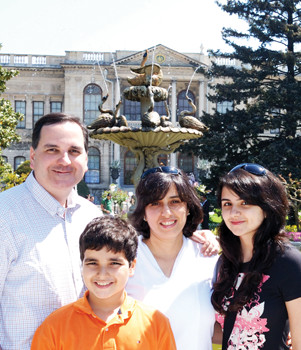
From left: Darius, Jehangir, Kerman and Leah Khambata
He talks of "a happy family background with two wonderful sisters (Meher Balsara and Navaz Dastur) with an onus on openness and fairness.” He describes his wife, Kerman, as his "alter ego…we think jointly.” Her father Khushroo Wadia played the piano while Darius’ father played the violin in the Bombay Symphony Orchestra. Their daughter Leah, 19, is currently in her third year of a four-year undergraduate liberal arts degree at Wesleyan University, Connecticut, USA. She is reading for a double major in film studies and psychology. "She is an amazingly talented and charming young girl who composes and performs her own music,” notes the proud father. Son Jehangir, 12, is an avid footballer and table tennis player who plays for his school Cathedral and John Connon. "He is musical and has a questioning mind and an engaging personality,” Darius notes.
Noting the entire family’s affinity to music, Darius admits his "great passion is western classical music.” After a day at the bar, Beethoven and Brahms are balm for the mind.
◆ ◆ ◆
From the archive