
Zoroastrians Abroad
Milestone mobedyar
"All things are possible for those who believe,” declares Mahshad Khosraviani, the youngest female mobedyar and the first Zarathushti lady to be ordained in North America. On the evening of July 28, 2012 at the OZCF (Ontario Zoroastrian Community Foundation) Center, Khosraviani "took a page out of the Zarathushti historical texts of Aerpatistan and Nirangistan of centuries ago, and through her determination and sincere effort made women in Zarathushti priestly activity a reality,” notes a report from Ervad Kerman Katrak who along with Ervad (Dr) Jehan Bagli, the immediate past president of the North American Mobeds Council (NAMC), organized her ordainment ceremony.
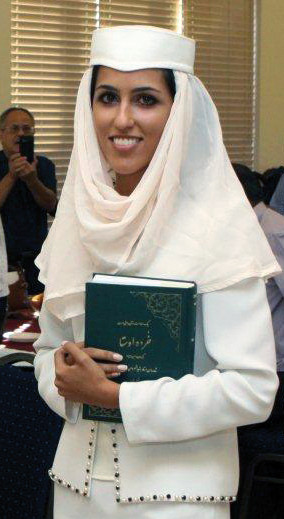
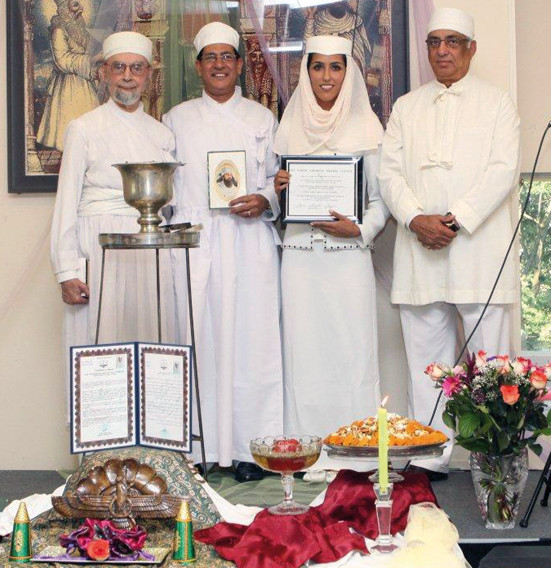
The evening started with Khosraviani reciting in front of the congregation the Avestan prayer of Atash Nyaish and concluding with the Tandorosti blessing. This was followed by a short talk by Katrak in Farsi and in English. Thereafter NAMC president Ervad Kobad Zarolia presented her a certificate recognizing her as a mobedyar and referred to the "milestone event…in the western world.” She was also commended by the members and board of directors of the OZCF.
In fact Khosraviani is the "only mobedyar in the Zarathushti world who is recognized both in Iran as well as by NAMC,” states Katrak commending her dedication for undergoing rigorous training in Iran before her ordainment in Toronto. In Iran, the mobeds there examined her in the art of Avestan recitation, demonstration of jashan ritual and other Zarathushti rites and rituals after which she was recognized as a mobedyar by the Iranian priesthood.
Daughter of Sohrab and Khorshid Khosraviani, in response to Parsiana’s queries, Mahshad acknowledged, "I don’t think I would have been the person I am today if it wasn’t for my parents, their love and support throughout my life... Family had a big part in my upbringing and on my view on religion. Growing up we always attended religious ceremonies, jashans, participated in Avesta classes and Zoroastrian events, spoke nothing but Dari at home. The first thing my dad would do every morning after brushing his teeth and getting dressed is his prayers. My mom would always encourage my brother and me to learn and study more about our past and the history of our religion.” She further continued, "I guess it’s fair to say also that attending Rostam Guiv’s all Zoroastrian girls elementary school in Tehran had an impact on my decision... I’ve always been so amazed and mesmerized by the history of my country, my people and my religion and those who have contributed their life so our generation could have a better understanding and freedom of choice!” Khosraviani’s family migrated to Canada nearly a decade ago but continue to visit their homeland every two years.
Currently studying human resources and business at the Toronto University, the motivated student has been a teacher at Avesta classes for years, helping children with their navjote prayers, writing articles for the ZSO (Zoroastrian Society of Ontario) Newsletter, and serving as guest speaker on radio programs. "Aside from wanting the same rights and freedom as men in my religion and opening a path for others in future, I am doing this for myself,” candidly declares Khosraviani on Facebook. She further adds, "I don’t care if I won’t be allowed to practice later or I’m not accepted in the Parsi community.”
Having made the choice "to better serve Ahura Mazda” the mobedyar conveyed to Parsiana, "I am doing this mostly because I love my religion, I love teaching and touching people’s heart in a way that will hopefully motivate them at least to live a life of righteousness… I do not see it as a sacrifice...It’s a lifestyle that one has to choose for him/herself... It’s a commitment; it’s a righteous duty which is in favor of Mazda. One has to wear the sudreh-kusti and practice Ashoi daily...
Mobedyar Mahshad Khosraviani (top ) with (from left) Ervads Jehan Bagli, Kerman Katrak and Kobad Zarolia
Photos: Nariman Photos
In fact Khosraviani is the "only mobedyar in the Zarathushti world who is recognized both in Iran as well as by NAMC,” states Katrak commending her dedication for undergoing rigorous training in Iran before her ordainment in Toronto. In Iran, the mobeds there examined her in the art of Avestan recitation, demonstration of jashan ritual and other Zarathushti rites and rituals after which she was recognized as a mobedyar by the Iranian priesthood.
Daughter of Sohrab and Khorshid Khosraviani, in response to Parsiana’s queries, Mahshad acknowledged, "I don’t think I would have been the person I am today if it wasn’t for my parents, their love and support throughout my life... Family had a big part in my upbringing and on my view on religion. Growing up we always attended religious ceremonies, jashans, participated in Avesta classes and Zoroastrian events, spoke nothing but Dari at home. The first thing my dad would do every morning after brushing his teeth and getting dressed is his prayers. My mom would always encourage my brother and me to learn and study more about our past and the history of our religion.” She further continued, "I guess it’s fair to say also that attending Rostam Guiv’s all Zoroastrian girls elementary school in Tehran had an impact on my decision... I’ve always been so amazed and mesmerized by the history of my country, my people and my religion and those who have contributed their life so our generation could have a better understanding and freedom of choice!” Khosraviani’s family migrated to Canada nearly a decade ago but continue to visit their homeland every two years.
Currently studying human resources and business at the Toronto University, the motivated student has been a teacher at Avesta classes for years, helping children with their navjote prayers, writing articles for the ZSO (Zoroastrian Society of Ontario) Newsletter, and serving as guest speaker on radio programs. "Aside from wanting the same rights and freedom as men in my religion and opening a path for others in future, I am doing this for myself,” candidly declares Khosraviani on Facebook. She further adds, "I don’t care if I won’t be allowed to practice later or I’m not accepted in the Parsi community.”
Having made the choice "to better serve Ahura Mazda” the mobedyar conveyed to Parsiana, "I am doing this mostly because I love my religion, I love teaching and touching people’s heart in a way that will hopefully motivate them at least to live a life of righteousness… I do not see it as a sacrifice...It’s a lifestyle that one has to choose for him/herself... It’s a commitment; it’s a righteous duty which is in favor of Mazda. One has to wear the sudreh-kusti and practice Ashoi daily...
"All things are possible for those who believe,” declares Mahshad Khosraviani, the youngest female mobedyar and the first Zarathushti lady to be ordained in North America. On the evening of July 28, 2012 at the OZCF (Ontario Zoroastrian Community Foundation) Center, Khosraviani "took a page out of the Zarathushti historical texts of Aerpatistan and Nirangistan of centuries ago, and through her determination and sincere effort made women in Zarathushti priestly activity a reality,” notes a report from Ervad Kerman Katrak who along with Ervad (Dr) Jehan Bagli, the immediate past president of the North American Mobeds Council (NAMC), organized her ordainment ceremony.
The evening started with Khosraviani reciting in front of the congregation the Avestan prayer of Atash Nyaish and concluding with the Tandorosti blessing. This was followed by a short talk by Katrak in Farsi and in English. Thereafter NAMC president Ervad Kobad Zarolia presented her a certificate recognizing her as a mobedyar and referred to the "milestone event…in the western world.” She was also commended by the members and board of directors of the OZCF.
In fact Khosraviani is the "only mobedyar in the Zarathushti world who is recognized both in Iran as well as by NAMC,” states Katrak commending her dedication for undergoing rigorous training in Iran before her ordainment in Toronto. In Iran, the mobeds there examined her in the art of Avestan recitation, demonstration of jashan ritual and other Zarathushti rites and rituals after which she was recognized as a mobedyar by the Iranian priesthood.
Daughter of Sohrab and Khorshid Khosraviani, in response to Parsiana’s queries, Mahshad acknowledged, "I don’t think I would have been the person I am today if it wasn’t for my parents, their love and support throughout my life... Family had a big part in my upbringing and on my view on religion. Growing up we always attended religious ceremonies, jashans, participated in Avesta classes and Zoroastrian events, spoke nothing but Dari at home. The first thing my dad would do every morning after brushing his teeth and getting dressed is his prayers. My mom would always encourage my brother and me to learn and study more about our past and the history of our religion.” She further continued, "I guess it’s fair to say also that attending Rostam Guiv’s all Zoroastrian girls elementary school in Tehran had an impact on my decision... I’ve always been so amazed and mesmerized by the history of my country, my people and my religion and those who have contributed their life so our generation could have a better understanding and freedom of choice!” Khosraviani’s family migrated to Canada nearly a decade ago but continue to visit their homeland every two years.
Currently studying human resources and business at the Toronto University, the motivated student has been a teacher at Avesta classes for years, helping children with their navjote prayers, writing articles for the ZSO (Zoroastrian Society of Ontario) Newsletter, and serving as guest speaker on radio programs. "Aside from wanting the same rights and freedom as men in my religion and opening a path for others in future, I am doing this for myself,” candidly declares Khosraviani on Facebook. She further adds, "I don’t care if I won’t be allowed to practice later or I’m not accepted in the Parsi community.”
Having made the choice "to better serve Ahura Mazda” the mobedyar conveyed to Parsiana, "I am doing this mostly because I love my religion, I love teaching and touching people’s heart in a way that will hopefully motivate them at least to live a life of righteousness… I do not see it as a sacrifice...It’s a lifestyle that one has to choose for him/herself... It’s a commitment; it’s a righteous duty which is in favor of Mazda. One has to wear the sudreh-kusti and practice Ashoi daily...
"It hasn’t been an easy journey; I went through some days of complete hopelessness, and mental confusion, thoughts filled with fear and insecurity. But like everything else in life, I had to work hard to get where I am today.”
To her, "the greatest” satisfaction of being a mobedyar "is being a real part of people’s lives and some of their important moments. We are present with the family in many joyous times like the birth of their child, their navjote, wedding, but at the same time we are present in some of the difficult times such as (in times) of death, sickness, loss or grief… I think what I’m looking forward to doing the most is to be with God’s people…” Convinced that "to achieve anything requires faith and belief in (one) self, vision, hard work, determination and dedication,” Khosraviani describes the "feeling I get when I sit and pray. Talking to Ahura Mazda calms me down — feels like it’s only Him and I, and no one or nothing else exists.”
◆ ◆ ◆
From the archive