
Readers' Forum
“The plucky priestess”
With reference to "The plucky priestess” (Parsiana, July 21, 2013) it is strange, if not bizarre, that the North American Mobeds Council (NAMC) controverts religious principles over female priests, yet condones novelties like the public recitation by a male priest of basic prayers in English (in lieu of Gathic Avestan, Avestan and Pazand), in an atrociously inaccurate rendition. That, presumably, is allowable by the standards of the NAMC!
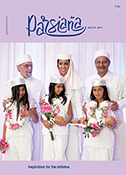
We now have their predictable kerfuffle over women priests, and abhor the separatist use of mobedyar for creeping gender discrimination. Do we have doctoryar and paralawyer to apply to lady medicos and women jurists? For readers looped into the 21st century, it is an affront to our ancient Gathic and Haptanhaitic (Yss.35-41) teachings on absolute gender equality with full rights over worship and practice. Mobed Mahshad Khosraviani is not some second grade priestess!
The basic Gathic texts in unambiguous support are Ys.46.10: "Whichever man or woman, O Mazda Ahura! who, for me (Zarathushtra) would confer the best things of life: the reward of truth and power through Good Mind... with all those shall I cross the Bridge of the Decider.” Ys.48.5 has: "May good rulers, not bad ones, assume governance over us — with actions through good insight!” Another, Ys.43.3, pronounces a benediction upon the well-motivated guide: "May that one attain to the better than good — the one who saves body and mind! — the instructor who guides along the true path to where the noble and beneficent Mazda dwells!” — all are accounted as healers and saviors: genuine priests! This, then, was the earliest priesthood of purposeful, resolute men and women through the ages.
The NAMC’s prohibition directed against both men and women regardless of intellectual status, and darkly operating within the Zarathushtra- and Avesta-free zones where scriptural knowledge remains absent, calls their judgmental qualifications into serious question.
An even more embarrassing gender free universalism awaits those NAMC objectors — Zarathushtra’s two Gathic preambles to our kushti/kasti ritual. Here is the first verse’s content: "Whom have You, O Mazda, assigned as protector for me when the deceitful seek to harm? Whom other than Your Fire and Mind which support actions of Truth, O Ahura? Declare these for my spiritual well-being!” (Ys.46.7: kam.na mazda). There we have it: actions through insight and truth!
Ys.44.16 (ka varathram.ja) states: "Who shall triumphantly protect, with your doctrines, those among the living? Appoint a judge therefor, as healer of life, and may hearkening (Sraosha/Sarosh) come to whomsoever (kahmaichit) You, O Mazda, wish it upon!” So begin the ancient ritual teachings for our continued daily benefit: it is Mazda who decides; not illiterate, incompetent priests for whom the Gathas are anathema!
In the chief aspect of the sedreh-pushi or navjote, the initiate is carefully instructed in the formal investiture of the sedreh-kushti by priests who are deemed qualified through true knowledge of the sacred Gathic words that males and females alike chant before the holy flame: those dutifully repeated by all newcomers for full acceptance into our noble mazdayasno zarathushtrish faith.
The prose Yasna Haptanhaiti (Yss.35-41) is even more forthright in its election of men and women to the priesthood, those past, present, and future, wherever born (Ys.39.1,2, which is among the predecessors of the Fravardin Yasht, esp. its §144 conclusion). Ys.41.2 clinches the argument for women priests on as full and equal a basis as their male counterparts: "May we attain to Your good governance for all time, O Mazda Ahura! May a good ruler, man or woman, govern us in both existences (of matter and mind)!” — no exceptions!
The NAMC would seek to restrict the types of ceremonies in which women priests may participate — why then do its male priests actually pray all the above inclusionist Gathic passages during the highest of all ceremonies: the great Yasna itself, and then publicly refute what they have just prayed before the sacred flame of truth? What brand of deceit are they knowingly and openly participating in, and what is their exclusionist authority for it?
The khshnumists have weighed in with their accustomed obfuscation and blanket denials of anything to do with the authentic Ahuric teachings of Zarathushtra. They do, after all, have the support of maddies and baddies everywhere.
There can be no doubt from the above prayed references that mobed Khosraviani, honorably and piously accompanied by Herbadhs Jehan Bagli and Jal Panthaky, has stout-heartedly done full justice to our Zoroastrian religion and its Mazda-inspired precepts.
Right-thinking Iranian and Parsi sisters in faith are with the mobed, for whom there is full admiration. She is the first of many who will show the Mazdaean way of truth and good mind in North America.
Congratulations to the Madon family, and felicitations from true Zoroastrians to their three lovely girls.
In closing, a hard little reminder from the priest-concocted Vandidad — Zarathushtra: "Who makes the insidious power of death increase?”Ahura Mazda sternly responds: "It is the one ungirt with the religion! He who does not chant the Gathas and imposes foreign cults! Do not call him an Athravan, O Truthful Zarathushtra — he is the one who teaches the wrong law (the Daevic variety)!” (XVIII.4, 9 — the Pahlavi is even more damning!)
And to those obsessed with ritual purity: purify the upper storey first! Scrub away as hard as one might, it is the mind that needs cleansing, for which honesty with integrity wouldn’t come amiss!
FARROKH VAJIFDAR
London
f.vajifdar@btinternet.com
Your article has reminded me of the history of mobedyars. When I held Avesta and Message of Asho Zarathushtra classes at Faravahr, the Zoroastrian Youth Association of Tehran in 1964-71, some my students spent the greater part of their summer vacations going to villages in Yazd and teaching Avesta prayers to the Zoroastrians there. I was informed by the high mobed, the late Rostam Shahzadi that this gave an idea to the Mobeds Council of Tehran to train people in religious rites. Consequently, a number of volunteers were trained and named mobedyars — mobed assistants. Later, the Council, seeing their enthusiasm and service, decided that mobedyars could become full mobeds after five years of service. While adding to the number of mobeds, this move also paved the way for any Zoroastrian to be eligible to become a mobed, thus removing the condition that a mobed had to be from an athornan family.
Today there are many such mobeds, mobedyars, and now women mobedyars in Tehran, all over Yazd and Kerman in Iran and a few in North America, including in Los Angeles.
Dr ALI JAFAREY
California, USA
jafarey@aol.com
Today there are many such mobeds, mobedyars, and now women mobedyars in Tehran, all over Yazd and Kerman in Iran and a few in North America, including in Los Angeles.
Dr ALI JAFAREY
California, USA
jafarey@aol.com
◆ ◆ ◆
From the archive