
Food
Treats with a twist
The best of Indian cuisine, with European influences, using the best seasonal ingredients from Britain
London based celebrity chef Cyrus Todiwala’s Cafe Spicé Namaste’s elaborate and extensive menu incorporates the best of Indian cuisine with specialities and influences from all over Asia, often with a European twist. Rare, unusual meats feature on the menu and Cyrus’ Speciality Menu changes fortnightly to take advantage of the best the British seasons have to offer. All dishes use only the freshest of ingredients, cooked with natural herbs and Todiwala’s own spice blends.
PARSI CHAANP (LAMB CHOP) AND TAMOATA NI GRAVY
Parsi style lamb cutlet served with tomato gravy
Lamb loin cutlets (chops) 4-6
(Ensure that these are large in that two to three bones are stripped onto one and flattened well)
Ginger (1 tsp — finely crushed, nearly pureed)
Garlic (1 tsp — finely crushed, nearly pureed)
Ground cumin (1 tsp)
Coriander (1.5 tsp — ground)
Turmeric (½ tsp — ground)
Garam masala (½ tsp)
Sunflower or rapeseed oil (2 tbsp)
Salt (little)
Lime juice (½ lime — squeezed)
Flatten the lamb cutlets well, scrape all meaty bits off the top of the bones with the back of your knife. Mix all the powders and ginger, garlic, lime juice and salt, oil well and rub well into the cutlets or chops as we Indians prefer to call them. If possible cover and place in the refrigerator overnight or for a few hours at least. Heat a good heavy non-stick frying pan and quickly seal the chops on both sides allowing them to brown on each side. Be careful as the spices will burn almost instantly so a bit of care is necessary. Remove onto a paper towel and set aside for 30 to 40 minutes before you do the next step or cool rapidly if possible.
Take Maris piper or fluffy potatoes (4-5 large ones). Peel and slice them thick approx quarter inch thickness and soak in cold water. Heat enough water in a pot and bring to the boil. Add salt and the drained potatoes and boil until cooked. Drain off the water or save it for soup or cooking and return the potatoes to the pan and onto the heat. Stir continuously with a wooden spatula, scraping off the bottom until the potatoes are dry and nearly crushed or mashed. Either pass through a ricer or mash the potatoes with a masher breaking up all little lumps.
Spread out and cool. Take one tablespoon of cumin seeds along with two cloves of freshly chopped garlic and a tablespoon of butter and heat this mixture in a small frying pan until the garlic is cooked and the aroma is just great. Add to the crushed potatoes, along with a heaped tablespoon of finely chopped fresh coriander after squeezing out some of the liquid so as not to make it too wet. Blend all this well and set aside to cool
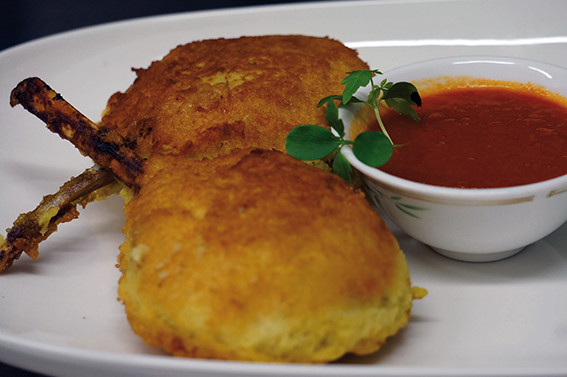
Parsi champ and tamota ni gravy
The gravy
Tomatoes (500 g — crushed or pureed)
Red onion or pink shallot (2 medium or 250 g — to be finely chopped)
Cassia bark (3-4” piece — or use cinnamon instead)
Garlic (3 cloves — chopped)
Red chilies (2 or 3 — large ones)
Malt vinegar (2 tsp)
Raw cane sugar (jaggery) (2 tbsp)
Tamarind extracts (light) (1 tbsp)
Salt
Butter (1 heaped tbsp)
Sunflower or rapeseed oil (1 tbsp)
Wash the tomatoes well cut them coarsely and puree them in a blender with the skin. Heat the oil and the butter, add whole red chillies broken into two or three pieces each and seeded. Add the garlic and the cinnamon stick or cassia and sauté for a minute or two until garlic changes color. Add the onions or shallots and sauté until soft. Now add the tomato pulp and bring to the boil. After a few minutes of boiling add the vinegar, sugar and tamarind and continue to simmer until the sauce/gravy is thickened. Remove the cinnamon stick or cassia bark and if possible puree the sauce now with either a stick blender or in a blender when slightly cooled.
Reheat and season.
This sauce can be used for most fried snacks or as an accompaniment with pasta, rice, etc.
It is a classical sauce which my ancestors brought back from Persia and it just goes to show how much the Great Persian Empire actually influenced European cuisine when compared with other European sauces.
The process
Bread crumbs (200 g or thereabouts)
Eggs (3-4 beaten)
Plain flour (100 g)
Oil for frying, roughly two inches in the pan or enough to deep fry.
Take each chop or cutlet and encase it thoroughly in the mashed potato mixture, removing any excess but ensuring that the meat is well covered and has at least a half inch layer of potato all around. Roll this in flour, dusting off any excess, dip it in the egg then in the crumbs. Deep fry or shallow fry in at least two inches of oil, drain well and serve with the tomato gravy and some salad. The chops and the sauce can easily be prepared and kept overnight in the fridge in readiness for the meal.
MASALA NU ROAST GOS
Oil (2-3 tsp)
Cinnamon stick (2 cm piece)
Cardamom (3-4 green pods)
Black cardamom (1-2 pods)
Cloves (1-3)
Dried red chillies (2-3)
Chopped onions (3-4 medium)
Shank of lamb 2-3 medium (200-300gms each)
Ground cumin (1 tsp)
Ground coriander (1 ½ tbsp)
Ground turmeric (3/4th tsp)
Ginger and garlic paste (1½ heaped tbsp)
Large potatoes (2 peeled and cut into large chunks)
Tomatoes (4-5 — chopped)
Chopped fresh coriander (1tbsp for gravy an a little for sprinkling as desired)
Salt
Heat the oil in a hot saucepan until a haze forms on top. Add the cinnamon, cardamom, cloves and red chillies. As soon as the spices swell and change color add the lamb and brown well turning occasionally, until browned on all sides. Alternatively put the shanks in a hot oven at 200º C for 20 minutes or so until browned and sealed well. When the liquid in the pan has almost dried up, add the chopped onions. Sauté until soft and brown.
Add the ground spices and the ginger garlic paste dissolved in 250 ml of water and stir well. Cook on a medium flame until the liquid almost dries up and oil begins to surface. Then add some salt and enough water (or stock) to just about cover the lamb. Place a tight fitting lid on the pan and simmer for 15-20 mins, stirring from time to time and making sure the sides of the pan are clean.
Add the potatoes and mix in well, then add the tomatoes. Cover again and simmer until the lamb and potatoes are tender and the meat is fully cooked. Check the seasoning and sprinkle with some fresh chopped coriander. Stir some in as well, if you like, for an extra kick.
KHADAY MASALAY KA GOSHT
Onions (12 kg — sliced)
Ginger (300 g)
Garlic (300 g)
Green chilli (250 g — slit into four)
Sunflower/rapeseed oil (300 g)
Butter (500 g)
Khada masala
Red chillies (100 g — whole)
Cassia bar/cinnamon (40 g)
Cloves (20 g)
Green cardamom (30 g)
Mace/javantri (10 g)
Black peppercorns (20 g)
Other masala
Red chilli powder (200 g)
Jeera powder (150 g)
Dhania powder (200 g)
Turmeric/haldi (50 g)
Yogurt (2 kg)
Tomato paste (850 g)
Salt (200 g)
Heat the oil to roughly 150°C and fry the whole spices first until cloves swell. Switch off heat and add whole red chillies until they turn brown and remove the fried masala. Switch back on to 100°C and add the sliced onions along with the butter and sauté until they turn deep brown. Scrape all the time and add water to deglaze from time to time to keep the pan clean. When brown and sticky add the ginger, garlic and fresh slit green chillies and sauté until garlic turns pale brown. Blend the powders along with the yogurt, salt and tomato paste and whisk to a fine paste. Add this to the mixture and cook on a slow heat for eight to ten minutes. Add approximately six to eight litres of water and puree the entire gravy. Add the whole spices again into the gravy and simmer on a low heat watching it all the time until the gravy is thick and lush and the fat has all been rendered.
Use it as a gravy for other meats, lamb or chicken too.
LEELI KOLMI OR MACHCHI NI CURRY
A simple tasty and creamy curry this recipe is a great one for whipping something up almost at the last minute. It does not ask for a great deal of preparation and once the pre-preparations are done takes no more 10 to 12 minutes to make. Fresh prawns make the best combination for this style, but other white fish turns out equally good.
Black tiger prawns (500 g)
Sunflower oil (2 tbsp)
Medium onion (1 — finely sliced)
Garlic (6 cloves — crushed)
Fresh ginger (1 ½” piece — crushed)
Alternatively take both peeled ginger, peeled garlic, place in a blender and with as little water as is possible. Grind to a fine paste. Or simply chop very finely.
Green chillies (2 — medium sized — slit into 4)
Ground turmeric (½ tsp)
Coconut milk (14oz. or 400 g tin)
Cashew nuts (100 g)
Green cardamom (4 pods)
Cloves (4)
Fresh curry leaves (5 to 6)
Cassia bark/cinnamon (¾” piece)
Fresh coriander (1 tbsp — chopped)
Salt as required
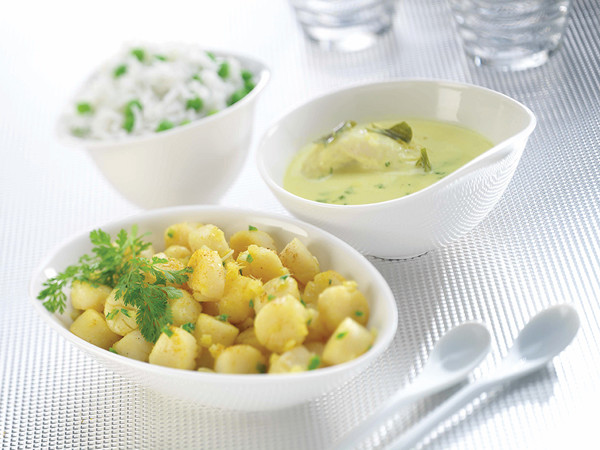
Leeli kolmi ni curry
Heat the oil in a six to eight inch diameter saucepan and sauté sliced onions until soft. Do not let them brown. Add the ginger, garlic and green chillies and sauté for two to three minutes. Remember not to keep the heat on high as they will discolor. Add the turmeric diluted in half a cup of water.
Puree the coconut milk along with the cashew nuts to make a smooth paste. If required soak the cashew nuts for an hour or so in hot water then drain and puree.
Cook for a minute or so and add the coconut milk combination.
Bring slowly to the boil stirring gently from the bottom up. As soon as it begins to boil add the cardamom, cloves, cinnamon or cassia and curry leaves. Add salt to season and simmer for a couple of minutes until the curry begins to thicken.
When the curry thickens to the right consistency add the chopped coriander, stir for a few seconds and add the prawns. Depending on the size of the prawns you can decide how long to cook them. Normally two minutes on boil and then leaving them in the curry for a few minutes covered is adequate. The latent heat in the curry will cook them perfectly. The prawns should always be added just before you are ready to serve as that way they will remain juicy and succulent.
Serve with steamed rice, some fresh onion salad and fried papads.
Copyright by Cyrus Todiwala (Namaste Of London Ltd)
◆ ◆ ◆
From the archive