
Food
Restaurants to be reckoned with
Battling predetermined notions about Indian food was difficult but essential in order to establish New Wave Indian Cuisine in Britain
Whilst Zoroastrians have been in business abroad ever since they left the comfort zones of India, it has to be said that very few are in the food business.
One of the reasons would have to be the fact that for a long time this was not considered a profession worthy of pride to the family. The caterer at the weddings and navjotes, etc was in a different league and was well respected because he or she is much needed in the community. However, the cooks got little or no recognition at all and would be looked down upon by our community members… simply as raamaas (servants).
Not being considered prestigious, few Parsis/Iranis took up the profession and it is only in very recent years that we have seen many more youngsters choosing to become chefs.
The Parsi/Irani urge to enter into business, ever so strong in our genes, prompts some of us to venture out of the comfort zones of our jobs and dive into the unknown armed only with knowledge, skill and the willingness to succeed.
My own entry into business, though always present at the back of my head, came out of sheer default here in the UK because of the need to survive. Having landed up here to run someone else’s establishment I soon found myself handling a substantially successful enterprise but one riddled with sheer mis-management by the owners which eventually put the company into liquidation. As it is, being in a new country with a wife and two very tiny kids required some adjustments. Thrust into that, the prospect of no job, no home, no income and no money changes the tune totally into one of either sheer desperation, or the reverse, which is the determination to succeed.
The same story was repeated two more times as new companies were opened and became bankrupt before I could venture out and ask that the business be entirely managed by me! This I did after asking Pervin, my wife, to join me in the venture. Pervin had, since 1986 when Jamsheed was born in Goa, given up working in the hospitality industry and with Hormuzd on board since 1990 she had a full-time occupation at home.
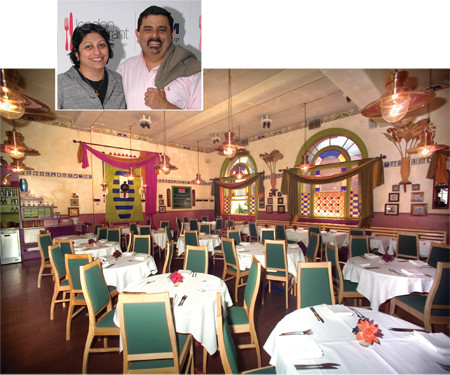
Pervin and Cyrus Todiwala at the launch of the London ITV Restaurant Awards. Bottom: Cafe Spice Namaste
In any case, by then we were in such a desperate situation that the only way of not getting deported from the UK was to either take another job (time was not on my side) or to take over a failing business and make it work. The burden put upon us to take over the business was immense and we were so tightly wedged into a corner that the task ahead seemed near impossible, but we took it on. Little did I know then that I would now embark on yet another hurdle, one which would last 10 long years, with a slight change in my legal status.
Though Namaste soon became a restaurant to be reckoned with and its success grew, the Home Office was determined to evict me from the UK as I had now changed my status from that of employee to employer. There were times when our passports were so-called lost, we had solicitors battling our case and even though the business was doing well we could save no money as all the earnings kept going toward the legal fees.
Fortunately, at Namaste we met our first business partner, Michael Gottlieb who had this vision of a colorful, bright restaurant which reflected the true colors of Indian cuisine. We joined hands and Cafe Spice Namaste was born in 1995.
Running a business in the UK is pretty tough, but it’s a great deal easier than running a business in India. However, there is much less money to be made as everything is totally above board as a true Bawa like me would like it to be and there is much satisfaction. For one thing, it is easy to get all your licenses, permits and business needs sorted, as long as you are happy to go by the book and pay your dues, as laid down.
Yes, one needs lots of money to start up a food business. We had none but with the support of others — Michael and his friends — we built a great business. Cafe Spice has been voted Best Indian Restaurant in the UK five times in its short history, it has won several awards for its standards and continues to grow.
Personally for me Britain has been a great platform to finally emerge as an individual armed with the skills not only to make a mark as a chef of high repute but also as a businessman. Pervin, no doubt, plays an extremely pivotal role in everything and is the backbone of the business.
In 2005 we raised some finance and bought out our partners. Though the sum of money was large and it has set us back several years, we now fully and wholly own our business and can look at a structured though perhaps slow growth.
The UK is the place to be for a chef to develop himself or herself and to grow. A vast plethora of opportunities are available to be grabbed and taken. Starting up a business is not as difficult or daunting as one makes it out to be, though circumstances may differ. There is much help available locally for advice, guidance, training for staff, etc to ease the process. Yes, one will see that margins are pretty small here compared to back home, but one can have a comfortable life and personal lifestyles do improve as things get better.
Unlike in large Indian cities like Bombay, or Poona or Delhi, in the UK there are not many people around to flock to every new restaurant. In Britain, the life of a restaurant is normally between three to five years and one has to work really hard to keep the business growing. Although things are not always hunky dory, we are now in our 14th year and have Cafe Spice Namaste, a 120-seater restaurant, Cafe ‘T,’ a 20-seater cafe serving snacks and light meals between 11a.m. and 5 p.m., The Cafe Spice Namaste Trailer, an eight-meter-long state of the art mobile catering unit for which we have a concession at Lords Cricket Ground for three years, Mr Todiwala’s Spicy Pickles and Chutneys, a small sandwich supplying business, a growing outdoor catering business and The Ginger Garden, an outdoor bar and restaurant seating 40 but seasonally inclined.
This will go to show that one cannot rest on one’s laurels and be complacent in one’s business. One has to continually strive. Only the drive to grow would help the individual personally as also the business.
Britain did not need any introduction to Indian cuisine per se, with all the knowledge or so-called knowledge of Indian cuisine. However, it is extremely difficult to change the stereotype that all Indian food is cheap and cheerful.
The cuisine I discovered when I came here in 1991 was not what I knew to be Indian food and it has been one long battle and struggle to educate the British whose knowledge of Indian cuisine has been predetermined over many years. What has been sold and presented to them all this time has been a pseudo Indian cuisine wherein all Indian food is termed as ‘curry.’ For the Brits, a chicken tikka for instance is also a curry and so is an onion bhajia or dal or a vegetable bhaaji.
So I had to embark on a complete educational process. I remember that the very first time when we changed the old inherited menu to a new one compiled and prepared by myself, people actually walked out of the restaurant because they did not recognize the dishes and were too scared to try anything new. A patia here in an ordinary restaurant is called ‘Persian Dish’ made with tomato paste, some purééd onion, sugar, red color, salt and capsicums. This is then mixed with boiled baby shrimp and served with a poori. Dhansak is also called Persian Dish but is available in varieties like prawn dhansak, vegetable dhansak, chicken dhansak, lamb dhansak, etc. It is just tadka dal, bright red in color with whole channa dal seen floating on it. It is sugary sweet at times and is served with a brightly colored pulav. The chef simply adds any boiled meat to it or vegetables or prawn when asked for variations.
The fantastic thing for us now is that we can do almost anything we like and our discerning customers will support it. We cook traditionally, but we use the best of British and European produce and work with local farmers to create some truly unique Indian/Parsi/Goanese dishes.
It is important to stick to one’s ethics and convictions as long as they are the right ones, and if one pushes hard enough success is really just round the corner. As a chef, I wish to say that what Britain has allowed me to achieve I could not have been able to do in India, at least not at the time when we left. Maybe things are different now. However, the unbiased recognition from the mainstream of chefs and senior players in the industry has been immense and very rewarding. Sadly, within our own sector we are still riddled with jealousy and backbiting and snapping and even stabbing in the back, which is typical. All of us have to rise above and beyond that and strive to continue to do what we set out to do.
In short, we helped re-introduce Indian cuisine some 16 years ago and this has now turned into a revolution with all restaurants aspiring to tempt their customers with new ideas, menus and dishes. I am sometimes referred to as the Father of New Wave Indian Cuisine.
DAAL JHINGA (LENTILS WITH PRAWNS)
This is an unusual dish and has two versions to it. The Maharashtrian version actually is quite snacky and becomes an afternoon snack but on the other hand it can be an accompaniment to a main meal and would easily form the seafood element of the menu. Below I will explain both the versions so that you can choose.
Moong beans or Moong daal (250 g)
Bay leaf (1 or 2 — fresh or dried)
Onions (3 medium — 2 thinly sliced and 1 for the masala)
Turmeric (½ tsp)
Ginger (1” piece)
Red chillies (8-10 large)
Garam masala (½ tsp)
Prawns (12 to 18 — large)
Butter or ghee (1 heaped tbsp)
Sunflower oil (100 to 200 ml — for frying the onions)
Indian "farsan” and sweet shops will more often than not sell you crispy, pan fried moong beans, either known as "mogar” or moong daal. For the Maharashtrian version of this dish this crispy, snacky daal is normally used instead of the method I describe below.
Soak the moong daal overnight and add a pinch of soda bicarbonate or a pinch of baking soda. Ready the browned onions beforehand. Thinly slice the onions evenly remembering to remove the root stub for best results. Fry in the oil and remove into a colander or strainer over another bowl when pale brown. Loosen with a fork to separate the slices and to reduce the effects of carry over cooking. Remember the onions will brown very rapidly. Also even if you take them out pale brown they will continue to color and you will achieve a great color and a great texture. Loosen well and remove onto a papered tray and spread out to cool. Strain the oil well and reserve for future use.
For the masala grind together the turmeric, ginger, red chillies and the single onion, in a grinder or a blender, to make a fine puree. Drain the daal and wash in the strainer under cold running water until the water runs clear. Heat the ghee or butter and fry the daal. Remove by pouring it into the strainer with a bowl underneath to catch any excess ghee or butter. It is advisable to first melt the butter and remove any liquid so that you can get a better result from the frying process. Ghee is simply clarified butter.
Now once again the Maharashtrian will boil the fried lentils until just soft and drain. You can choose to do that as it gives the dish its authenticity. In the drained ghee/butter sauté the prawns on a brisk flame until just half done and drain again. Add the drained ghee/butter to a medium casserole and if too little add a tablespoon of oil from the fried onions. Fry first the bay leaf and then the ground or pureed masala until the oil begins to be released from it. Stir and scrape regularly so that the masala cooks well and also so that it does not stick and burn at the bottom of the pan.
Once the masala is cooked add the boiled daal and after a minute or two when the daal is hot add the prawns, season and cook until prawns are done. Approximately two to four minutes. Add half the fried onions, check the seasoning and remove into a dish. Sprinkle with the remaining fried onions and if you like a sprinkling of chopped coriander. You can also drizzle a combination of chopped coriander blended with freshly grated coconut.
This is best served with hot puris if not accompanying the main meal and as a snack with drinks, etc.
CABBAGE AND BEANS FOOGATH
A simple, quick and easy preparation cooked with grated coconut. Hailing from Goa this one in particular is the most popular of all Goan vegetarian preparations, the Catholic households, much like the Parsi community, not being vegetable friendly.
Cabbage (250 to 300 g)
French beans (250 g — cut into 1" pieces)
Onions(2 medium — thinly sliced)
Cumin seeds (½ tsp)
Mustard seeds (¼ tsp)
Red chilli (2 whole — cut into ½ inch pieces)
Turmeric powder (¼ tsp)
Curry leaves (10)
Garlic (6-8 cloves — chopped)
Coconut (1/3 of a freshly grated coconut or 250 g frozen; if using desiccated coconut select the coarse variety and use approximately 150 g)
Salt (to taste)
Lime juice (a few drops to taste)
Fresh coriander (1 tbsp — chopped)
Sunflower oil (2 tsbp)
Shred the cabbage after removing the central stub and prepare the beans as required. Do not mix the two. Heat the oil in a casserole and when hazy add the mustard seeds first. After they stop crackling, reduce the heat to medium, add the curry leaves, the cumin and the red chilli pieces. Saute for a minute and add the sliced onions. When the onions turn soft add the garlic and saute for a minute or two, add the turmeric and then the cabbage. Saute the cabbage for a minute or two and then add the coconut. Saute this for four to five minutes. By this time the cabbage will be more than half done. Mix in the French beans and check the seasoning. Cook only for a further two minutes or so.
Sprinkle lime juice and add the coriander. Cover the pan, put off the fire and leave covered for 4-5 minutes. The beans should be crunchy when cooked but the cabbage if not more or less cooked but still crunchy will as it normally would do cause flatulence.
Served best with hot crusty rolls if not eating as part of a meal.
FOFOS DE ARROZ
A simple rice and cheese croquette (approximately three inches in diameter) made from left over cooked rice or rice boiled and cooled for the occasion. Ideally thick parboiled type rice is the best or a risotto type but most Indian rice will be okay to use specially the Surti kolum, aamba mohur and the Goan ukday.
Rice (boiled as much as you may have)
Cheese(grated — 1 heaped tsp per croquette)
Green chilli (1 — chopped for 6 to 8 croquettes)
Paprika or chilli powder (½ tsp for the above)
Coriander (1 tbsp — chopped)
Salt (a little to taste depending on the cheese you use)
Bread crumbs (as needed)
Flour (3 tbsp — for upto eight fofos)Eggs (2)
Oil (as needed to semi deep fry, approximately ¾” depth in the frying pan)
Take the old rice, add a little salt and mash it a bit with your palms until it is soft enough to be shaped. Combine the cheese with the coriander, the chilli, and the paprika, mix well and taste. Make even sized balls with the rice and set aside. Divide the cheese into as many balls as the rice. Flatten the rice ball on your palm until approximately ½” thick. Place a ball of the cheese in the center and fold over carefully. Make cylindrical or egg shaped forms but ensure that there are no visible cracks and roll them lightly in the flour.
In another dish beat the egg lightly until both white and egg are well mixed. Dip each fofos in the egg and then crumb them. Chill them in the refrigerator for a couple of hours at least if possible. Chilling makes them firm and also helps the cheese within not to overheat and expand, thereby cracking the fofos. Heat the oil until almost smoking and fry when you need them. Do not overheat the oil. You can keep them in the refrigerator overnight or for a few hours before serving. Fry the fofos when you are ready. Only ensure that they are kept covered and that they have paper at the bottom.
In Goa these are rolled in semolina instead of breadcrumbs. This gives a lovely crunchy texture and is different.
Serve with a garlic and tomato chutney or an aioli type dip.
GOS MA EEDA ATHWA ADLO (LAMB WITH EGGS OR SHIN)
This recipe is an old classic and a very traditional one at that. In a traditional Parsi home three basic masalas existed and these are: aadu lasan no masalo (ginger garlic paste), dhana jeera no masalo (coriander and cumin paste) and laal marcha no masalo (red chilli with spices). Today times have changed and things have been simplified but there are still several hundreds of refrigerators that will be able to proudly display these all-time favorites. The masalas give the housewife tremendous flexibility and she can virtually create a hundred different products by playing around with her masalas.
The dish here is an example of the richness of the cuisine and the culture. No doubt the Parsis are primarily meat eaters but they also love their potatoes and this becomes evident in many Parsi dishes.
Lamb (500 g — diced)
Kidneys (250 g)
Adu lasan no masalo (1 tbsp)
Laal marcha no masalo (1 tbsp)
Salt (to taste)
Ghee (125 g — use oil if you wish)
Cloves and cardamom (5 each)
Sour yoghurt (250 g)
Browned onions (3 heaped tbsp)
Saffron (few strands)
Eggs (5 — boiled)
Lal Marcha No Masalo
This is a simple red masala with whole red chillies, coriander seeds and cumin seeds gently roasted and ground to a fine paste with some water.
Red chillies (20 g)
Coriander seeds (1 level tbsp)
Cumin seeds (1 heaped tsp)
Snip the red chilli into small pieces. Place all three on a frying pan and roast them on a very slow flame pressing down with a well folded kitchen towel or cloth until the spices change color and give off a strong aroma. Do not allow to burn or discolor. Puree in a blender with a little water or as much as is desired. In the recipe above only one tablespoon is asked for. Reserve the rest for later use.
Dice the lamb and kidneys into small pieces. Wash drain and mix in the two masalas with salt. Crush the cardamom and cloves, fry in the ghee until light brown and add the lamb and kidneys, saute for five to six minutes. Next add a little water (approximately 100 ml) and continue cooking. Mix the yoghurt, the browned onions, and saffron and set aside for a while and then puree. When the lamb is almost done and the liquid almost dry, add the yoghurt mix. When the lamb is cooked, add the boiled eggs either cut into halves or whole. Leave on a slow flame or heat for a few minutes.
The above is cooked with lamb shanks as well and makes a very tasty dish. It also makes an excellent variation to the plain diced lamb. The kidneys however remain unchanged.
You may like to add a few chunks of deep fried potatoes for that extra touch. One or two tablespoons of chopped coriander will enhance the flavor greatly. The shank may be shredded and then re-added to the dish or left as a whole. Remember the best lamb for all this type of high class cooking is organic bio dynamic lamb. Across the subcontinent the lamb is mostly naturally organic since no actual feed is given or pastures grown for grazing.
DHANA JEERA NO MASALO
Take half the quantity of coriander seeds to cumin, roast them gently as shown above, puree them to a fine paste in a blender or liquidiser but use very little water.
Storage
All these masalas will stay very well if kept properly. Use only airtight jars with a wide mouth or small plastic containers. Make sure that each time you use a masala you wipe the edges of the container with a dry paper towel and close the lid tightly. Another way of preserving your masalas well is to add some sunflower oil to them on the top. This prevents oxidation and drying out. Always remember that if your masala begins to dry up, add some oil and not water to make it into a paste again. Raw water will attract mold.
◆ ◆ ◆
From the archive