
Cover Story
The lure of the hills
Running a hotel in the hill stations of Mahabaleshwar and Panchgani is not all strawberries and cream.
The verdant Wai Ghat drive ends as you enter Panchgani. Advertisements scream at you — jacuzzi endowed hotels, massage parlors (especially ayurvedic Kerala massages) with facials, hookah joints, indoor games and rooms at Rs 500 per couple. Offers of Punjabi and Chinese and Mughlai and Jain fare are wrapped up in one meal. Some old bungalows with green cover, gardens and walks leading to the view points remain lush but no walkers are visible. Nowadays you drive to these look-outs in cars and hired taxis.
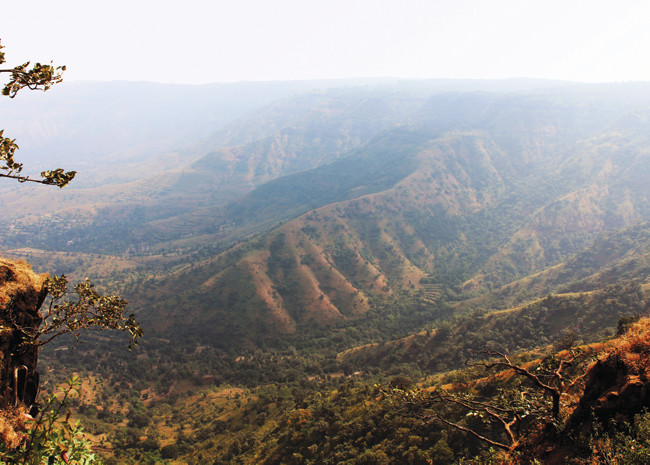
Magnificent Mahabaleshwar
‘Progress’ has marched into the Panchgani Plateau, Parsi Point and also into walks at Lodwick, Babington, Elphinstone and the other 35 odd points (lookouts) of Mahabaleshwar — all named after the British. Tucked away from the main area, Parsi owned hotels are indicated with little to no signage. They prefer to do business with the regulars rather than have walk-ins. There are six functional hotels and boutique guest houses run by Parsis in these twin hill stations.
Of all the changes that Mahabaleshwar-Panchgani have seen, the most dramatic are climatic and developmental. Rains in Mahabaleshwar used to touch 750 cms till 15-20 years ago. The monsoons, as they are termed, have gone down steadily till rainfall has now reached 660 cms on an average. Until 10 years ago Mahabaleshwar closed down, with hay bundles covering every roof and tarpaulin on the verandahs from June 15 to September 15. This was time for the town to rejuvenate as did nature. Customers started arriving early October. Things have changed — the strain on the town is telling not only in the dirt but also with noise and infrastructural breakdowns. This is what every hotelier laments. Panchgani is in the rain shadow and has rains but not lashing ones and not an extreme climate.
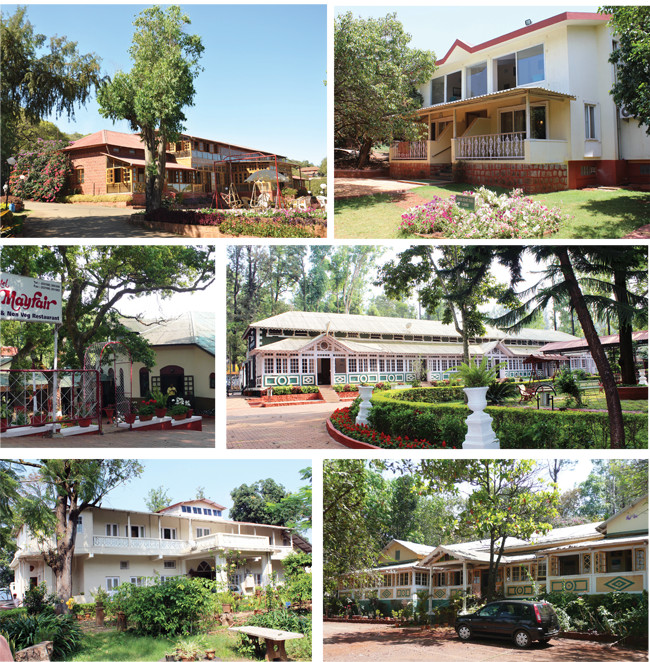
(clockwise from top left): The Dina Hotel; Sherwood Resort, Il Palazzo Hotel, Mount View, Maidstone and Hotel Mayfair
"Bus loads arrive and choke the city,” says Naval Jal, 85, of The Dina Hotel, Mahabaleshwar who has kept the old-world finish with mosaic tiles and added modern amenities. Jal refuses to have a swimming pool and video games. "In five years’ time there will be power and water shortage,” he states. "I could have a swimming pool but 10 months of the year the weather is anti-swimming. Also labor is difficult to get and how do you keep it clean?” He laments political greed and infrastructural stagnancy for limited growth of the hill station.
Most owners’ thoughts are reflected in what Gita Choksi, 63, of Maidstone, (also known as The Virjees) in Panchgani states, "Panchgani is overrun by indisciplined tourists and population. Whilst the expressway is a boon it has also brought pollution and chaos. The sanctity of serenity is lost and I miss that… The pattern of taking holidays is changed. No more two weeks in Panchgani when guests became our long-term friends and we got to know them well. Few spend five nights. Ours was a mature clientele — 90 percent Parsis — that complexion has changed. They now come from Poona, Bombay and Delhi too… young yuppies for a night. Those days of playing hostess with a pre-dinner drink, chats, then dressing up for dinner are over. No one is unpleasant but some do throw their weight around. The interaction itself was what kept us going and entertained. That is not entirely true anymore.” Choksi was in the travel trade and has taken up the running of the guest house since 2004, after aunt Daphne and late mama (maternal uncle) Pesi Virjee with late aunt Dolly Virjee ran it for decades. Choksi has vivid memories of going into the valley overlooking their house to have hot bhakri and milk.
Mount View in Panchgani and Maidstone, marketed as a boutique guest house, both have a view of the valley and the Krishna river below. Mostly all of them serve in-house strawberry preserves as strawberries, patent fruits in this region, are in season and on sale in cardboard boxes everywhere, not wicker baskets any more.
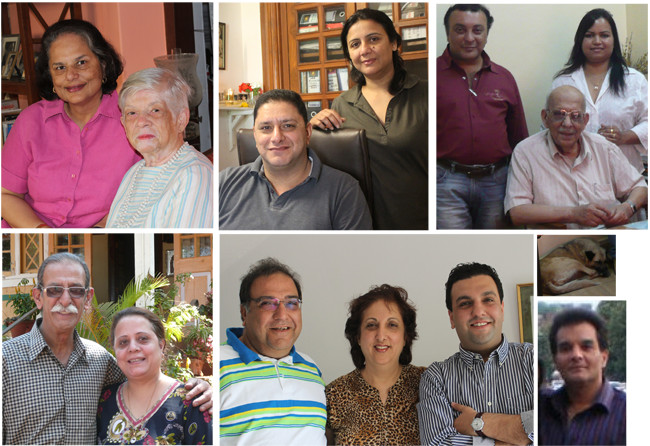
Above (from left): Gita Choksi and Daphne Virjee of Maidstone; Kobad and Lily Davierwalla of Il Palazzo; Hormuzd and Shobha Mahableshwarvala with Naval Jal (seated) of The Dina Hotel with pet Lucy. 2nd row: (from left): Noshir and Veera Khambata of Mount View; Meher, Zeubin and Danesh Palia of Sherwood Resort; Syrus Mazda of Hotel Mayfair
Kobad Davierwalla, 50, managing partner of Il Palazzo Hotel, Panchgani reminisces how just a few years ago "you had to book trunk calls anywhere out of Panchgani, there was no television, no net, no entertainment.” Davierwalla takes pride in managing "old world charm with modern amenities.” Thriving on change he says he loves gizmos — "it is the only hotel in this area which has communication satellite, free and unlimited wi-fi. I love change, the latest (technology) must be here,” he says. "I have great pride in my achievement.” He referred to the improvements they are constantly making from 1992. "There are no duty hours…” his wife Lily (43) chimes in "but a group of us go every Sunday afternoon to Wai to see a film — mostly Hindi ones. There are friends around and on weekends the hotel is full and there is no time to relax — even our clientele is third generation.” (Weekenders leave by breakfast time on Sundays.)
Noshir Khambata of Mount View Hotel, Panchgani states, "Mahabaleshwar has a name. Panchgani is small and touristically only has the Plateau and Sydney Point. People don’t know what to do (with their time). It also was seen as a convalescing hill station.” Khambata’s love of the place is also evident with an immediate reposte, "the beauty of Panchgani is in its silver oaks, the walks, the rappelling, the picnics we used to go to.”
Hotel Mayfair, Mahabaleshwar owned by Syrus Mazda and his mother Nergis, is booked even in the monsoon by corporate clients. Sherwood Resort, owned by Meher and Zeubin Palia in Mahabaleshwar also has corporate tie ups. Sherwood has two unique tree courts where eating takes place under widespread trees. One of these courts accommodates 250 persons with conference facility at ‘Redwoods.’ The property was bought from the Maharaja of Sangli in 2000; they vowed they would keep every tree on the premises. Zeubin (née Anklesaria of the Adurjees of Mahabaleshwar) proudly claims that she has placed two of her porcelain paintings in all 76 rooms.
Old staff at these Parsi owned hotels are loyal to them for an average of 20-25 plus years and are drawn mostly from the valleys around both the towns. Dina has second generation staff who work their way up from washer-man to waiter. All staff do multi tasking. At Maidstone Choksi gets tired training staff who leave. "There are several holiday homes (with) caretakers and most leave for that.” Considering themselves fortunate for having staff with integrity, we see a bearer help with sowing as owner Choksi and he discuss where to plant what. There are women in stand-by mode waiting for action. Il Palazzo says category four staff are impossible to get and leave when trained. "Today everyone goes to school, then they do not want to do a class IV job.” Mount View also complains of difficulty in obtaining staff. They now have workers from Jharkhand and other northern states. Sherwood sources their 80-odd hands locally and from Garhwal, Uttarkhand.
Hotels Ripon and Race View in Mahabaleshwar stand but are not functional as both are under litigation. Shiraz Satarawalla of Hotel Ripon laments that the Mahabaleshwar of his youth now has no parking, "a quiet place has become a city like Lavassa or Amby Valley.” His ancestors came with Lodwick in 1824 and his is the seventh generation, all three siblings are unmarried. Hotel Ripon has a commanding location but has no signage as it overlooks Venna Lake, Wilson and Connaught Peaks, Marjorie, Lodwick and Elphinstone Points. Shiraz and his two sisters Zarin and Armaity inhabit this beautiful location. Satarawalla comes alive as he speaks of his expertise in bio diversity and bio regional identification of flora. He is an expert in flora and fauna of the Western Ghats which are just about to get heritage status — an expertise he learnt from his father Kohiyar who, as a forest contractor, took his son for walks.
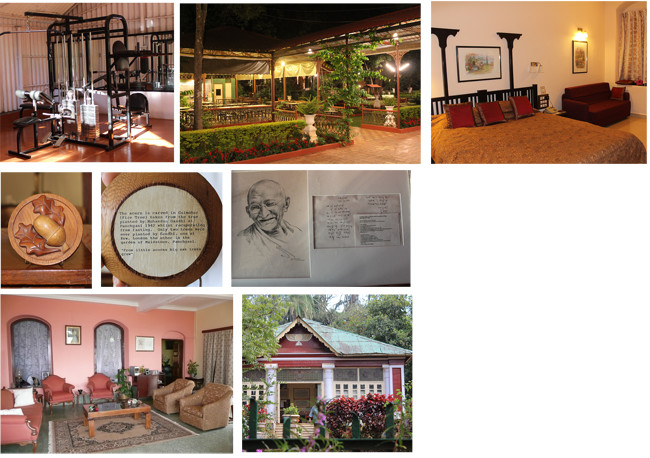
Top row: Gymnasium, The Summer- House Restaurant and bedroom at Il Palazzo; 2nd and 3rd rows: Gandhi memorabilia; sittiang room and penthouse bedroom at Maidstone
Race View has two partners in court — Navaz Engineer and her brother, offspring of Nusswan Dosabhai. The hotel has been closed for at least three decades. Among the other Parsi hotels which have been sold or closed down are Jerroz, Belmont Park Hill Resort, Victoria, Prospect Hotel, Royal Hotel and Fountain Hotel.
Six of the eight hotels are inherited properties — Ripon, Race View, Mayfair and Dina in Mahabaleshwar and Il Palazzo and Maidstone in Panchgani. Mount View in Panchgani is on lease for the fourth generation from the same lessor but also inherited. Sherwood is the latest Parsi addition on the block.
The Dina Hotel’s unique selling proposition is its extension of service, personalised and warm, Jal says. "Each is a self-contained unit with its own sit-out, a separate verandah, an area for the occupant, like a suite. My staff is very humble and well trained.” Dina is a one floor hotel dating from 1916, the teak finish windows and doors have an old world charm with western, formal meal service. The Parsi touch is in its hospitality and obliging staff who make you comfortable. ‘Chalk’ welcomes the Parsi customer. The menu caters to all palates and serves multi cuisine in one meal.
Naval Jal narrates how his ancestors came up in the party of the British Lodwick when he walked up to Mahabaleshwar in the 1820s. Jal has seen the town grow from no buildings to colonies. Jal has been managing this Hotel for almost 50 years and is ably assisted by nephew Hormuzd Mahableshwarvala (52) and his wife Shobha. On his return from Malawi in Africa, Jal came to help in the family business. It was in Africa that he dropped his longish surname ‘Mahableshwarvala.’
Jal also spearheads a campaign to clean Mahabaleshwar where he follows the truck to oversee them doing what they are supposed to! He is in the forefront to maintain the aramgah. He states, "I have a knack of knowing what is going wrong, so it’s corrected.” With a mischievous smile he acknowledges that people say "Aay buddho aavsé ané pachho garbar karsé (the old man will come and raise hell again).” Jal has cultivated this dour image which he capitalizes on to get his work done but also admits that he is greatly respected in the city and at the Mahabaleshwar Hoteliers’ Association where he has been treasurer for the past 15-20 years. He informs that there are only 65 registered hotels of the Association, averaging 20 rooms each, but there are 2000 or more unofficial beds.
Expansion is not a word used by all the six hoteliers. They do a maintenance and consolidation job. "I don’t want to expand and then have problems managing it. Personalised attention won’t be there. In five years, staff will be difficult to get as they go away during the sowing season,” says Jal.
The insistence on maintaining a standard has often been a double edged sword and at times the undoing of Parsi owned properties. Even Il Palazzo feels expansion should happen only if the standard can be maintained and the next generation plans to join the business. "Each generation feels the previous one has done nothing,” says Davierwalla. Khambata of Mount View recounts how the current hotel was a nunnery. Noshir’s grandfather disliked running a liquor shop — a business he left to run this hotel for a friend at a charge of eight annas per head per day in those days, when his bapaiji used to go halfway down the valley to buy milk and eggs. The couple state "Hamé éhvu kaam nathi kidhu We’ve worked hard but not like this.” Mount View talked of toilets placed way out and using topli na vara (basket toilets) before drainage was laid by Noshir. Given on trust, on word with the contract not renewed, their lease agreement dates back to 1936.
Both Khambata sons are graduates of hotel management and both live in Panchgani. The beckoning of the land seems strong for most of these inhabitants but with this family it seems special. Their roots go back to 1923 as inscribed on a water drinking katli. Noshir smiles sheepishly and states they "used to go for shikar in olden days.” This comes from the husband of a woman who feeds birds bread lathered with butter and sometimes jam. Veera adds as the squirrels and birds feast "é loko né sukku-paakku nahi gamé (They don’t like dry stuff).”
Panchgani "grows on you … the climate, the place… For nothing in the world can I leave Panchgani,” declares Davierwalla. No wonder he was emboldened to come here from Surat where he was running an establishment as no family member wanted to settle here. "My roots attracted me.” Lily admits she was miserable initially when Kobad shifted from Surat, as she realized she could not go to her parents in Ahmedabad at anytime. She recalls how she coped with no friends, no language and no family to fall back on.
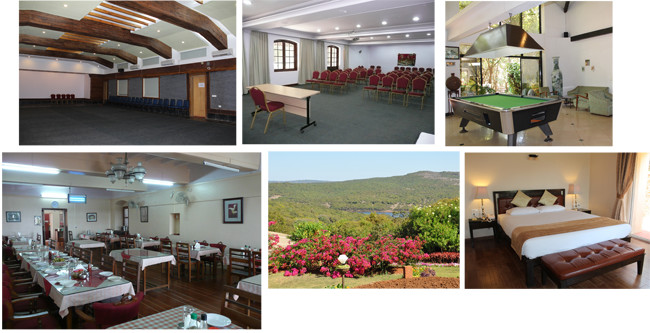
Clockwise from top left: Conference facilities, pool table and bedroom at Sherwood Resort; view and dining room at The Dina Hotel
The story of Virjees is not dramatically different. It is the oldest property in Panchgani — standing at 92 years. Jal Virjee sent all the sickly family of six children and wife Bachoobai to Panchgani for five weeks. When he came down to meet the family, he could not recognize them. He made the decision to settle, especially since his Italian car dealership in Bombay was to close down. After initial good years, the current property was mortgaged in the 40s. Following a few years of litigation with a man each from Sindh and China when they had no access to their own property, they ultimately won in court. The Virjees then built the annexe to sustain and maintain the nearly eight acres of land. It was here that Pesi and Daphne’s children Mohinee and Zal’s navjote was performed. The 50s and 60s saw school boarders and their parents inhabiting this property where M. K. Gandhi had recouped after coming out of jail. Gita, who was practically brought up by her maternal grandfather, has renovated the property in 2004 and added a modern outlook, even installing an inverter. She now only wants to consolidate what has been inherited.
Would the current hoteliers recommend this business to the next generation and to other Parsis? Answers vary: Choksi says you need passion for it and she will let the next generation decide. Jal of Dina Hotel already has the next generation involved, Khambata is happy to let this happen at Mount View but cautions that knowledge of Marathi is a must. Davierwalla is hoping that his daughters will join him but is uncertain about whether it will happen. Davierwalla states, "Property rates are so high, it is now next to impossible for an individual to buy a hotel.” Zeubin believes her family, the Adurjees, started the culture of hotel management in this area and hopes her children will carry on the tradition at Sherwood Resort. Adurjees used to own two hotels, Victoria being well known, but both were sold by her father.
The hoteliers are sudreh-kusti wearing Zoroastrians. Davierwalla says they do loban everyday. The Khambata youngsters go to the agiary every day though married to non-Parsis. Choksi is a great believer in prayers. Almost with one voice they are all liberal and say they would accept their children marrying non-Parsis. They all profess their last rites will be done at the aramgah either in Mahabaleshwar or Panchgani. Naval Jal also said that he has stopped putting sandalwood at the agiary for environmental concerns and thanks to "that Veerappan who has vandalized the trees.” Whether they are devout or not, each of them follows the tenets of the faith in its essence and their actions remain louder than words.
The next issue will feature other Parsi-founded institutions in the twin hill stations.
◆ ◆ ◆
From the archive