
Books
Ethical enterprise
Seven Fires and Three Pillars of Ethical Management: The Zoroastrian Model for Good Business by Dr Jose Luis Abreu. Published in 2009 by the Universidad Autonoma de Nuevo Leon, Facultad de Contaduria Publica y Administracion, Monterrey, Mexico. Pp: 177. Price: Not mentioned.
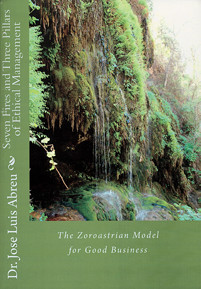
This book is unique in more ways than one. Its author, Dr Jose Luis Abreu, a Venezuelan who lives in Mexico, has made the Zoroastrian religion his life’s work. Currently director of the Latin America Spenta University Foundation and a member of the California based Zarathushtrian Assembly, this is Abreu’s second book on Zoroastrianism. His previous one, The History of Ethics and Its Zarathustrian Origins, recounted how this distant religion played a crucial role in the development of ethics.
That he, a foreigner, should be so fascinated is itself a tribute to one of the first and greatest revealed religions of the world. It would be no exaggeration to say that Abreu has researched more deeply and done more for this religion than those who routinely practice it in India and around the world. As Dr Jehan Bagli once remarked: "The theme of ethical management is worthy of broadening to portray all humans as the managers and the world as the organization.” Hence the book’s subtitle, The Zoroastrian Model for Good Business.
This is a thought-provoking and somewhat academic chronicle of the tenets of Zoroastrian philosophy and how they evolved. Also recorded is the life of Zarathushtra.
Zarathushtra is believed to have spent 15 years on Ushidaran mountain till Vohu Manah, the embodiment of the Good Mind, appeared to him in a vision and led him to the divine presence of Ahura Mazda. He felt himself truly blessed when he was asked to assume the mantle of a missionary to spread the new religion.
For almost half a century he labored to deliver the message of the one and true and good God and the good life. Even King Vistaspa and his queen Hutaosa and their children and the people at large underwent a complete transformation, forsaking their throne to become zealous missionaries to spread the divine message. The result was that the religion spread far and wide within the lifetime of Prophet Zarathushtra.
As Abreu comments: "For the first time in history, a universal religion was born with a message to inspire all of mankind.” Zarathushtra’s divine message was "a unique revelation, a fresh outlook, a new philosophy, a novel doctrine. It cleansed the human mind of prejudices, superstitions and evil thoughts… based on the triple principle of good thoughts, good words and good deeds.” Again "with the wise leading the world, the message is ever fresh and ever present… a self-renovating religion… a timeless guide to humanity.”
That he, a foreigner, should be so fascinated is itself a tribute to one of the first and greatest revealed religions of the world. It would be no exaggeration to say that Abreu has researched more deeply and done more for this religion than those who routinely practice it in India and around the world. As Dr Jehan Bagli once remarked: "The theme of ethical management is worthy of broadening to portray all humans as the managers and the world as the organization.” Hence the book’s subtitle, The Zoroastrian Model for Good Business.
This is a thought-provoking and somewhat academic chronicle of the tenets of Zoroastrian philosophy and how they evolved. Also recorded is the life of Zarathushtra.
Zarathushtra is believed to have spent 15 years on Ushidaran mountain till Vohu Manah, the embodiment of the Good Mind, appeared to him in a vision and led him to the divine presence of Ahura Mazda. He felt himself truly blessed when he was asked to assume the mantle of a missionary to spread the new religion.
For almost half a century he labored to deliver the message of the one and true and good God and the good life. Even King Vistaspa and his queen Hutaosa and their children and the people at large underwent a complete transformation, forsaking their throne to become zealous missionaries to spread the divine message. The result was that the religion spread far and wide within the lifetime of Prophet Zarathushtra.
As Abreu comments: "For the first time in history, a universal religion was born with a message to inspire all of mankind.” Zarathushtra’s divine message was "a unique revelation, a fresh outlook, a new philosophy, a novel doctrine. It cleansed the human mind of prejudices, superstitions and evil thoughts… based on the triple principle of good thoughts, good words and good deeds.” Again "with the wise leading the world, the message is ever fresh and ever present… a self-renovating religion… a timeless guide to humanity.”
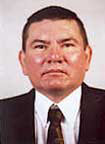
Dr Jose Luis Abreu: fascination for Zoroastrianism
The book is titled Seven Fires and Three Pillars of Ethical Management. The word "management” is used in its broadest sense — not only the management of business but also the management of life. Dr Ali Jafarey is quoted as calling them the primal divine laws of life. They are the universal laws of nature, the natural way of living. The three pillars are humata, hukhta, huvarshta — good thoughts, good words and good deeds. The seven fires are intuition, good mind, righteousness, serenity, the ideal government, progressive mind and perfection. These are the stages in a process that sustains a successful individual or an organization model.
Zoroastrians do not worship fire. To them fire is the symbol of the divine spark in man, what is called fravashi. The fragrance of sandalwood and incense that the fire spreads as it burns is the fragrance of man’s good deeds. The dust to which fire is reduced is man’s mortal end. Fire is a symbol common to other religions also.
In his search for truth, Zarathushtra found and realized the supreme and divine entity of creation called Ahura Mazda. He recorded the divine teachings in 17 songs as eternal guidelines for humanity — referred to as Gathas, sacred songs. The divine philosopher wanted to maintain an ever-fresh message, so he used a poetic approach as the easiest way of transmitting the knowledge.
A good Zoroastrian makes for a good businessman by following the traits of his faith — righteousness, truthfulness, and all other outward manifestations of goodness, not because of any rewards he may get nor because it will reflect well on the community, but for the sake of goodness itself and no other reason. He promotes the good mind to support an ethical structure for whatever business he is in. He promotes serenity, a state of mind and spirit, to avoid wrong decisions made when one is stressed and to ensure the righteous ethical climate in his organization. Ethics will help to strengthen the foundation for human resource development. The utilitarian principle will become the basis for a unified and comprehensive ethical system. Spenta Mainyu and Haurvatat are supporting ingredients for Ameretat (eternity), the peak of the triangle.
In addition, trust is important because it helps in the acceptance of dispute resolution procedures. As for healthy leadership, 4,000 years ago the Gathas provided a guide to the formation of good leaders for the organization and for society in general.
Abreu’s book ends on a note of prosperity, which is the aim of good business. Many people, he believes, are deceived and misled in their quest for prosperity. He gives the example of the Prophet himself who, when he was suffering persecution in his early days as a missionary, made a fervent plea to Ahura Mazda: "I know, Wise One, that I am powerless. I have a few cattle and also a few men. I appeal to you. Lend me the help a friend gives a friend. Grant through righteousness, the riches of a good mind.” The Gathic concept of prosperity takes into consideration two main elements: "good mind and righteousness.” The Prophet made clear that prosperity is a state of mind. A stanza in the Gathas clearly states: "Good mind, my only riches.”
Ironically, this deeply researched and profoundly illuminating book is not available in this part of the world.
BURJOR K. KARANJIA
◆ ◆ ◆
From the archive