
Politics and Policy
The Federation in isolation - V
A new tax code crippling trusts catering to particular communities is on the anvil
"All charitable trusts are exempt from wealth tax,” noted chartered accountant Hoshang Wania, president of the Nargol anjuman, but if the new Direct Tax Code 2010 to be effective by April 2012 comes about then "we will have to pay one percent of the market value as wealth tax. Religious trusts are not exempted. This means the [Bombay Parsi Punchayet (BPP)] dakhma land alone would be approximately taxed Rs 50 lakhs annually and other lands too… Already Doongerwadi is running in a deficit. This bill has been introduced in Parliament but we have made a representation…
"Any trust for a particular caste or creed will have to pay 30 percent tax” on income received, Wania observed. The exemptions granted to trusts prior to 1961 are to be removed. This would include charitable institutions and hospitals such as B. D. Petit Parsee General Hospital. Further amendments would require trusts to spend 100 percent of their income in the financial year or face taxation. Whenever a trust sells land or a building and reinvests the amount an exemption from tax is granted but "tomorrow if any anjuman sells anything they have to pay tax,” he stated. He referred to the formation of a Federation of the Religious Charitable Trusts and urged "each and every anjuman to become members.” The Federation would make representation to government to maintain the status quo, "explain how these provisions are hurting us” and grant exemption to trusts formed prior to 1961.
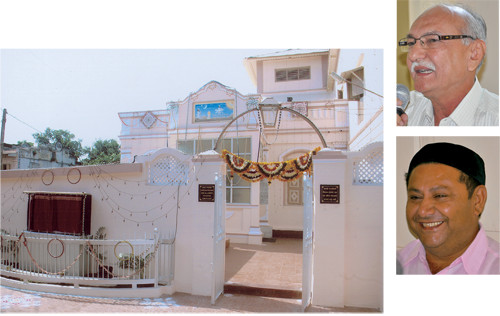
Clockwise from below: Ardeshir B. Patel Anjuman Dar-e-Meher in Mahuva, Dr Hosang Mogal and Hoshi Bajina
Anjuman news and views
Yazdi Panthaki who represented Saronda said the anjuman has a dakhma on three-and-a-half acres of land. Around 60,000 sq ft of the land has been usurped. The matter was taken to the charity commissioner and a compromise worked out whereby 50 percent of the land was given to the party and the anjuman kept the rest.
The dadgah has been repaired and the anjuman distributes food grains, and renders medical and educational assistance. "We are working on a group medical insurance,” he said. The anjuman’s income is nine lakhs and a dole of Rs 500 per month is given to disadvantaged families. Dinshaw Patel added that the agiary observes five bois a day as they have a mobed. "We have a fine corpus,” he added.
Kersi Patel of the Parsi Zoroastrian Anjuman of Secunderabad and Hyderabad noted that the number of deaths in 2009 and 2010 totaled 37 while the number of births was only seven. In 2011, till March there were two deaths and no births. "Our three agiaries are running well. Our two dakhmas are fully functional. Our Zoroastrian dharamshala and Parsi school are working well. There are 1,250 children in the school. There are 16 Parsi teachers. There are many Parsi colonies around the agiaries.”
"Ours is a very small association,” said Dinyar Naka formerly of Visakhapatnam, comprising two families consisting of five Parsis and one family of an interfaith union. "We do not have an agiary or dakhma. Only aramgah. The land was procured from government by Mr Choksy in 1922 — we have no record of the purchase of the land. There is also a small plot inside the Hindu cemetery. The municipality has taken up the management. It’s well kept, internal water drainage has been done; an electric crematorium is by the side, a marble plaque is also there. There are no documents so we had written to the children of Mr Choksy. They gave rights to us very kindly but said they have no documents. There are 11 graves. Earliest usage was in 1922. Many deaths have taken place. My wife is also buried there. The only asset is in the form of a fixed deposit which gets renewed from time to time. We don’t need anything from the Federation. Half yearly meetings are good to let us know what is happening. Four vice presidents are very motivated and moving to help govern the Federation better.”
Viraf Mirzan formerly of Chattisgarh mentioned three elderly Parsi women reside there. They have some property but are not able to manage matters well. Mehta suggested Mirzan write to the Federation with details as to what could be done to which Mirzan replied that a letter had already been sent.
Cyrus Todywalla of Daman noted their dadgah is 173 years old. "We have made a new agiary 11 years ago. We have 14 acres of doongerwadi land. Our president Dosabhoy Oliaji manages well. We have a community Navroz function and all of you are welcome.”
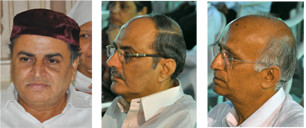
From left: VPA trustees Aspi Sanjana, Bomi Mehernosh and Noshir Zaroliwalla
"The agiary of the Mahuva anjuman near Surat will complete 100 years soon,” said Dr Hosang Mogal. "In 2010 we spent 22 lakhs on repairs, no personal appeals, only a few advertisements in the Jam-e-Jamshed and from different trusts we got money for the repairs. Mr (Adi) Patel of the Andheri Patel agiary takes an active interest. The repairs are so well done that for the next 50 years we will not have to worry. We have Rs 3.5 lakhs to spend (on) our dakhma land… every year we have a jashan since the last 15 years. We also have medical and education relief. There is no dastur and one man tends to the fire. I hope we are not reduced to a defunct anjuman some day. We should speak only in Gujarati at this meeting, not English. First let us teach our children good Gujarati. There are only four Parsis totally (in Mahuva), a few sometimes come to the agiary from the surrounding villages.”
"We in Mhow have a peculiar condition,” said Phiroze Illava. "We are two (trustees) of 85 and 83 years. The future administration of the anjuman is being discussed in a court of law. It is not a good thing. We have a stay on the elections, (North zone vice president) Tehmton Anklesaria will come he says and explain to the local Parsis and settle the issue. The anjuman funds will be at a standstill. We need to get a third trustee fast who can also operate our bank accounts. Federation already has a custodian trustee. Mhow was the first to appoint the Federation as a co-trustee.”
The Mhow dakhma "stands on 11 acres of land. It is hilly land. We maintain our agiary and kathi funds. The agiary consumes seven to eight tons of kathi every year. The agiary is 150 years old and was renovated in 1966. One big problem in Mhow is absentee property. People migrate and move away but lock their homes. Every year we distribute one to one-and-a-quarter lakh rupees in education aid. Very few youngsters are left in Mhow. Our water harvesting is very successful.”
Farroakh Govadia of Nargol stated the "anjuman required funds. We have two mobeds who are paid Rs 18,000 a month plus a chasniwalla so our total expense is Rs 21,000; plus each year we give them one extra salary. We also have to manage kathi costs of Rs 2,00,000 a year. One big problem is the doongerwadi road which needs repairs of Rs 4,00,000. One person has promised Rs 2,00,000 but (has) not yet given. We have 800 mango trees and our drip irrigation system works well.”
Pardi is "a very small anjuman with an agiary about 150 years old,” said Jal Patel. "Our dakhma is not in use. We have requested Bulsar (Valsad) to let us use their doongerwadi. They have agreed. We are very grateful to Bulsar. Sam Chothia helps us a lot, Dr Burjor Pardiwala has donated money and said to use the money for education and the dakhma. The dakhma has no fencing. Mr Sui donated his house to the anjuman. That property is now worth Rs 50,00,000, but before that we have to get two people out. We have no income. We give Rs 11,000 salary to dasturji so total costs are Rs 15,000-17,000 a month approximately. We find it difficult to maintain. Bawal trees that are cut are replanted.”
"One of our buildings is about 130 years old and another, the aramgah bungli, is not much younger,” noted a letter written by Hirji Belgaumwalla, president and honorary secretary of the Hubli Parsee Zoroastrian Anjuman and read out by south zone vice president Kerfegar Antia.
"The first which was the precursor to our fire temple built in 1932, was used for various occasions by our then flourishing kom (community) as Hormuz Baug for ceremonies religious and otherwise, as also to serve Zoroastrians passing through to Poona or Bangalore, providing room and board to Parsi salesmen, etc.
"As recently as about 20 years ago, we were forced to consider renting out these premises because the population began dwindling due to obvious reasons like demise and emigration, and better transport network which enabled travelers to reach their destinations faster.
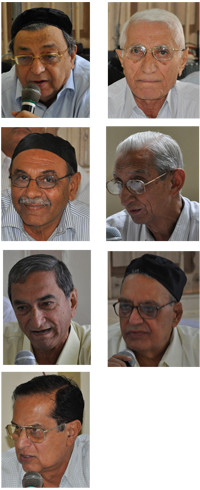
Clockwise from top left: Hoshang Wania, Farroakh Govadia, Phiroze Illava, Dinyar Nakra, Viraf Mirzan, Jal Patel and Kersi Patel
"Our kom’s income reduced to such a state that we were hard put to employ a priest to tend to the sacred fire, let alone invest in paint and polish! The dastur we then had, left for better prospects… A few of the retired men spent the days tending the atash saheb while others took turns in sweeping and swabbing and general care.
"In fact our then architects on inspecting the premises declared that it needed urgent upkeep or it would disintegrate within a few months as the construction was of unbaked mud bricks and cracks had developed all over the walls! They recommended renting, so the tenant could effect repairs and maintenance at his expense.
"As no one in the kom was prepared to pay even the minimum rent (and as) we needed to keep afloat, we were forced to send out feelers — and rented out the Hormuz Baug premises to a non-Parsi firm dealing in Indian made foreign liquors, as a warehouse.
"Now, the elders of that firm are no more and their business is also history because of political changes in the state. The present tenant is unable or unwilling to pay sufficiently enhanced rent as per present values in the area and location. He has said he wishes to knock down the building and erect a modern three-storeyed structure, which means he will want to have a long lease commensurate with his investment of crores. We understand that trust properties cannot be given on long lease…
"What we truly wish is that we ourselves, i.e. the Zoroastrian kom at large, could do the needful and retain the major advantages ourselves. Thus the Hubli Anjuman would then not be reduced to seeking donations to finance repairs and renovations — rather we could build a corpus from which we could do the donating!
"The Club Road is fast developing now, with a number of major banks on it or close by. The ruling rates for new buildings with frontage is around Rs 32 per sq ft and Rs 28 for the first floor, etc. The current tenant is presently paying us Rs 7,000 only... He isn’t ready to pay more for the existing structure.
"This is the right time to consider the future — his lease is up and so far we have not renewed it, as he does not want to continue using the old (dilapidated) building, nor pay more rent!... We would certainly be very, very grateful for any and all help you can render us.”
Those attending the Federation meeting were: Porus Debara from Agra; Jamshed Mohta (representing Amroli on the first day and Bardoli on the second); Meher Panthaki from Badnera-Amravati; Kersi Sanjana and Homi Pithawalla from Bardoli; Maki Kapadia from Belgaum; Eric Sethna from Bharuch; Marazban Baria, Dhanjishaw Avari and Noshir Badhni from Bilimora; Dinshaw Mehta, Khojeste Mistree, Yazdi Desai, Armaity Tirandaz, Mehli Colah, Cawas Panthaki and Godrej Dotivala from Bombay; Noshir Paghdiwalla and Mini Khan from Borivli; Viraf Mirzan from Chhatisgarh; Parvez Italia and Rohinton Italia from Chikhli; Shavaksha Todivala, Homai Engineer and Homiar Damania from Daman-Vapi; Marazban Wadia from Davier; Jehangir Dalal from Dharwad; Yasmine Sanjana from Dumas; Kersi Patel from Hyderabad-Secunderabad; Pervin Jehangir from Ilav; Mehrwan Irani and Pervez Irani from the Iranian Zoroastrian Anjuman; Ronny Dick and Zerin Dick from Jhansi; Tannaz Parakh and Pervez Khergamwalla from Khergam; Hoshi Bajina, Dr Hosang Mogal and Rohintan Mogal from Mahuva; Percy Mandviwalla and Godrej Hansotia from Mandvi; Phiroze Illava from Mhow; Hoshang Wania and Farroakh Govadia from Nargol; Jal Patel and Aspi Sui from Pardi; Tehmton Anklesaria from Ratlam; Dinshaw Patel, Jehangir Mandviwalla, Yazdi Panthaki and Sarosh Poonewalla from Saronda; Anahita Desai from Sholapur; Kerfegar Antia from South zone; Zarsis Udhnawala, Pervez Bhesania and Zubin Sethna from Thana; M. F. Dhanbhoora, Sheila Dhanbhoora, Sam Chothia, Aspi Sanjana, Bomi Mehernosh, Noshir Zaroliwala, Yazdi Laher and Aspi Sanjana from Valsad; Pesi Kasad and Darayas Mirza from Vansda; Dinyar Nakra from Vizag; Dr B. P. Jokhi and P. B. Buhariwalla from Vyara. The Press was represented by Jam-e-Jamshed and Parsiana.
The office bearers who were not representing their punchayets were west zone B vice president Areez Khambatta, joint honorary secretary Pervez Mehta and executive secretary Arnavaz Mistry. Mani Clubwala was the co-opted member from south zone. The guest speaker was Sorab Katpitia.
◆ ◆ ◆
From the archive