
Cover Story
“In power, yet powerless”
Two-and-a-half years of humiliation outweighs a lifetime of community commitment, feels erstwhile trustee Noshir Dadrawala
"I am a fighter but not a street fighter. I didn’t stoop to their level. I wrote letters, approached colleagues, tried persuasion, media, the judiciary…When the judicial appeal failed on technical grounds, they gloated.”
Erstwhile Bombay Parsi Punchayet (BPP) trustee Noshir Dadrawala ended his "dream turned nightmare” by resigning from the BPP’s board of trustees on March 31, 2011.
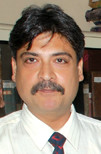
"What’s the use of being on a board where every voice of reason is squashed, where you are treated like a social pariah. How much humiliation can a man of dignity withstand?” a frustrated Dadrawala unburdened himself to Parsiana in his Centre for Advancement of Philanthropy (CAP) office in Bombay’s Flora Fountain area on April 1, 2011.
Dadrawala, chief executive officer (CEO) of the CAP, a renowned professional in the field of corporate philanthropy, was the only successful member of a team of professionals who had contested under the banner of Adult Franchise for Progress (AFP) — all middle of the road Parsis who were castigated as ‘liberals’ by the ultra orthodox — the first ever election of BPP trustees by universal adult franchise in 2008.
Dadrawala’s own orthodox religious persuasion was never in doubt, but he was never rabid. He became a political scapegoat of the current board of trustees, especially of the chairman Dinshaw Mehta, who perceived him as a Trojan horse planted by Mehta’s AZA (Alert Zoroastrians Association) opponents who were also Dadrawala’s electoral sponsors. Dadrawala has alleged that no worthwhile business was carried out at the board meetings when he was present "wasting two to three hours of time in micromanagement, even interviewing students for hostel accommodation!”
The main policy decisions were taken in the BPP CEO’s cabin while he waited in the boardroom, he alleged. His requests to see the minutes of board meetings, the Wadia Committee of Management meetings, the BPP accounts, etc were initially ignored, then rejected outright, on the ground that it may be used against the board. The traditional ‘black box,’ containing important official papers that used to be sent to the trustees for their information and comment in earlier times, has now been replaced by "a pink colored plastic folder with inane things like the amount of scholarship or health assistance to be given to respective applicants,” laughs Dadrawala.
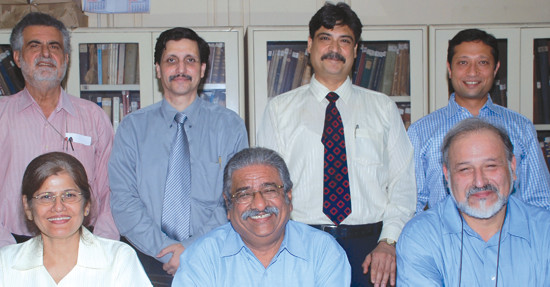
Noshir Dadrawala (above) and with the 2008 +elected BPP board (L to R, rear) Rustom Tirandaz, Yazdi Desai, Jimmy Mistry, (seated) Arnavaz Mistry, Dinshaw Mehta and Khojeste Mistree
In an e-mail to the BPP CEO Mehli Colah dated September 1, 2010 Dadrawala had noted, "An item that has been consistently on the agenda for virtually the last three months is… consideration of (my) e-mail dated June 10, 2010… asking for copies of all the minutes of the Wadia Committee of Management meetings and various other information. Almost a month ago at one of the board meetings I had requested Mr Mehta to take this matter up. However, on that day he pretended deafness and I did not pursue the matter more vigorously to avoid conflict… Is there something in the minutes that Mr Mehta is afraid of disclosing? The normal belief is that inconvenient evidence can and must be hidden. However, I am sure Mr Mehta is aware that even though our judicial system is adversarial, the basic function of the court is not to pass judgments, give orders or issue decrees. It is to find the truth...”
Matters seemed to deteriorate from inception as the new board filed a writ petition in the Bombay High Court contesting an order of the Charity Commissioner (CC) under which the old board, at the behest of its critic AZA, had agreed to provide accommodation to 104 members of the community. The current board wished the court to decide whether these allotments were in accordance with the trust’s Merit Rating Scheme. Dadrawala had dissented from this move of his co-trustees and according to legal practice had been named among the respondents. Nonetheless, the BPP’s reply to Dadrawala’s application to the CC states, "It is the avowed goal of AZA/AFP to thwart the functioning of the opponent trust and to embroil the trust in one frivolous litigation after another, thereby preventing it from fulfilling its objects of ameliorating the condition of the Parsi Zoroastrian community in Mumbai…”
"Litigation is their only, their top priority. The BPP went to court in the matter of the housing allottees, not AZA… Sixty lakh rupees of the trust’s money have been spent to dismiss 23 of the104 and people have been kept out of a home for two-and-a-half years. In the process they have ruined the plumbing etc by keeping the flats locked! That is what they call amelioration!” rues Dadrawala.
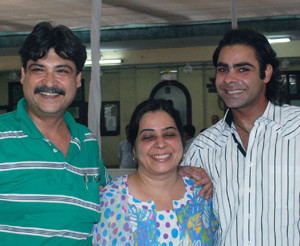
With wife Mavaz and son Darius
He does not know how much more money has been wasted in defending their fatwa against the ‘renegade’ priests: "I told them it was a waste of time. Why prosecute only two when there are more than 25 priests who perform such ceremonies? I told them they were inviting trouble… Defenders of the religion? Religion has been a tool for political gain. Dinshaw Mehta is a member of the Association of Inter-Married Zoroastrians!” counters Dadrawala.
When they were all newly elected, Dadrawala had hoped that the team would engage in strategic planning, create a vision and mission for the community. Such an exercise needs all stakeholders to come together, including the opposition and the beneficiaries. For example, AZA’s point of view on housing would need to be addressed, he notes. "You have to engage the opposition, make them part of the process…The trustees’ job is not to manage but to govern.” It was not to be. Mehta and his WAPIZ (World Alliance of Parsi Irani Zarthoshtis) supporters were "excessively puffed up with power and victory,” said Dadrawala. The combination of head and heart that makes for good trusteeship was replaced by the "politics of hate and alienation. They wanted to crush the opposition… They don’t want a watch dog. They want a lap dog! I was virtually outside the threshold!”
Personally, Dadrawala says he has "no regrets. They called me Mr Pendulum on the WAPIZ Page, but I’ve stood my ground in whatever I believe in…They promised transparency and accountability at election time — the pledge still exists on the chairman’s website. It is never practiced.” But he is sad to see the decline in values and practices: "People use the BPP as a personal office? You are voted in merely because you are the wife of the trustee who died?”
Though not a cynic at heart, Dadrawala expects Mehta to promote himself to chairman emeritus, groom his son for trusteeship, Khojeste Mistree may become the future chairman. He says "WAPIZ has a stranglehold on the community… Either Mistree or Yazdi Desai is always there. Yazdi walks into the trustees’ meeting at 8.45/9 p.m. and is marked present. The fatwa matter was initially opposed by Mehta. I was present at the meeting when he said ‘don’t open too many fronts.’ But they have an agreement: ‘You keep the Doongerwadi fiefdom, I’ll keep the housing portfolio!’ Off and on we see a schism. There are minor flare-ups but they are patched up because both need each other to survive. It is an alliance of convenience.”
After ace oncologist Dr Katy Dinshaw and vice chairman-cum-CEO of Housing Development Finance Corporation (HDFC) Keki Mistry were rejected by the community, Dadrawala doubts if any person of merit will stand again for election to the BPP board, though someone like Muncherji Cama could "give them a proper fight” for he has all the resources — wealth, experience and the backing of the cream of the community, though he would have to contend with Mehta’s stranglehold. For the space created by his resignation "they might put up a youth candidate or their current blue-eyed boy, Phiroze Amroliwala,” Dadrawala ventures. "Let the new man be their yes man. Give them a long enough rope to hang themselves! Or the new man would have to be able to fight at their level — be aggressive, crude, have loads of time and patience.”
What has cut Dadrawala to the quick is the lack of awakening among common Parsis: "There is only lip sympathy. I’ve been writing about my treatment in the BPP, but where is the voice of the community? If the community was really upset, it would call for a revolution. The BPP and the community are at their nadir. There is criminal wastage of community funds meant for the poor and needy. They can’t be wastefully utilized on litigations of this nature!” He is also leery about the courts’ tendency to dismiss cases on technicalities.
Asked to comment on his experiences in challenging the trustees before the CC and courts of law, an unhappy Dadrawala explains his "diminished faith in the system.” He feels the cases are "managed, not judged on merit.” As an example he notes that in the body of the order, the deputy CC who heard his case said that "information must be given, but in the operative part he says the information must not be misused. Does it imply no application of mind? Or what?” According to Dadrawala, the deputy CC was eventually caught for alleged corruption.
Dadrawala considers adult franchise a "double edged sword.” Just as Nani Palkhivala had questioned India’s readiness to choose politicians of merit, Dadrawala notes with regret that the community is not ready for it. "There is a complete unthinking mass at the base of the pyramid. Our community has used religion just as religion has been used in Bihar, Uttar Pradesh, etc. You can’t call Parsis enlightened any more.” That said however, he adds that with Mehta’s stranglehold on the earlier Anjuman Committee, things could have been worse.
Actually, the elections were a first step in refining the process, concedes Dadrawala. Rustom Hormuzdiyar and Com. Aspi Marker who presided over the first and second elections respectively, found some serious lacunae and have presented valuable suggestions to streamline the system, but they are gathering dust, he notes, because the trustees are constantly in lawyers’ offices.
Asked whether he continues to be orthodox or whether his views have changed, Dadrawala is candid about what the religion means to him and how a changing environment is affecting its practices: "Orthodoxy does not mean promoting hatred. Religion is something you live by; you don’t carry it on your sleeve. If the trust deed says the Doongerwadi is only for disposal via the dakhma, you have to follow it; you have to separate personal thinking from trust law.” Then he adds, "Trustees should be involved in the healing process, not create more controversies. You can’t run away from the fact that the system is not working. Zoroastrianism teaches righteousness but my fellow trustees flout it at every turn. You can’t run away from reality. I don’t want to be pessimistic but you can’t run away from the truth or let the people run away from the truth.”
We turn once more to the Punchayet’s hot potato — the cremateni bungli and Dadrawala repeats what he had told Parsiana in early 2009 when newly elected to trusteeship: A prayer facility within the Ambawadi complex is acceptable, keeping in mind that the traditional system is not working; but not in Doongerwadi itself. "The first time the property was shown was done by Dinshaw Mehta. He took Berjis Desai to see it,” he adds.
Dadrawala maintains the orthodox position on intermarriage — he prefers marriages within the community. But he is against gender disparity. He believes that the children of an out-married Parsi mother should have the same right to the religion as the children of an out-married Parsi father or it should be closed for both. Nor, he says, is he abusive about intermarriage or disruptive when such a child’s navjote is being performed. "In the Maloo case the Punchayet was out to disrupt the navjote. Hoodlums were called into the board room to plan the bash-up. I wondered if this was the BPP or a conclave in Dubai?... The community gets the leadership it deserves.”
Dadrawala sees the BPP’s youth wing, Zoroastrian Youth for the Next Generation (ZYNG) as a "platform to promote the sons and daughters of trustees for future trusteeship. They have to show some track record of community engagement. This would be it.” As for the calendar, the less said about its "cheap gimmicry,” the better, he notes. "Initially the trustees were gloating on it. It was only later they became embarrassed.” As for the ZYNG parties, they earn a dismissive comment about "sleazy pictures on the internet.”
According to Dadrawala no fresh charity donations have come into the BPP coffers. However, when flats are allotted — or sold by auction — income is generated by taking the proceeds partly as donation and partly as security deposit. This is in addition to interest income generated from investments by earlier boards of trustees, he tells us.
How do large philanthropic trusts elsewhere appoint trustees? we ask Dadrawala. There may be a search committee appointed to seek potential candidates, or promising individuals may initially be engaged in an advisory capacity before they are selected to serve on the board of trustees, he tells us. Some trusts have board development committees whose job is to create a bank of potential candidates, we learn. One guiding principle is to intellectually enrich the board of trustees with maximum professional diversity, he says. Nowhere does he mention an electoral process.
There is no questioning the fact that having axed the fractious BPP out of his system Dadrawala is happily back where his heart is — with the CAP which celebrates its silver jubilee this year. In the press release announcing his resignation from the BPP he notes with pride, "Professionally I have been involved in the field of philanthropy and management of charities for two-and-a-half decades. I have advised the Government of India and served on expert committees of the Planning Commission of India. I have helped to set up some of India’s best corporate and family foundations and continue to serve as trustee of some of the best institutions in the country and abroad. I teach philanthropy management at two of Bombay’s best business schools and the company which I head is the first port of call for people from across the world seeking guidance on philanthropy, be it the Gates or Google Foundation or celebrity clients like cricketer Steve Waugh and Oscar winning director Danny Boyle whose Jai Ho Trust I govern as managing trustee.”
The CAP has reached a crucial moment in its history ("The organization and I have grown together”) and made the waste of time at the BPP fretful for Dadrawala. He has announced that he would be leaving shortly for the United States of America to attend the prestigious Global Philanthropy Forum and thereafter organize a similar event in India. "There is an exciting and beautiful world of philanthropy beyond petty Parsi politics and I am happy that I am no longer a part of the latter,” he notes in his press release. "Everything I teach and practice professionally was completely negated (in the BPP). I was in power and yet powerless!” he told Parsiana.
The visits of international philanthropists like Warren Buffet, Bill Gates and others and the maturing of Indian philanthropists like Azim Premji and his ilk have roused in Dadrawala the need to reinvent the CAP and his role therein in terms of programs and outreach, both national and international. He is now eager to be off the mark to host an international philanthropy event in India to commemorate the CAP’s 25th anniversary.
And the community? "For the moment I will take a back seat, stay away from the community for a while. I am completely disillusioned but old habits die hard. The roots run deep. I have been writing for the Jamé since I was 18 years old. But now I want to devote more time to my family and close friends.”
A friend who has walked this thorny path earlier sent an SMS on hearing of Dadrawala’s resignation: "Welcome to the world of sanity!”
◆ ◆ ◆
From the archive