
In Memoriam
The sound specialist
Died: Burjor Ardeshir Mistry, 92, sound engineering consultant whose expertise was sought in the construction of more than 500 theaters and auditoria all over India and even overseas, on August 18, 2010 at the B. D. Petit Parsee General Hospital in Bombay following complications arising from diabetes.
Acknowledging the acoustic engineer’s significant role in the establishment of the National Centre for the Performing Arts (NCPA) complex in Bombay, in his condolence letter chairman Khushroo Suntook referred to Mistry being "connected vitally with the NCPA” and appreciated that he "contributed greatly to the building of the theaters.” A member of the Research Advisory Committee of the NCPA for over three decades, Mistry was appointed as consultant (theater engineering) at the NCPA during which time the landmark 1,100 seater Tata Theatre was erected [sans proscenium (dividing wall that separates the stage from the audience), sans curtains to resemble the intimacy between artistes and audience in traditional Indian "baithak” setting] and the Jamshed Bhabha Theatre (with its spacious stage designed to accommodate visiting orchestras and troupes performing in India). In fact during the construction of the Bhabha Theatre, when Parsiana had interviewed Mistry (see "For sound results,” April 1996) he had temporarily taken up residence at the NCPA Guest House to be closer to the scene of action.
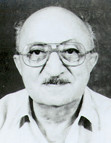
Burjor Mistry: designing theaters
As project consultant and designer, Mistry had additionally played a key role in the building of other landmark theaters like the Homi Bhabha Auditorium, Bhulabhai Desai Memorial Auditorium, and the auditoria within the precincts of popular institutions in Bombay like the United States Information Service, House of Soviet Culture, Patidar Samaj Trust, S. N. D. T. Women’s University, Bharati Kala Kendra, South India Association… To him, a good theater was one where the audience does not have to keep shifting in their seats for a view of the stage and a good cinema hall permits the viewers to feel that they are a part of the movie scene. More than a score of cinema halls in Bombay which bore the Mistry touch included Regal, Eros, Sterling, Shalimar, New Talkies, Ganga-Jamuna and the Satyam-Shivam-Sundaram multiplex complex where he took pride in introducing a screen that would have no constraining black borders to restrict the visual field. In Calcutta he has left his mark on theaters like Globe, New Empire; in Delhi, Plaza, Kamal; in Madras, Sapphire, Blue Diamond; in Bangalore, Lido, Sangam; in Ahmedabad, Relief, Krishna; in Surat, Rupam, Jivanjot… Besides being research director and member advisory (auditorium) and encyclopedia committee of Sangit Mahabharati, he was technical representative of the Film Federation of India, had served as vice president of the Theatre Owners Association, India, and was a respected associate of Evergreen Pictures.
An associate of the British Institute of Theatre Technicians and British Institute of Design, Mistry’s mastery encompassed theater engineering, acoustics, electronics, illumination engineering, comfort conditioning and environment technologies. Overseas he was invited to design theaters and auditoria in Sri Lanka, Kenya, Uganda, Tanganyika, Bangkok… In fact, there was a time when those seeking an appointment with him in Bombay would be advised to meet him at the airport between flights!
His expertise in sound effects was urgently sought when a visiting orchestra under Zubin Mehta was proposing to cancel its tour being dissatisfied with the acoustics of the Shanmukhananda Hall. With his ingenious technology Mistry was able to create a special acoustic shell to ensure that the sound does not get dissipated on stage. Thereafter his services were requisitioned for many such occasions. His consultancy was sought by Adi Marzban, Pesi Khandalavala and Sam Kerawalla too, well-known names in the Parsi theater circuit.
The willingness to explore new solutions Mistry had imbibed from Father Rephal who taught him maths and physics when he was an undergraduate student at St Xavier’s College. He graduated in science topping the Bombay University and later opted to study at the Indian Institute of Science in Bangalore. Midway through the course his services were requisitioned by the Government of India defence wing and then loaned to the Royal Air Force (RAF) where he was deputed to the Royal Aircraft Research Establishment, Farnborough during World War II when he did extensive work on vibration, physics of explosions, high energy physics and physical acoustics. Under the compensatory education scheme he earned additional degrees, MSc (telecommunication) and BSc (structural) from Imperial College, London University, as stated in his bio data. A fellow of The Institute of Physics as also The Royal Aeronautical Society and The Imperial College of Defence Engineering, Mistry refused, on principle, to show his credentials to anyone interested in engaging his services, declaring that he was willing to be cross-examined but why should he feel obliged to proffer his bio data when such demands are not made on other professionals?
When the RAF sent him on a mission to India to oversee the winding up of the Air Raid Precaution Wing, he happened to be on the same ship which exploded in the Bombay harbor incapacitating him for life. With a part of his colon destroyed, he was unable thereafter to eat any foods that left a residue. Until India gained independence, Mistry remained with the RAF and later opted to return to his country of origin even though he was offered life pension if he stayed back in the UK, recalls his wife Pola (née Sabavala, erstwhile well-known announcer on All India Radio), revealing how monetary returns were never the reason for his accepting any assignments.
In his younger days rather than spend pocket money on personal comforts, he would constantly buy science magazines. The only indulgence he permitted himself was purchase of books, a practice which continued into his old age. An avid reader despite suffering from a lazy eye syndrome he took pride in his personal collection even though he had lost vision in both his eyes towards the end. In sports, he took keen interest in badminton and table tennis as also swimming and particularly cycling. In fact during his younger days he took pride in reporting that he had cycled from his home in Andheri to his Master Tutorial High School at Nana Chowk and reached his destination faster than a train! Whilst their Andheri home abounded with canines and geese and occasionally snakes, which were all perceived as harmless creatures, he was most passionate about dogs as was their son Kaivan who passed away in a tragic accident in the Himalayas 10 years earlier. Exchange of birthday cards between father and son would invariably bear photos of dogs, recalls Pola mentioning how he kept asking for a dog in the last few years when confined to a bed at his marital home at Marine Lines.
"People believe that if you study more science you become godless. But it’s exactly the opposite,” claimed the sound specialist in his interview with Parsiana. Having studied Avesta-Pahlavi up to the MA level, Mistry took pride in reporting that he understood the meaning of the prayers and the significance of the sudreh-kusti that he religiously wore. Although he was flexible in his approach, on religious issues he maintained an orthodox stance and declined to attend the navjote ceremony when Pola’s sister who has married out of the community chose to have her children initiated as Zoroastrians. Unhappy with the functioning of the Parsi community he had declared, "If we could pool our assets we could be one of the richest in the world, physically and mentally. But we don’t…”
The ace acoustics engineer is survived by his wife Pola.
◆ ◆ ◆
From the archive