
Comment
Challenges for the chairman
The priorities outlined by the Bombay Parsi Punchayet board need substantial funding
The Bombay Parsi Punchayet’s (BPP) vision for the community encompasses projects aimed at improving the standard of living, especially of our priestly class, adequate housing for all, enhanced medical aid facilities and ensuring the survival of our Parsi Irani Zoroastrian ethnicity and religion by adhering to our time-tested customs and practices.
At present nearly 50 percent of our community members reside outside our baugs and are thus isolated from mainstream community affairs: Our housing project to build sufficient houses in the next five to 10 years will ensure that every deserving person on the waiting list is adequately housed. The present board of trustees hopes to house not only all the applicants but also all Parsis and Iranis living in private buildings, especially in distant suburbs, to bring them within the colony culture. This will increase interaction among young and old, leading to more marriages within the community and security for the aged. This dream is very close to reality and I hope to achieve it with the cooperation of my colleagues before my last term ends in 2015. Hopefully, all negative litigation about housing before the Charity Commissioner and the courts will stop and a more consensual way of dealing with the issue will be adopted by our critics.
At the Dubai World Zoroastrian Congress the BPP trustees had exhorted Zoroastrians who had migrated abroad to surrender their flats lying locked up in our colonies/baugs. For this scheme to succeed, we need to provide these NRIs (non-resident Indians) with comfortable transit accommodation when they visit India. After the housing needs of the applicants on the waiting list are completed, we should consider setting up such transit accommodation with proper facilities and infrastructure.
Since incidence of breast cancer is high amongst Parsi women it is advisable that mammography tests are done every two years by Parsi/Irani women over 40 years of age. In consultation with the B. D. Petit Parsee General Hospital managing committee we are trying to evolve a scheme of free testing for all such women.
We will continue to provide relief from poverty to the needy, support and subsidize the pursuit of education at all levels, extend financial support towards medical expenses as well as encourage sporting activities by funding qualified coaches, transportation and equipment.
A universal complaint is that of our declining population in India. We would welcome any suggestions and ideas on how to reverse this trend. The BPP pays each family Rs 3,000 per month from the day their third child is born, till his/her 18th birthday, as an incentive to have larger families. This came into effect from April 1, 2009. The board has now sanctioned the same incentive to be given to the second child, who used to earlier receive only Rs 1,000 per month. This will come into effect from April 1, 2010. We have decided to construct three room kitchen flats to be allotted to newlyweds. We have also started a youth wing called ZYNG (Zoroastrian Youth for the Next Generation) to initiate better interaction among our youth. We have also started holding matrimonial meetings on the second Saturday of every month at the Khareghat Colony hall to help the singles of our community find a suitable spouse. All Parsis Iranis, between 18 and 40 years are eligible to attend.
Another grave cause for concern is the decline in the number of practicing priests. There is a need to set up an independent institution or body to expeditiously take steps to enhance the wages and ensure financial security of the priestly class. Various stakeholders like representatives of the Athornan Mandal, all the vada dasturjis, the madressas and other concerned institutions need to get together and formulate such a scheme. At present there are only about 20 children studying in the Dadar Athornan Institute and only three in The M. F. Cama Athornan Institute in Andheri.
At present from the nearly 450 ordained priests, about 134-full time mobeds are serving in Bombay and another 112 mobeds are all over India. To give the priests a decent living wage with other perks and benefits, a total outlay of around seven crore rupees per annum would be required. Thus, a total corpus of at least Rs 100 crores would be the requirement of a nodal body set up to serve the needs of the priestly class. Since such large financing is required, I sincerely hope that large trusts like the Petit Trust, N. M. Wadia Trust, A. H. Wadia Trust, Ratan Tata Trust, Maneckbai Jejeebhoy Trust and others will pitch in, to effectively formulate the above program.
It is a good sign that our high priests have started taking an active interest in community affairs. On February 17, 2010 we were informed by the two high priests of Udvada that the wrongful initiation of a foreigner into the Zoroastrian priesthood was being conducted at the Zoroastrian College in Sanjan. Concerned members of the community intervened and stopped this rather unfortunate saga of a 48-year-old Russian tourist being initiated into the Zoroastrian priesthood. We would like to assure the community that the BPP will, against any odds, help protect the sanctity and purity of our religion, its beliefs and customs.
The petition filed by Jamsheed Kanga and Homi Khusrokhan, challenging our ban on the two renegade priests who continue to perform irreligious activities of conversion, prayers for those taking the cremation route where dakhmas exist and mixed marriage ceremonies, was dismissed by the Bombay High Court. While the dismissal was welcome, the high cost of defending this litigation, was not!
All this shows that the head and heart of the BPP are in the right place. Let us bring about a spirit of harmony in our small community so that there is no acrimony and bitterness, but only good old bawaji humor and a sense of joie de vivre. Let charity, the great Zoroastrian virtue, prevail.
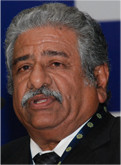
A Master in Science from Bombay University, Dinshaw Mehta has over 35 years experience in the field of construction. He hails from a civic minded family, his late father Rusi being one of the longest serving corporators in the Bombay Municipal Corporation, his brother Noshir serving as a corporator for three consecutive terms and being chairman of the BEST committee while sister Anahita is at present corporator for the second successive term. He has been a trustee of the BPP since 1994 and became chairman in September 2008.
◆ ◆ ◆
From the archive