
Books
China: the other face
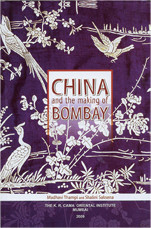
China and the making of Bombay by Madhavi Thampi and Shalini Saksena. Published in 2009 by the K. R. Cama Oriental Institute, 136, Bombay Samachar Marg, Bombay 400023. Pp: 176. Price: Rs 700.
When Parsiana sent me the book China and the making of Bombay for review, I was somewhat puzzled, or, rather, intrigued. Because of my ignorance I couldn’t quite make the connection. But after going through the book’s 160 deeply researched pages, I realized two things — one, that China did through the ages make a substantial contribution to Bombay’s phenomenal growth, and two, that thrills need not necessarily be confined to detective stories — business has its thrills, too.
Both the authors are experts on China. Dr M. Thampi wrote the book Indians in China 1800-1949 and edited another, India and China in the Colonial World. Dr Shalini Saksena’s areas of academic interest are modern Indian and modern Chinese history. She is the author of India, China and the Revolution. Their contention, certainly a valid one, is that much has been written about the philanthropies of men like Jamsetjee Jejeebhoy, Premchand Roychand, David Sassoon, Jamsetji Tata and several others which enabled a sleepy hamlet (once described as "seven islets in a cesspool”) to grow into a modern city. "How these merchants made their fortune,” the authors complain, "seems to be less important to these chroniclers than what they did with their money.” So their aim is to set the balance right and delve into the largely unexplored "China connection” in the fascinating history of how the city grew to become the country’s commercial capital.
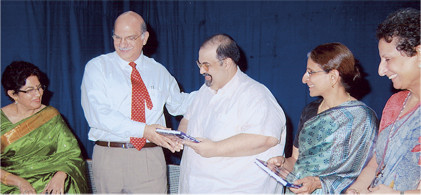
From left: Dr Shalini Saksena, Sir Jamsetjee Jejeebhoy, Muncherji Cama, Dr Madhavi Thampi and Dr Nawaz Mody at the launch of the book at the K. R. Cama Oriental Institute on January 5, 2010
Historians of China-India relations regard the Opium War as one of the defining aspects of China’s modern history. They tend to view Britain’s trade in China merely in terms of the justification it provided Britain to launch the Opium War. It is also possible to view this trade in another light — as an important phase in the centuries-old Sino-Indian commercial relationship —and to study it in all its aspects without assuming wrongly that it was confined to opium. The point is that this trade had its impact not just on China’s history but on India’s history too, through its role in the growth and development of India’s commercial capital, Bombay.
The origins of India’s trade with China are of great antiquity going as far back as the second century BC. Goods were carried back and forth between these two major productive regions of Asia. The first Indian from Bombay who sailed to China in pursuit of trade in the 18th century was Heerji Jehangir Readymoney who made the voyage in an Armenian ship. The arrival in Bombay of the master shipbuilder Lowjee Wadia in 1736 marked a turning point in several ways. With the decline of Surat as a trading port, Bombay took its place. From the 10th and 12th centuries AD the sea routes obviously began to supersede the earlier, slower, land-based trade routes. Indian merchants sailed to China with their wares, and there is evidence that a colony of Indian merchants resided in the Chinese port of Ovanghow in the 12th century.
However, it was from the last quarter of the 18th century that this trade really began to flourish. In 1714, four ships sailed from Bombay to China with cotton, but by 1786, with the government of Bombay reducing customs duties from six percent to 2.5 percent, the number jumped to 16. In 1805, the total volume of cotton exported reached a peak of over Rs 94 lakhs. This gave a boost to Bombay’s fortunes. In 1797, the Bombay Courier referred in glowing terms to "our China trade, upon which it may almost be said the mercantile excellence of our port depends.” For lack of any warehouses suitable for storing so bulky a commodity, the loosely packed bales of cotton were spread out on the Bombay Green. The bales, which were in a dirty state, were cleaned out by hand, but later cotton cleaning machines were employed.
The cotton trade gave a major boost to the shipbuilding industry in Bombay. Built of Malabar teak, these sturdy ships were reported to last as long as 60 years and in some cases up to 100 years. This in turn posed a threat to the British shipbuilding industry, so much so that parts of ships built in Bombay had to be sent to Britain. Several pioneering Parsis — the Wadias, Banajis, Readymoneys, Camas, Dadyseths — became ship owners. Jamsetjee Jejeebhoy took the shrewd decision to buy a fleet of ships to save on freight charges. At the time, the Banaji family owned as many as 40 country ships. Registration records showed that "the majority of those who owned ships owned only one ship and did so for only one season.” This was because a large number of small-scale and part-time operators were involved in the trade, along with the big agency houses and merchant princes.
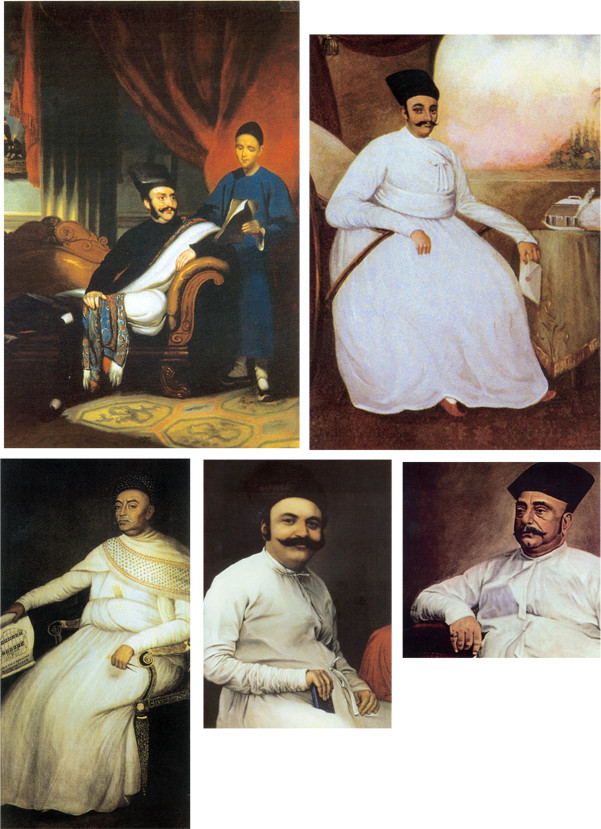
Clockwise from top left: Sir Jamsetjee Jejeebhoy Baronet 1783-1859, first Indian Baronet, with his Chinese scribe; Pestonjee Bomanjee Wadia 1758-1816, a successful merchant, the largest land holder in the Fort area, and owner of several ships; Merwanjee Framjee Panday, 1812-1876, a China trader who survived the Share Mania despite losses through his involvement in the textile industry; Sir Cowasjee Jehanghier Readymoney 1812-1878 who contributed to the University Convocation Hall and a Public Hall now the National Gallery of Modern Art; Jamsetjee Bomanjee Wadia, 1754-1821, fourth Master Builder, portrait painted by the Chinese artist Lamqua (Guan Qiachong)
With the slump in the cotton trade in the second decade of the 19th century, the Bombay traders, undaunted and without too many twinges of conscience, turned their attention to the forbidden alternative — opium. Despite the Chinese emperor’s ban on the import of opium, the revenues were so tempting that repeated imperial edicts continued to be ignored. Edicts routinely transmitted by the East India Company to the authorities in India were equally routinely ignored. When at long last the Bombay government discouraged the export of opium, the trade was diverted to the Portuguese possessions on the west coast, Daman and Goa. The consequent loss to the Bombay government was so great that to soothe its conscience by imposing a flat transit duty of Rs 175 per chest, it allowed the trade to be resumed. A sharp increase in opium export from 9,333 chests in 1831 to 14,007 chests in 1832 followed. Ultimately, there was a 10-fold increase in the Bombay export of this commodity to 42 percent of the total exports!
Incidentally, there were constant disputes about the quality of opium exported. Indian merchants accused the Chinese of adopting dubious methods to adulterate the product in order to have to pay a lower price. In desperation, Indian merchants took the precaution of having their opium examined and certified in Bombay itself to avoid rejection of their consignments when they reached China. Yet another hurdle for Indian merchants was the growth of steam shipping which was tightly controlled by the big European countries. It was the combination of exporting merchandise together with ship owning that had hitherto been the foundation of the prosperity and dominance of the big Bombay families. The arrival of steamships that could ship goods much faster and cheaper than the old country ships posed a new challenge. A few of the wealthy merchants like the Jejeebhoys, the Sassoons and others did interest themselves in steam shipping, but were unable to challenge the monopoly of the European companies who charged freight rates that cut deeply into the profits of Indian merchants.
Worse was to come. Alarmed by the spread of the illegal opium trade and its harmful consequences, the Chinese sent a new Imperial Commissioner, Lin Zexu, to Canton to suppress it. Lin demanded that all the foreign traders surrender their opium stocks and also sign a bond pledging not to carry the drug in future. Could it be that the wheels of God had begun their grind? There was nothing the Bombay merchants could do but surrender their stocks of opium. Much of their profits remained only on paper. They did send a memo, with a sense of injured innocence, asking for reparation for all the opium surrendered. The memo, sent in October 1842, had 163 signatories — less than a third were Parsis, the others were Jains, Marwaris and Hindus. The book’s authors don’t say what happened to this memo. In all probability it found its way to the wastepaper basket.
Shakespeare wrote about the soul of goodness in things evil. Fortunes accumulated through the opium trade thus far played a significant role in launching and sustaining Bombay’s earliest major industrial ventures such as the cotton textile industry which occupied Indian traders for another half century in industrial development as well. They began to make forays into other fields of economic activity in India such as banking, establishing cotton mills in the home city and other related activities. In the field of modern banking in India, Pestonjee Wadia, the great-grandson of shipbuilder Lowjee Wadia, was one of the founders of the Bank of Bombay in 1840, to be followed by the Bank of Western India in 1842, the Commercial Bank in 1846-47, and the Chartered Mercantile Bank of India, London and China which was reconstituted as the Mercantile Bank of India.
Along with their involvement in banking, some China traders took to experimenting with other industrial activities like setting up a plant for the mechanical sawing of wood, the use of steam in industrial machinery, and the possibilities of local machine-made cotton yarn and cloth. Most far-reaching of all was Dinshaw Petit’s family textile empire dominating Bombay’s industrial landscape and comprising as many as 17 mills. It was the China trade which not only provided seed capital for these ventures, but gave them exposure to modern business practices. By 1865 there were 10 mills containing 25,000 spindles and 3,400 looms, consuming more than 40,000 bales of cotton. Above all else, the new mills provided jobs to thousands of workers.
Parsis dominated the cotton mills industry of Bombay, till the Sassoons entered the field floating the Sassoon Spinning and Weaving Company, followed by the Tatas who established the famous Swadeshi Mills. Cotton yarn exports accounted for 16 percent of the total value of Bombay exports. According to the 1909 export figures, the export of cotton yarn to the Far East was "one of the chief foundations of Bombay’s prosperity during the last 30 years.”
Inevitably, the flooding of the Chinese market led to a glut followed by a decline in yarn exports. There was also competition from Japanese yarn which was of as good quality. Some changes had to be made by India, like scrapping spindles and replacing them with looms. However, the textile industry continued to grow, driven by domestic demand rather than Chinese. Aggressive Japanese marketing raised its share of the market from 2.7 percent to 55 percent. Indian production, which used to supply 77 per cent of Chinese requirements, had to be drastically reduced. Sixteen mills in India had to close down, wage cuts were imposed, but business has its ups and downs which have to be taken in their stride. One great "up” was that Bombay now had a port that was bigger, better equipped and more easily accessible than the Calcutta port.
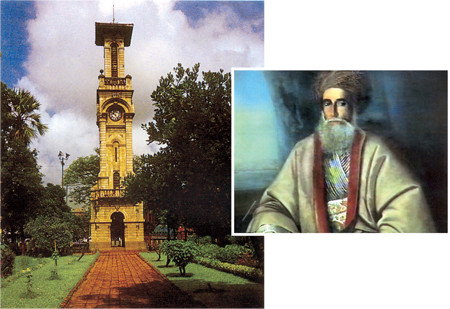
The Sassoon Clock Tower at Victoria Garden. Clock Towers are a feature of many Sassoon buildings, reflecting David Sassoon’s concern with punctuality; David Sassoon, patriarch of the famous Baghdadi Jewish business family, who migrated to India in 1832
An interesting detail to note is that India-China business was conducted in an area on the Canton waterfront which came to be known as "Thirteen Factories.” It was a small self-contained world. All activities of the foreign businessmen, both business and daily life, had to be conducted within its confines. English, French and American factories were lined up in a row along the waterfront. Most of the Indian businessmen were to be found in a factory called "Chow-Chow” meaning "miscellaneous.” It was described as "teeming with Indians,” particularly "Marwaris, Persians, Moors, Jews and Parsis.” In fact, Parsis so outnumbered the others that in Chinese records this particular factory came to be referred to as "the Parsi factory.”
It wasn’t smooth sailing for these early traders. Far from it. It called for more than a dash of daredevilry. The South China Sea was notorious for typhoons, which could capsize a ship or drive it off-course. Pirates were an ever present menace with the numerous islands dotting the coast and the rocky coastline providing ideal hideouts. Sometimes, as during the Napoleonic wars, the merchant ships became targets of raids by the French. The great opportunities offered by the trade were offset with great dangers like loss of cargo and even the lives of people on board, and frequent breakdowns. Why, even the foremost and the greatest of the traders, Jamsetjee Jejeebhoy, found himself stranded at the Cape of Good Hope, bemoaning his lot. As against the official system of trade as established at London which followed the regulations and practices of the Chinese Empire, there was an unofficial system in tandem, dealing in contraband items all in contravention of official regulations, which was largely conducted in the offshore islands. The biggest foreign player in this unofficial alternative was the East India Company, which even encouraged smuggling on the part of others when it suited its interests.
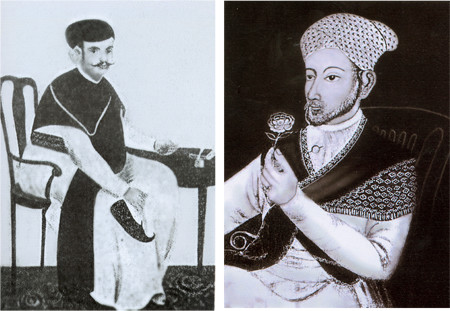
(left) Ardeshir Dady Dadyseth, 1765-1810. He traded extensively with China, and was a leading figure in the public life of Bombay; (right) Seth Maneckjee Lowjee 1726-1792, second Master Builder, son of the first Master Builder, Lowjee Wadia
Accidents and sudden deaths were rare. An item in the Canton Register (October 4, 1828) reported the death of a young Parsi, Auspundearjee Muncherjee, who went for a walk late at night and whose body was found the next morning lying by the river. But the mystery was never resolved, not that any effort was made to resolve it. The body was buried in Dane’s Island. This led in 1829 to a Parsi cemetery being established at Macao, with Cursetjee Wadia among a few others being buried there. Interestingly, the Parsis in China retained their traditional form of dress, the white flowing robes with cloth caps which, as the American Toogood Downing observed, suited their environment much more than the tight clothes and stiff hats of the Europeans.
Differences between Indian and British traders occurred. After the abolition of the East India Company, private British traders began pressing for changes in the existing system of trade, deliberately raising the level of confrontation with the Chinese government which retorted by imposing a complete ban on trade, a total boycott. Things went from bad to worse. Commissioner Lin’s success in confiscating the opium stocks was a short-lived victory. By the end of 1840, military hostilities between Britain and China had commenced in what came to be known as the First Opium War. The Chinese Empire was defeated and humiliated by being forced to sign the Treaty of Nanjing in August 1842. According to the severe provisions of the Treaty, the ports of Amoy, Fuzhon, Ninglo and Shanghai were also opened to trade, the "incompetent” and "not substantial” Co-Kong was abolished and China surrendered possession of Hong Kong to the British.
The terms of trade with China and the maritime trading conditions were altered forever. The book’s authors concluded: "Although merchants from Bombay continued to flock to China to do business for many decades thereafter, particularly to Shanghai and Hong Kong, the unique conditions under which they had operated in the Pearl River delta in the days of the ‘Thirteen Factories’ and the smuggling trade no longer prevailed.”
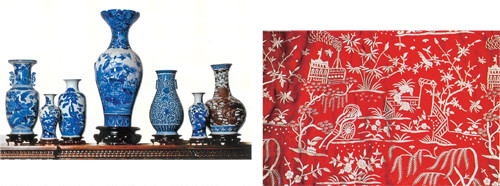
Chinese vases and heavily embroidered silk gara from the Perveez Aggarwal collection
The China trade needs must share the credit in the "making” of Bombay with the far-sighted visionary governors and the British administration generally who came to look upon this city as their own. The authors do mention the indefatigable Bartle Frere who spared no effort to woo the leading merchants and urge them to participate in his desire to beautify the city: "These men know how worthily to use the gifts which God has given them.” But there were several others whose contributions need to be mentioned. "Out of all this scum, there might rise another Carthage” predicted Dr John Fryer, an early traveller in the East, way back in 1675. His hopes were shared by Gerald Aungier who became Governor of Bombay in 1669. Among his many achievements — including laying out a town plan, introducing law and order and establishing a court judicature, a mint, a small hospital and even a printing press — must be mentioned the importing of English ladies to marry the English settlers. "Bombay is a city,” Aungier declared, "which by God’s assistance is intended to be built.”
Almost a century later, in 1771, Governor William Hornby built a vellard named after him between Mahalaxmi and Worli, ignoring the protests of the penny-pinching Company directors against the spending of one lakh rupees on the project. Hornby Vellard effectively welded the eastern and western shores of the island into one area. It also set the pace for other reclamations during Sir Bartle’s governorship (1862-1867) from Apollo Bunder to Colaba Church, from Custom House to Sewri and, on the western side, the great Backbay Reclamation from Colaba to the foot of Malabar Hill (1909-1918). Top British architects were commissioned to draw up the plans of new buildings in the highest traditions of Victorian Gothic architecture. These several buildings, too numerous to mention here, have today become the city’s proud heritage.
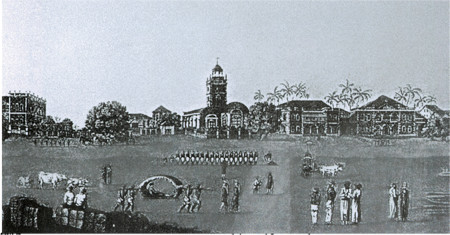
A glimpse of the raw cotton trade at Bombay Green, now Horniman Circle. The cotton bales are in the left foreground
Donations made in other spheres were spent on building libraries, educational institutions and public works of a secular nature. Religious buildings fulfilling the needs of the various Indian communities came up one after the other. Apart from the traditional forms of charity, wealthy merchants contributed directly to the building of Bombay’s basic infrastructure like the Mahim Causeway. It was, however, in the development of the health, educational and cultural facilities that the China traders made their most distinguished contribution. Similarly, in the ornamentation of the city, in the form of edifices glorifying the British as well as the contributions of eminent Indians, they left a lasting impact on the city. Small wonder Bombay came to be recognized as India’s foremost city and its commercial capital.
The book’s final chapter concerns Chinese influences on Indian art and culture. These were not obvious or dramatic, but were to be found in the subtle ways they affected elite tastes, in the beautiful vases and paintings that adorned their homes, in the innovations into patterns and designs of Indian clothing, particularly in the gara (or garo), the heavily embroidered silk saris prized by Parsi women, and in the prevalence at that time of Chinese pedlars marketing their wares in the streets and bylanes of the city.
The gara saris, popular to this day, are a fascinating example of the fusion of Indian and Chinese cultural traditions. As regards the tanchoi sari with which the Chinese were not too familiar, Indian weavers were actually sent to China to master the art of producing the fine satin brocades.
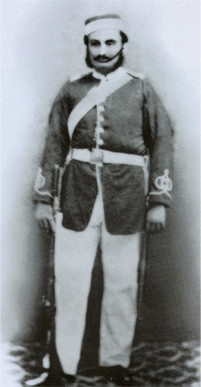
A young J. N. Tata as a volunteer in the British military operations in China
Culture has no barriers. A most recent example, not in the book but published in The Times of India (February 26, 2010) under the heading "Chinese take liking to Marathi” describes how at the World Book Fair in Delhi recently, about 68 Marathi books, including literature, learning material, reference books and even novels, were picked up by the Chinese delegates. The news item mentions that the history and culture of Maharashtra are "a small part of the syllabus in some universities in China!”
One final observation before I conclude. Business presents a straight face. Politics, by its very nature, tries invariably to contort its features. India’s misfortune is that for the past several decades we have been confronted by the contorted face of China — the border disputes not only with India but with no less than 15 other countries surrounding China; the mockery China made of the slogan "Hindi-Chini Bhai, Bhai” coined by itself, and so on and so forth. These aberrations are not being mentioned to add fuel to the fire. They are being repeated to emphasize the major importance and the supreme contribution to India-China relations by the book being reviewed, China and the making of Bombay. This contribution is simply to present to India and to the world the other face of China — the uncontorted, perhaps true face.
India and China are today the two economic giants of Asia. No doubt one is brawnier than the other. No soothsayer is needed to prophesy that, together and united, the two can work wonders, perhaps even miracles.
China and the making of Bombay boasts of a generous foreword by Muncherji N. M. Cama, president of the K. R. Cama Oriental Institute, several dramatic illustrations of historic interest, a 47-page index listing the names and activities of the Bombay merchants, a sizable bibliography and the usual index. The cover of the book is artistically designed and the book’s production values are high.
This is a book that needed to be and demands and deserves to be read. Who knows it may yet bring about, if not a more friendly, at least a less judgmental attitude, between the two great countries.
As a book lover and a voracious reader, this reviewer has learnt one lesson — never underestimate the power of the written word.
◆ ◆ ◆
From the archive