
Ideology
Committed to the cause
Turning his back on a life of privilege, the soft-spoken, scholarly Kobad Ghandy chose the path of revolution, dedicating his life to the Maoist cause
Detained politburo member and ideologue of the banned Communist Party of India (CPI) (Maoist) Kobad Ghandy’s bail petition was rejected by a Delhi court on October 21, 2009. The court directed the All India Institute of Medical Sciences (AIIMS) to find out whether Ghandy, who was arrested in the national capital on September 21, 2009, is medically fit to undergo a narco-analysis (truth serum) test, as requested by the police. On October 29, AIIMS pronounced Ghandy medically fit to undergo the test, and chief metropolitan magistrate Kaveri Baweja remanded him to further custody until November 4.On November 6 the Delhi High Court stayed the test until after the next hearing which has been scheduled for December 14.
Ghandy’s lawyer had opposed the test on the ground that his client was suffering from heart disease and would not be able to withstand the procedure. The police moved the court because of Ghandy’s alleged non-cooperation. Despite using all the scientific methods available to them during the interrogation, the police were unable to extract "all useful” information from the Maoist leader, and hence the need for narco-analysis.
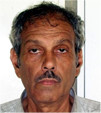
Kobad Ghandy: "privy to many secrets”
Ghandy’s arrest on September 21, 2009 resulted in media overdrive, sending frissons through society and the community. Born to a well-to-do Parsi family, the 62-year-old Doon School and St Xavier’s College, Bombay alumnus had studied chartered accountancy in the United Kingdom. Influenced, like a large section of the young urban elite by Left-wing dreams of a classless society, he chose to join the radical Naxalite movement which made its presence felt in the late 1960s and 1970s. But unlike many others who ended their association with the movement quickly, Ghandy remained committed to the cause.
Reams have been written about why the sober, soft-spoken and scholarly Ghandy turned his back on his heritage of privilege and chose the path of revolt. His father Adi was the managing director of the multinational Glaxo Laboratories and the family lived in a sprawling bungalow at Worli Sea Face. On retirement Adi and his wife Nargis chose to live in Mahableshwar. Their older son Farokh (now deceased) and his wife ran a holiday resort, Beaumont Park, in that hill station. Earlier, Farokh had made a name as pioneer in the making and marketing of fresh fruit flavored ice-creams in Bombay named Friendly Ice Cream. Maharukh Feroze Vevaina is Ghandy’s only sister. In later life, the senior Ghandys moved to Panchgani where they built a bungalow and lived in genteel retirement for the rest of their days.
As the head of the information branch of the CPI (Maoist), Ghandy was the Party’s senior ideologue in charge of propaganda and agitation. He had shouldered several crucial responsibilities, managing the party’s international affairs, its publications wing and the subcommittee for mass organization in urban areas. He was a founder member of the Committee for the Protection of Democratic Rights (CPDR) in the mid-1970s. His wife Anuradha (née Shanbaug), a sociology professor and fellow Maoist who died of cerebral malaria in 2008, was both comrade and soul mate. They were members of the People’s War Group, a Naxal organization promoting terrorism and violence to achieve change. The couple went underground when the Maoist party was banned and spent several decades indoctrinating and working among poor tribals in the interior districts of Maharashtra.
Had he not gone to Delhi seeking treatment for prostate cancer and cardiac problems, Ghandy may have continued to elude the authorities. The police had had him on their radar ever since they tracked the origin of the 14-page document, "Post-Election Situation: Our Tasks,” seized by security agencies from the laptop of an ultra in Jharkhand. Written and circulated by Ghandy in June 2009, the document carried details of the Maoists’ game plan to counter anti-terror moves by the state. It also elaborated on how and why the Maoists should use the current economic slowdown as an opportunity to expand their base among the deprived working class in rural and urban areas.
"I was detained on September 17 but the arrest was recorded on September 21 only,” Ghandy complained at the G. B. Pant Hospital in Delhi where he had been brought from Tihar Jail for a medical check-up on the morning of September 30, reported Daily News and Analysis (DNA) on October 1. The police, however, denied the allegation of illegal detention, maintaining they had arrested him on September 21 from Bhikaji Cama Place, acting on intelligence inputs. "This is the first time that such a senior Maoist leader has been arrested. Ghandy was a frequent visitor to the city. Interrogation is in progress,” a senior police officer told DNA on September 23.
Projecting himself as "just a writer,” Ghandy said, "I think it is exaggeration by the state that the person who writes for Maoists can be termed a ‘big catch.’ Those who are working at the grassroots level are important,” reported The Times of India (TOI) on October 6, 2009. But a senior police officer told that newspaper "Ghandy’s role in major Naxal attacks needs to be established and he needs to be questioned in connection with incriminating material seized... We believe that he is privy to many secrets of the banned outfit.” A laptop and pen drive seized from the leader proved of little use as the hard drive had been removed. According to the police, Ghandy allegedly operated using nine fake names like Dilip Patel, Narsi, Arvind, Rajan, Katif Ansari and others to substantiate their claim that he was actively working for the Naxals.
Meanwhile Naxalites began to step up the campaign for the release of their jailed leader, threatening attacks if he was not released unconditionally. In Jharkhand, police inspector Francis Induwar was abducted by five unidentified gunmen and later killed after the government reportedly ruled out freedom for three arrested leaders, including Ghandy, in exchange for Induwar’s release. The beheaded body of the 52-year-old police officer was found on October 6, seven days after his abduction. Subsequent investigations, however, revealed that the murder was engineered by a local Maoist leader to avenge the intelligence crackdown on his men. But Ghandy, who was back in Tihar Jail after a brief stint in police custody, refused to condemn the killing, querying, "How are you certain he was killed by Maoists?” Hindustan Times (HT) mentioned in its edition of October 20.
A senior Maharashtra cadre police officer who kept a close watch over the activities of Ghandy and his associates recollected that the Maoist from Bombay had initially floated the Maharashtra Kamgar Union in Nagpur to espouse the labor cause, reported HT on September 25, 2009. "Ghandy and his wife Anuradha used to be a formidable combination. They fuelled workers’ unrest and brought work at several industries in Nagpur and Chandrapur to a standstill,” not to mention hundreds of agitations in the collieries in the district.
Friends remember Ghandy as a warm and cheerful man with a lively sense of humor. "He was deeply democratic,” Shoma Sen, who teaches English literature at Nagpur University and worked closely with Ghandy and his wife, revealed to HT. Sunil Shanbaug, Anuradha’s brother who is a well known theater director in Bombay, recollected, "He retained a child like enthusiasm for life.” Friends recall that he was deeply egalitarian, helping with all household chores without the slightest fuss, and describe theirs as "a marriage in which gender did not play a role.”
Activist Jyoti Punwani, who wrote about "The Kobad Ghandy I knew” in HT (September 23), described him as "more a trusted mentor than the formidable ideologue he was even then (the 1970s). His simplicity endeared him to our families; seeing him sweep and wash while his wife taught at college, Doon School seemed eons away.” Revealing another facet of the man, that of a "foodie,” Punwani recollected that on one occasion "after a whole morning wrestling with Lenin’s ‘Imperialism’ at some open air camp outside Bombay, Kobad would start making lunch, insisting that we learn to wring the necks of chickens, else how would we stand the sight of blood when revolution actually came?”
"Kobad played a key role in mobilizing youth movements...when an argument would heat up, his calm intervention would settle matters. He was not bossy but his logic was spot on. He was known for his vision and sense of humor,” Ritu Diwan, professor of economics at Bombay University who was part of the core group of CPDR in the 1980s told The Indian Express (IE) of September 24. "He is... a scholarly person. He is very soft-spoken and a thorough gentleman. I can’t believe he led violent operations,” activist and member of CPDR Asghar Ali Engineer said to IE.
"During the seventies there were many young men and women who were passionate about Marxism, but they slowly slipped away or lost interest. Kobad’s interest never waned, it only got stronger,” Bombay-based human rights advocate P. A. Sebastian told Mid-Day on September 24. He added that he was not shocked that Ghandy chose such a path or was arrested. "When I saw him on television, he just looked a little aged, that’s all,” said Sebastian who believes that Maoist violence is often in retaliation for injustice inflicted on them.
Meanwhile, DNA reported on October 5 that Ghandy will utilize his time in Tihar Jail to write a memoir on his wife, his comrade-in-arms for over two decades. When contacted, the jail superintendent admitted that it is their policy to promote and encourage prison inmates to undertake creative pursuits, but that the jail authorities are not aware of what Ghandy is writing.
◆ ◆ ◆
From the archive