
Events & Personalities
“Versatile and wise”
The 11th century Persian poet Omar Khayyam "was not an epicurean,” claims Dr Sabar J. Have-walla, former professor and chairperson of the Centre for Persian and Central Asian Studies, Jawaharlal Nehru University. Speaking about the muse who extolled the virtues of wine, women and song, Havewalla said, "In real life he was never like that...He was a genius… versatile and wise…he excelled in every field.”
So how did he get the image of being a hedonist? Havewalla attributes the distortion to Edward Fitzgerald’s translation of Khayyam’s rubaiyats, iambic pentameter quatrains with a rhyming scheme. "Languages have many shades. Fitzgerald’s translations word by word are true... But he did not translate the metaphors with proper understanding. The translation is beautiful but it is not the poetry of the Omar Khayyam produced by Iran,” Havewalla told the audience at the K. R. Cama Oriental Institute (KRCOI) on July 29, 2009. She termed it a "transcreation.”
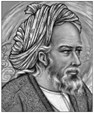
Omar Khayyam: "excelled in every field”
According to Have-walla "wine is a symbol of Navrooz and ancient Iranian culture… Iranians are proud that they discovered wine. They celebrate this "rather than get drunk” on the spirit. How did his tributes to wine affect his faith in Islam? asked a member of the audience. "Though he was a good Muslim he was very proud of his ancient (pre-Islamic) culture,” replied the professor.
Dismissing allegations that Khayyam was an atheist, Havewalla countered, "He believed in God but not in the mercy of God…he was a theologian.” Living in the "eastern part of Iran he was influenced by Buddhism.” He did not believe in heaven or hell. "He did not know where the soul goes” after death, she added.
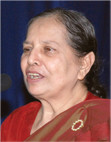
Dr Sabar Havewalla: Persian scholar
Khayyam wrote 200 couplets or 100 quatrains unlike Firdausi who wrote over 60,000 couplets in the Shahnameh alone. The reason being that Khayyam had many interests. "He was a great scholar, a great scientist,” noted the professor. "The calendar he devised is still used in Iran today.” He correctly calculated the equinoxes as well as the longest and shortest days of the year. In Iran "you can see the changes in the weather according to his calendar,” said Havewalla who according to KRCOI chairman Muncherji Cama was the youngest person ever to receive a PhD from Tehran University.
Ancient Iran "dismissed” Khayyam as a poet because of his heretical views and because he did not follow the style set by the legendary muse Firdausi. As Cama explained in his introduction, Khayyam was "parsimonious in his use of words” and did not write "epics and love poems.” And unlike the others he was not a prolific writer.
KRCOI joint honorary secretary Dr Nawaz Mody thanked Havewalla for "effectively translating” Khayyam’s quatrains for the audience’s benefit. After the talk Parsiana inquired from Havewalla if Khayyam was married and did he have many lovers as claimed by people. The professor replied that she did not know if he was wed as she was more concerned with his works than his personal life. As for his alleged promiscuity, she dismissed the notion claiming he was too involved with his myriad interests to have time for affairs.
◆ ◆ ◆
From the archive