
Politics and Policy
“Talibanization of the BPP”
Liberal groups threaten to take the Bombay Parsi Punchayet to court over their decision to bar two priests from performing religious ceremonies
The Bombay Parsi Punchayet (BPP) ban on two allegedly "renegade priests” from performing religious ceremonies at Doongerwadi, the Shapoorji Fakirji Jokhi Agiary at Godrej Baug and the Godavra Agiary (see "Talibanization of the BPP,” Events and Personalities, Parsiana, July 7, 2009) has stirred a fresh and heated controversy.
"The law is the only recourse” for the two priests, said Association for Revival of Zoroastrianism (ARZ) trustee Kerssie Wadia.
"We are in the process” of examining all the options, says Wadia. The BPP trustees "are violating the fundamental rights” of individuals to freely practice their profession. "Doongerwadi is not their (the trustees’) personal property” to do what they like with it. "Just because they are elected to office for seven years does not make them the owners,” he remarked.
On June 9, 2009 the BPP trustees passed a resolution barring Ervads Framroze Mirza and Khushroo Madon from performing ceremonies at the three places. They justified their dictat on the grounds the duo performs funerary rites for those opting for cremation and the navjote ceremonies of children of interfaith unions. The trustees cited a letter from Dastur (Dr) Kaikhusroo Jamasp-Asa calling for a priestly boycott of the two.
Madon in an e-mail to Parsiana has vowed to continue performing the funerary ceremonies of those opting for alternate means of disposal to Doongerwadi, while the World Alliance of Parsi Irani Zarthoshtis (WAPIZ) has "saluted” the BPP’s decision, noting the trustees were upholding traditional values.
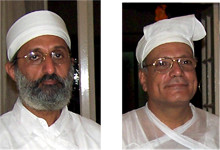
Ervads Framroze Mirza (left) and Khushroo Madon: boycotted by BPP
The Hindustan Times of July 28 quoted BPP trustee Khojeste Mistree as saying, "Would the Hindu community allow a burial at their crematorium?” and BPP trustee Jimmy Mistry as stating, "We’re not orthodox. We are just thinking logically as the Towers of Silence is the best system of disposal of bodies as it follows an eco-friendly system.”
The issue, of course, is not changing the system of disposal at Doongerwadi as alleged by the two trustees but permitting those who want to opt for alternate means elsewhere to have their funerary rites performed.
The WAPIZ Page in The Free Press Journal of July 24, 2009 applauded the trustees "for banning renegade priests from performing any religious ceremonies at Doongerwadi… Some years ago, our High Priest, Dasturji (Dr) Kaikhusroo JamaspAsa saheb had circulated to all the agiaries in Bombay, a letter against renegade priests. These priests in defiance of the religious traditions, have been contributing to the weakening of our religion, by encouraging irreligious practices such as cremation, by performing religious ceremonies for those cremated, in (Bombay).
"The new board of trustees of the BPP has now not only unanimously ratified the resolution passed by the earlier trustees, but has also begun to implement it. Renegade priests, Khushroo Madon, Framroze Mirza and others who are of the same mold have been banned from performing any religious ceremonies at Doongerwadi.
"This will send out a loud and clear message to the coterie of rogue priests that tradition and custom are to be upheld as are the directives of the High Priests and that this ethos has finally found its rightful place in the BPP boardroom. The BPP election of 2008 has given a mandate to trustees to uphold the traditions and practices of the faith and desist from supporting misplaced liberal causes.
"WAPIZ applauds the BPP for their firm stand on this issue, which will not only go a long way in upholding the dakhmenashini system, but will also give strength to those devoted priests who, despite the opportunity to earn more moneys, refuse to perform such irreligious ceremonies. By doing so they have stayed steadfast to the religion, firm in their belief of dharam pèhlé, pachhi paisa (religion before money).”
Both Mirza and Madon live in BPP housing. While Mirza is a tenant and therefore protected by the Bombay Rent Act, Madon’s tenement is on a leave and license basis. The trustees in their fit of religious fervor could refuse to renew the license when the lease expires (see "Big Brother is watching you,” Parsiana, July 21, 2009).
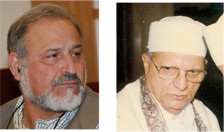
Khojeste Mistree (left) and Dastur (Dr) Kaikhusroo JamaspAsa: "traditional values”
"What is irreligious”
Ervad Khushroo Madon responded to the allegations made by WAPIZ in an e-mail to Parsiana which has been edited for publication: "I have been performing the four days’ after-death ceremonies for the departed souls of persons opting for dakhmenashini, cremation, burial or for corpses donated to medical institutes. In the WAPIZ Page in The Free Press Journal it is mentioned that this is being done by me for hefty monetary gains. This is totally wrong.
"I have been charging a very nominal amount of Rs 9,500 for four days’ ceremonies including geh sarna, sarosh kardas, two uthamnas, daham yazad and chahrum afargan and farokhshi. This amount includes the entire cost of flowers, uthamna materials, sandalwood, loban, fruits, malido, transport charges, praying fees for mobeds, etc for the four days including ashodads.
"I am sure no agiary panthaky is doing the four days’ ceremonies for such a small amount. At Doongerwadi too, I do the four days’ ceremonies at the same cost. Normally at Doongerwadi other panthakies are charging more, i.e. about Rs 12,000 to Rs 15,000 plus ashodad.
"Even for a navjote or wedding I tell the client (rich or poor) to pay me whatever they wish and accept Rs 500 or Rs 1,000 as total amount per wedding or navjote. In a number of cases I have performed navjotes and weddings of the poor free of cost.
"Hence, the charges levelled against me are totally false and mischievous. Once the soul leaves the body and I pray for the soul, what is irreligious?
"My intention is this that ravaan rakhdi nahi jae (the soul is not forsaken) and the four days’ ceremonies, which are very important for the soul, are performed. In places where there are no dakhmas the four days’ ceremonies are performed officially in an agiary or aramgah even when the body is cremated.
"In Bombay the first four days’ ceremonies are not performed at Doongerwadi or agiaries if a person is cremated. But from the fifth day almost all agiaries perform the religious ceremonies like dasmu, masiso, muktad, varsi, etc.
"If, according to Dastur JamaspAsa, cremation is a sin committed by the person then why support him and favor him after four days? It means he is pardoned after four days of punishment. From the fifth day is he free from the sin of cremation?
"Hence I will continue to perform the four days’ ceremonies at Doongerwadi and elsewhere as and when called by any person at any time. Also I will perform the navjotes and weddings of mixed Parsis as the same is approved by highly learned and revered vada dasturjis like Kanga, Dhalla, JamaspAsa (the grandfather of present JamaspAsa).
"I will not listen to the translations and double standard preaching of Mistree and JamaspAsa, as the same will lead us to extinction.”
Madon’s rejoinder was published in the Jam-e-Jamshed Weekly of August 2, 2009 as well as the front page of the Mumbai Mirror tabloid of August 4, 2009.
◆ ◆ ◆
From the archive