
Zoroastrians Abroad
A fire in North America
"We are working on the modalities of establishing a consecrated fire temple in North America,” says Homi Gandhi who retired recently as president of the Zoroastrian Association of Greater New York (ZAGNY) after two consecutive terms.
Along with Dr Behram Pastakia of Washington DC and Firdosh Mehta, the former president of FEZANA (Federation of Zoroastrian Associations of North America) Gandhi has been brainstorming on "how to get closing agiaries in India to North America.” One such they have identified is the agiary (dadgah) in Bhuj, Gujarat, where according to Gandhi there is only one worshipper. "We want to transport it to North America,” Gandhi shares their goal with Parsiana in the course of an interview in Bombay on February 3, 2009.
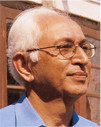
Homi Gandhi: focusing on social issues
Noting that ZAPANJ (Zoroastrian Association of Pennsylvania and New Jersey), ZAMWI (Zoroastrian Association of Metropolitan Washington) and ZAGBA (Zoroastrian Association of Greater Boston) are interested, and new associations are cropping up in various parts of the United States like the Zoroastrian Association of North Texas in Dallas and the Zoroastrian Association of Kentucky, Ohio and Indiana (see ZAKOI in this column), Gandhi says "ZAMWI needs one badly.” With 80-100 Zoroastrian kids in the area they are setting up religious education classes, showing film maker Tenaz Dubash’s documentaries on the Zoroastrian heritage. ZAMWI for example uses hired premises in school buildings but according to Gandhi "you can’t get them for more than two hours” at a time and require setting up and pulling down the educational infrastructure each time.
"My dream is to have a Zoroastrian information and library center,” he notes. Transporting a consecrated agiary to the US "will require a lot of time, money, devotion. The money will come if the project is crystallized…because North America will be the number two Zoroastrian community in the next generation. It has to lead, get the world community together…I am looking forward to it in my lifetime,” he smiles.
Gandhi had been among those from FEZANA who had worked "very hard” to create a world body of Zoroastrians. The project was scotched by die-hard orthodox from India. Gandhi perceives such community commitment as stemming from two sources: "Because they firmly believe in it or they want to create a power structure around themselves. Our faith talks about Asha — the power of reason. How you utilize it is what matters.”
ZAGNY celebrated its 35th anniversary on January 24, 2009. One highlight was a slide presentation by Ferzine Patel reminiscing on the association’s growth and development, notes Gandhi. There are currently more than 10 priests who provide the community with religious backing. The services of three of the veterans was recognized with the presentation of shawls on the occasion. "The younger generation of priests are also very responsible and hardworking. They want to contribute to the community,” Gandhi notes happily. He recalls ZAGNY’s three-day participation in a Gujarati conference in New Jersey over the Labor Day weekend in August 2006 where they had been allotted 10 x 10 space in the exhibition hall and the whole community had gathered around to represent the Parsi connection.
Gev Nentin has succeeded Gandhi as president of the Association since the organization’s AGM in 2008. His team which will hold the reins until 2011 includes vice president Khurshid Navdar, treasurer Kerman Dukandar, secretary Behroz Dutia, joint secretary Keki Dadachandji, and members at large Vispi Kanga, Dinyar Kalwachwala, Patel and Pervin Tata Lobo.
Gandhi, who had been professionally associated with the New York Stock Exchange (NYSE) tells us that it comprises two bodies — NASDAQ (National Association of Securities Dealers Automated Quotations — a system of quoting over-the-counter securities) which is the market and the NASD (National Association of Securities Dealers) Regulation Incorporated which is the regulatory body. "NYSE started as a market selling stocks. When it was found that people were mishandling (the securities) a regulatory body was set up and that became a separate body,” says Gandhi who had been a member of the latter. NYSE is the biggest in the world, he tells us, accounting for 30 to 40 percent of the world market in stocks and shares. "In the US it controls over 70 to 80 percent of market capitalization.”
Having retired from the NYSE, Gandhi’s time and energy are devoted to social issues. Along with Pastakia he co-chairs the FEZANA UN NGO committee comprising over 60 adults, as notes the FEZANA Journal (Fall 2008). Last year the United Nations renewed FEZANA’s standing as a non-governmental organization (NGO) in consultative status with the Economic and Social Council (ECOSOC). The FEZANA contribution will be viewed again in 2012. A letter from Gandhi and Pastakia in the Journal notes, "Delegates have traveled to the meetings, found lodging and made arrangements for their visas all on their own time and expense. We have learned to write press releases, organize workshops and interact with the media. We are grateful for the contribution of each and every individual who has brought us this far, and trust this provided participants an opportunity to grow as world citizens…
"This year the United Nations marks the 60th anniversary of the Universal Declaration of Human Rights. The year-long celebration provides us an opportunity as local associations, as small groups or even as individuals to ask the question, ‘What is it in our own faith tradition that impels us to support human rights?’…” Diana Katgara of Toronto, Armene Modi of Poona, Parmis Khatibi of California and Naheed Vatcha of Chicago had been scheduled to accompany Gandhi to the 61st Annual DPI/NGO Conference Reaffirming Human Rights for All: The Universal Declaration at 60 held at the UNESCO Headquarters in Paris, September 3-5, 2008.
Another social issue close to Gandhi’s heart is climate control. In this area he says he uses "other people’s expertise along with my financial background” to help establish plants and units conducive to the idea. At the climate control session at the UN, largely based on Abrahamic faiths, Zoroastrians were called in to provide a rejoinder, he tells us.
While in India Gandhi was preparing a press release for a UN presentation in March — a bid to be on the panel discussion to present the Zoroastrian contribution to caregiving, with emphasis on HIV-AIDs. He was working to present the Bel-Air Hospital and Sanatorium, a 70-year-old institution that began as a caregiver for the TB afflicted when there was no cure for TB and has now metamorphosed into India’s premier hospital for HIV-AIDs.
◆ ◆ ◆
From the archive