
Comment
The Marathwada mamlatdar’s monsoon magic
A hope and a prayer can sometimes work wonders
As per the orders from the Government of Nizam of the erstwhile Hyderabad State, I was to take charge as tahsildar (mamlatdar) of the Ambad Taluka in June 1945. Situated in the Marathwada region, at that time Ambad was one of the constituents of the State of Hyderabad but subsequent to the reorganization of states it was included in Maharashtra, initially in Aurangabad district and presently in Jalna district.
The scenario was grim on the eve of my first responsible assignment. Looking at the conditions the locals feared the monsoons would fail. When handing over charge the retiring tahsildar advised me that my prime duty would be to resolve this situation on a priority basis.
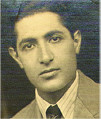
Zal Nowsherwanji: A lifetime in the civil service
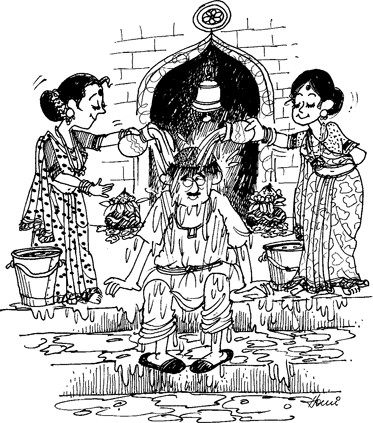
Sure enough, the very next day at my office I was greeted by a delegation of some farmers, village officials viz the Patels, Patwaris, Kotwals, and some senior citizens who had come to apprise me of the situation. They revealed that as per age-old customs, in the event of monsoon failure, congregational prayers were offered in temples and mosques but there had been no improvement in the drought situation. Traditionally, as a last resort, the tahsildar, being the head of the taluka, would have to come forward without any garments (with only underwear on) and sit at the main entrance gate of the Tahsil Kacheri when some local women would draw water from the nearby wells and pour it on him in the presence of the general public. The performance of such a ritual some decades ago had brought rains. Therefore they pleaded that I participate in such a rite.
I was stunned for as A. A. Hodges mentions, "Faith must have adequate evidence else it is mere superstition.” Although sympathetic to their cause and willing to help out in their difficulties I felt awkward to appear nude in public. Not knowing how to respond I politely told them that I would intimate my decision the next day.
On returning home I offered my daily prayers and later narrated the incident to my father, seeking his guidance. His practical advice was: "Beta (son), you can’t avoid this ritual and displease the janta (public) at this crucial juncture.” Being religious minded since my childhood, with full faith in our Zoroastrian religion I mustered courage to face this situation.
The next day I explained to the delegates who had come in large numbers that I was a Parsi to whom the sudreh and kusti were sacred vestments. I therefore suggested that instead of sitting naked for the ritual I would wear the lehenga, sudreh-kusti and topi on my head. The delegates, amongst whom were some priests of temples and mosques, unanimously agreed to my proposal.
Accordingly on the appointed date and time as fixed by the local astrologers I participated in the ritual. As scheduled, the local women came to pour pots of water on me. While the priests were chanting their prayers, I was silently humming Yatha Ahu Vairyo and Ashem Vohu.
On the third day after this dramatic event, there were light showers followed by heavy downpour. Within a few days the drought situation had eased. Instead of famine, the Ambad Taluka had bumper crops that year.
As Stoughton has said, "Faith does nothing alone — nothing by itself, but everything under God, by God and through God.”

Born and educated in former Hyderabad State, 90-year-old Zal Nowsherwanji started his career in the civil service there. He also served the Maharashtra state and government of Delhi administrative civil service as an officer. A former vice president of the Delhi Parsi Anjuman, he now resides in Bombay.
◆ ◆ ◆
From the archive