
Anjumans
Mohta ousted
Following a specially requisitioned meeting of the Bardoli Jarthosti Anjuman, three dissenting trustees were removed from office
The three dissenting trustees of the Bardoli Jarthosti Anjuman (BJA) were voted out of office at a specially convened annual general meeting on January 5, 2008 with the presence of police to prevent any untoward incident. By a vote of 39 to eight with one voter remaining neutral, Jamshed Mohta, Viraf Munshi and Viraf Pithawalla were removed as trustees and in their place Gustad Byramjee Pastakia, Godrej Pesi Batliwala and Marazban Merwanji Pithawala were elected, states Homi Pithawala, president of the BJA.
As the BJA has no trust deed, Pithawala noted the procedure for removing and electing trustees was as per the provisions of the Indian Public Trusts Act 1882. "Trustees can be removed on the grounds of misconduct, blemishing the name of the anjuman” and so on, says the BJA honorary secretary Pervez Mehta. The BJA was founded in 1850 but no trust deed was drawn up at the time, says Pithawala. In 1952 when it became compulsory to register trusts, a written statement denoting the objects of the trust and the property possessed was submitted. The trust owns an agiary, a dharamshala and a dakhma.
The AGM partially held on December 1, 2007 (see "Bardoli brouhaha,” Parsiana, December 21, 2007) was reconvened on January 5 and the Anjuman members requisitioned for a special meeting. Mohta, a former president of the BJA and a founder trustee of the World Alliance of Parsi Irani Zarthoshtis (WAPIZ) questions the legality of the meeting and the requisition. He alleged the removal of the three trustees "was not on the agenda.” Charges were not stated against the three so there was no opportunity to reply to the allegations, he states.
As several disputes between the two factions are in court "How can (they) dismiss the trustees?” he queries. Only after both parties are given a hearing can the voters decide. And only with the Charity Commissioner’s consent could they be removed, he argues. He intends to counter the ouster in the courts.
Mohta says he wanted to read at the January AGM the letters he had sent earlier to the board of trustees but was not permitted to as some members of the Anjuman present said they had already read them and did not want to waste time at the meeting. The rest of the gathering "were silent spectators,” claims Mohta.
"This is the first time (police protection was sought). It has never happened before,” says Pithawala. "The mohalla people were shocked.”
"It was most humiliating,” added Mehta. "We tried to keep matters to ourselves. (But) now it’s all in the open. (That’s why) we are talking to you.” Pithawala, Mehta and Kersi Sanjana, all trustees of BJA spoke to Parsiana on January 19, 2008 in Bombay.
Mohta avers on Dada Ahura Mazda, no swear words or "maara-maari (fighting)” took place at the December 1, AGM. If there was any "tofan (disturbance)” why was not a First Information Report filed with the police? After the meeting everyone sat together and ate, he says.
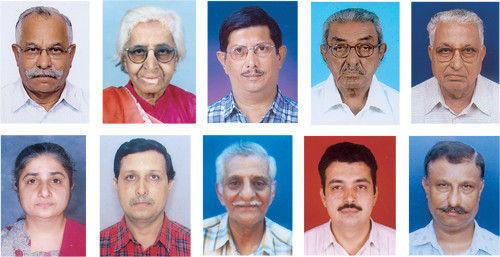
Board of trustees (clockwise from top left): Homi Pithawalla, Daulat Mohta, Pervez Mehta, Dhanjisha Dumasia, Jalbhai Kasad, Marazban Pithawala, Godrej Batliwala, Gustad Pastakia, Kersi Sanjana and Maharukh Sanjana
The dispute largely hung on the conflicting views over the Bardoli Doongerwadi lands. The dakhma has not been in use since 1964, says Sanjana, the corpses being taken to Surat or Navsari about an hour or two’s drive from the south Gujarat town. A proposal to construct a school on the premises by the Bardoli Parsi Zarthosti Education and Medical Trust (BPZEMT) was mooted. The educational trust would pay a rent of Rs 20,000 a month to the BJA, and in the years to come if the school fared well the rent could be increased, said Pithawala and Mehta.
Mohta contends the return in terms of rent is minuscule to what could be earned if the property is sold. He claims the BJA could realize up to 2.5 crore rupees from the sale of the property. Pithawala and the others dispute the valuation and contend that when they gave Mohta and his colleagues two months to find a buyer they were unable to do so.
Mohta terms the offer "a bluff… do you think they will agree to dispose it off? Have they given the offer in writing?” Mehta shows the minutes of the meeting when the proposal to Mohta to sell is noted but adds no letter could be given in such matters.
Mohta contends Mehta and the other trustees are adamant in putting up a school building on the land and that the trustees of the BPZEMT are all Mehta’s relatives or supporters. He alleges a conflict of interest, stating that Mehta already has a nursery and primary school on his personal premises and now wants to expand his facilities at the cost of the BJA.
Only people qualified to run a school can do so, says Mohta, alleging that Mehta and the other trustees do not hold the required qualifications. He surmises that they will have to "depend on outsiders” (read non-Parsis) to run the institution. He also says as the BPZEMT is a cosmopolitan trust, the income cannot be funneled to community causes. (The rent would accrue to the BJA nevertheless. Up to 50 percent of a cosmopolitan trust’s earning can as a practice go to community causes. Another trust, the Bardoli Jarthosti Anjuman Medical and Education Trust of which Mohta is the president, also runs a cosmopolitan charitable dispensary — editors.) The BPZEMT has a clause that only Parsis can be trustees.
Mehta refutes Mohta’s allegation stating he had already taken a Rs 25 lakh bank loan to construct another building on his own premises so his school could expand. Noting that schools normally do well financially he is confident of good returns accruing to the concerned trusts.
In addition, the land would remain with the community which would not be the case if a sale took place. The dakhma too may be demolished if the land is sold.
The dakhma lands are larger in front and then taper at the back where the tower of silence is located, says Sanjana. The land is around 1.75 acres or approximately 80,000 square feet and was given to the community in 1885 and not 1934 as Mohta alleges, the trio state.
Mehta and Sanjana had rented a portion of the land for poultry breeding and farming but found it unviable and returned the land last year to the Anjuman without seeking or receiving any compensation for giving up their rights, say the duo. They also note a bore well, two pumps and electrical connections put up by them as the municipality had not extended the power lines to the land have been left intact on the property.
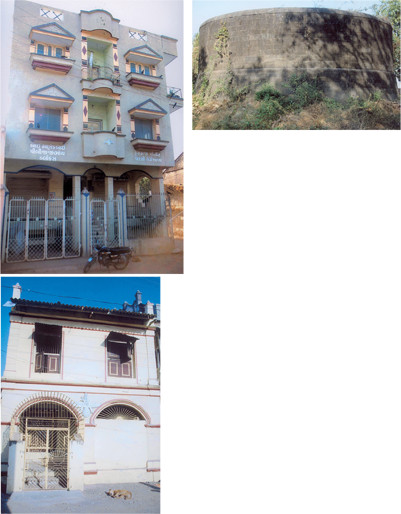
Above: housing block plus dharamshala; right: dakhma Below: E. N. Mehta Dare Meher
Pithawala observes that farming on such a small plot is not a viable alternative. "Even on 10-acre plots people are not able (to earn a living),” he adds. The three stated that earlier the land had been encroached by neighboring residents and they had to forcibly take it back by bringing in bulldozers. At that time they allege Mohta did not participate in the operation claiming he was not informed of the plan.
They state Mohta resigned over some differences in June 2006 but under pressure from "certain WAPIZ trustees” the BJA trustees relented and permitted him to rejoin. But when the disputes again arose and WAPIZ was asked to intervene, they refused, stating it was "an internal matter.”
For his part Mohta stated the BJA trustees approached him and said they would all resign if he did not rejoin the board. Mohta claims Pithawala signed his trustee proposal form but subsequently this paper was destroyed and a new form was filled with someone else’s name appearing as the proposer. Pithawala and Mehta deny both allegations.
Mohta states many of the BJA trustees are from surrounding areas and not Bardoli itself yet they objected to outsiders attending the January 5 AGM. The other four trustees of the BJA are Daulat Mohta, Dhanjisha Dumasia, Jalbhai Kasad and Maharukh Sanjana. "I am fighting for the community, not for myself,” said an emotionally charged Mohta over a phone call to Parsiana on January 21, 2008 followed by a personal visit on January 30. The other trustees were "fighting for their own interests.” He alleged the trustees running the school would be paid honorariums. "A trustee cannot be a beneficiary,” he alleged. "Chappal maaraa maathaa per maaro hoo joothi vaat karoo tau” (hit me on my head with a slipper if what I say is untrue).” Mehta qualifies an honorarium would only be paid in the event there are no Parsis left in Bardoli and some Parsis from elsewhere are asked to officiate as trustees. The payment would thereby cover incidental expenses of travel and so on.
Regarding Mohta having given his consent to the school proposal on the dakhma grounds at a trustees’ meeting on December 15, 2004 when he was president, Mohta contended he had been asking for copies of the minutes but they were not forthcoming. According to Pithawala and Mehta the resolution endorsing the giving of the land for the school was passed unanimously. Mohta questioned the context in which such a sanction had been given. "How long will they spread falsehoods?… I am prepared to tender my resignation if the land is not given” for the school, he added.
"Maroo naseeb saroo nathi (my destiny is not good),” he laments. "I saved the land” (but) "hoo dookhi thayo (I was pained). Why do they categorize me as a black sheep?”
◆ ◆ ◆
From the archive