
XIV NAZC
The Toronto Impact
For the third time Toronto hosted a North American Congress that set its own benchmark
Toronto, the place where the North American (NA) Zoroastrian Congress was born, laid out a lavish welcome for its 500 plus guests at the Grand York Ballroom of the Sheraton Parkway Toroto North Hotel and Conference Center on June 30, 2007. The city has a special place in Zoroastrian history in North America, stated Sam Vesuna, president of the Zoroastrian Society of Ontario (ZSO). Hosting the three-day XIV NA Zoroastrian Congress under the aegis of the Federation of Zoroastrian Associations of North America (FEZANA), he recalled how Prof Jamshed Mavalvala and Ervad Yezdi Antia had coordinated the maiden attempt in 1975 — called the First NA Zoroastrian Symposium — even before FEZANA had been formed. Toronto had again been the venue in 1988, the first such event after FEZANA’s birth, with Ervad Kobad Zarolia as congress chair. The panache of the current event, held after 19 years — aptly titled ‘Impact’ — eclipsed the earlier occasions and attested to the increasing strength and maturity of the largest Zoroastrian settlement outside India, ranking third after Bombay and Poona, as noted Bombay Parsi Punchayet (BPP) chairman Minoo Shroff. It was here too that the Khorshed Jungalwala Lecture Series sponsored by FEZANA was kicked off with the initial lecture dedicated to the late Jungalwala presented by the inimitable Prof Kaikhosrov Irani. Also, a global mentoring project has been launched. And a 104-page glossy art-paper souvenir heralded the event.
Incumbent FEZANA president Rustom Kevala and his four predecessors — Rohinton Rivetna, Dolly Dastoor, Framroze Patel and Firdosh Mehta — celebrated the 20th anniversary of the transcontinental organization with the cutting of a massive cake. "Each congress improves on the previous one,” observed Kevala.
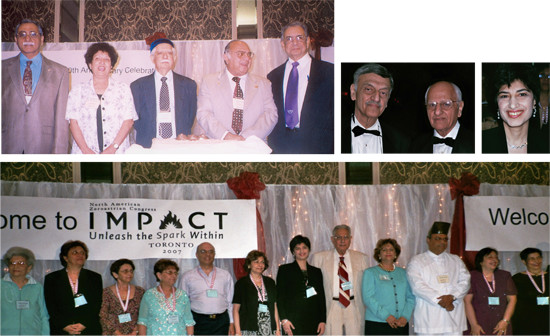
L to R: FEZANA presidents Rohinton Rivetna, Dolly Dastoor, Framroze Patel, Firdosh Mehta and Rustom Kevala; Bomy Boyce and Minoo Shroff; Phee Vania. Below: The Congress Committee
"The feeling of community in this hotel is just spectacular!” beamed Phee Vania, chair of the Congress Committee, in her welcome address, acknowledging the "vision, perseverance and dedication” of her team despite their busy lives, and their "staunch refusal of anything mediocre.” Vania paraphrased the motto of the Congress, "Impact: Unleash the Spark Within,” as referring as much to the "impact of Zoroastrianism and Zoroastrians on the world” as to the effect of the religion on its votaries and the wealth of talent and capability within the community that awaited ignition and release.
The Congress had begun with fine renditions of the US and Canada’s national anthems by Zoroastrian sopranos Tara Jamshidian and Vista Pourbahrami respectively.
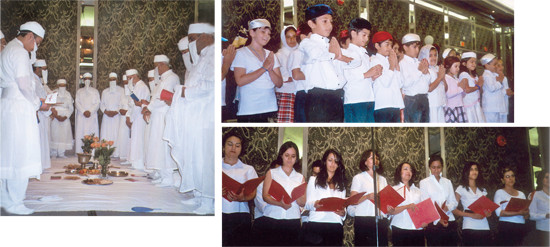
On the closing day: jashan, ZSO children’s and Iranian choirs
With FEZANA vice president and chair of its overall Congress Committee Bomi Patel leading the way, 17 of its member associations were represented on stage. Some of them had a special message for the audience as they identified themselves, with some lighthearted repartee. Thus Prof Farrokh Mistree of Atlanta, extolling the virtues of the state of Georgia, invited the audience to "relocate in the new south, that is Atlanta.” Following on Mistree’s heels Chicago president Hosi Mehta quipped, "I am not here to sell real estate. The heaven we believe in is in our hearts!” Rustom Engineer of Houston brought "greetings as big as Texas.” Deadpanned Firdosh Mehta, formerly of Alberta who has now relocated in North Texas: "Everything in Texas is big and beautiful. He is big and I am beautiful!”
Noting how Zoroastrians have found space in "this multicultural capital of Canada,” chair of the Congress Program Committee and master of ceremony Daraius Bharucha began by giving a glimpse of the goodies in store for the audience, such as the Zoroastrian Symphony Orchestra sponsored by FEZANA, when he was rudely interrupted by a fire alarm. Every time it stopped, Bharucha tried to get in a few more words, with the audience undecided whether to stay or file out. Eventually it was found that it was not fire but leaking water somewhere which had set off the alarm. However, the uncertainty created by the alarm led to a curtailment of the opening session program and an item by the choir of the ZSO-Iranian Cultural Kanoun conducted by choir master Shahram Bastani and accompanied on the piano by Farobag Cooper, was eventually presented at the closing ceremony along with an item by the ZSO Children’s Choir led by Zia Mahmoudzadeh and Mehrtaj Farhadi. Smiled an apologetic Bharucha, "Who will forget this Congress now? It will always ring a bell!”
So too will the gala night on July 1 — Canada’s national day — with the Zoroastrian Symphony Orchestra under the baton of Cooper rendering a few Strauss waltzes and excerpts from Georges Bizet’s Carmen (with an unexpected dance accompaniment by Zeena Dotiwalla.) The Orchestra also accompanied sopranos Meher Pavri and Jamshidian in pieces from Mozart’s Alleluja and Parizad Irani’s Suite from Zarathustra, respectively. The tour de force was Dr Darius Bagli’s piano rendition of the first movement of Edward Grieg’s Concerto in A Minor, accompanied by the orchestra. Though only nine members of the Orchestra were Zoroastrians, the rest being professional musicians as well as music students from the University of Western Ontario, the audience was delighted and almost delirious in its applause.
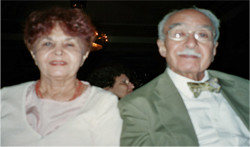
In the audience Paricheher and Farhang Mehr
Guests of honor at the gala evening – a product of Dr Dhun Noria’s organizing expertise as much as the largesse of the Noria family, particularly Farokh Noria — were Gerry Phillips, Minister of Government Services, Ontario and Satish Mehta, Consul General of India. "You should be proud of all you do to make the world a better place; your strength is beyond your size,” Phillips complimented the community. "We have been able to attract the best flowers from around the world and of course, the best and brightest flower in our garden is the Zoroastrian flower,” he added. Said S. Mehta, "The Zoroastrian priest put sugar in the milk as a promise to sweeten the land. I know of no other community that has kept its promise for 1,400 years!”
The fine, well orchestrated dinner had been preceded by a cocktail reception which was too crowded for comfort but nonetheless had the congregation in high spirits (pun intended). The cherry on the cake was a peppy band that had the audience on its feet, gyrating happily into the night. The complaints came the next day when three more sessions were slated at 9 a.m. before a jashan of 17 mobeds presaging the close of the Congress with its appended ceremonies. Fortunately someone had thought of and provided trays of delicious sev for breakfast which the finest Bombay caterer would have been proud to claim as his/her own creation.
Keynote address
Feted as president of the World Zarathushti Chamber of Commerce (WZCC) -India and chairman of the BPP, economist and management guru Shroff presented the keynote address. He observed that despite the migration of Zoroastrians from India, Iran and Pakistan to various countries of the West, "they have adjusted themselves admirably wherever they have settled, readily absorbing the culture of the host countries while continuing to practice their religion and upholding as best as they can their ancient traditions.” Noting that the vision of Zarathushtra had made us responsible, courageous, industrious and optimistic, he referred to the Zoroastrian brand equity that led the people of India to fully subscribe through equity all the capital that the Tata Iron and Steel Company (now the redoubtable Tata Steel) needed at a time when the banks were hesitating to sanction loans to the nascent company. Even today, Shroff said that among the 25 top economic entities in India, there were four leading industrial groups owned or managed by Parsis, and referred to India’s accelerated industrial development at 8.5 percent per annum despite inadequate infrastructure and a growing shortage of skilled personnel. He highlighted the fact that in June 2006 IBM had its annual investors’ day in Bangalore, thereby sending a strong message that India is now at the core of IBM’s global strategy.
However, he lamented the fact that Parsi enterprise has stagnated as also the community’s lack of representation in politics, or the higher echelons of the bureaucracy or the police which he described as "positions of vantage.” However, the community had fared well in the professions such as medicine, law, scientific research and entertainment, he noted. Stating that 30 percent of women don’t marry, over 30 percent marry into other communities and the rest have less than two children, Shroff described the skewed age profile of the community with 18 percent under the age of 18 and 31 percent over the age of 60, admitting that the declining birth rate was a problem the Parsis of India shared with the Caucasians of Europe.
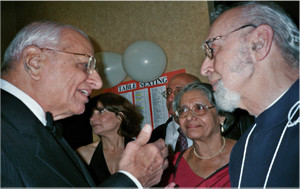
(L to R) Minoo Shroff conversing with Mahrukh Joshi and Jehan Bagli
"Religious communities are like chameleons: they change with the environment,” noted Shroff, citing the examples of Bombay and Los Angeles. He urged everyone however to "appreciate the need for a confluence of beliefs.” Attributing the present schism between the liberals and the traditionalists in the community to the stalled creation of a world body ("building bridges was thwarted by ethnicity”), he urged the revival of a spirit of adjustment and sagacity, citing the example of South African patriot Nelson Mandela who had "held out a hand of friendship to his former tormentors.” Happy that time honored traditions, family values and moral fiber were intact in the diaspora, Shroff described Ahura Mazda as "the spirit of civilization.”
Concurrent sessions Day I
It was a heady morning of gourmet offerings. Shroff’s address was followed by the "Talk with the Titans” — the first ever multimedia interactive program in a Zoroastrian congress where the assembled community heard and questioned three community icons from India (Ratan Tata, Nadir Godrej and Fali Nariman) via internet, saw and heard British beer baron Lord Karan Bilimoria’s prerecorded message as he was out of electronic connectivity in South Africa at the time and interacted with Karachi based international hotelier Byram Avari who had specially traveled to Canada to participate in person (see "Talk with the Titans” page 60). Unfortunately a concurrent youth session deprived young participants of listening to what these five successful gents had to offer. Immediately thereafter followed the NA awards ceremony and a delectable lunch hosted by FEZANA (see "The winning streak” page 72).
So it was an understandably jaded audience that attended the four concurrent sessions that followed. In "Show Me the Money,” Dr Edward Keall, a specialist in Sasanian and Parthian archeology, and Ervad (Dr) Jehan Bagli, a Distinguished Fellow in pharmaceutical research and currently president of the North American Mobed Council, discussed numismatics and social management in ancient Persia. Two members of the Toronto Press — Aparitha Bhandari and Rakshande Italia — discussed media portrayals and perceptions of Zoroastrianism in the session titled "In the Eye of the Lens.” The session "Lights, Camera, Action: Zoroastrians on Stage and in Film” had Nazneen Contractor, Rahnuma Panthaky and Michelle Mama speaking about young Zoroastrians and their impact in arts and theater. A session for ‘singles’ aged 25 and above titled "True Confessions,” was a discussion on the realities of being a single Zoroastrian in North America moderated by Vania.
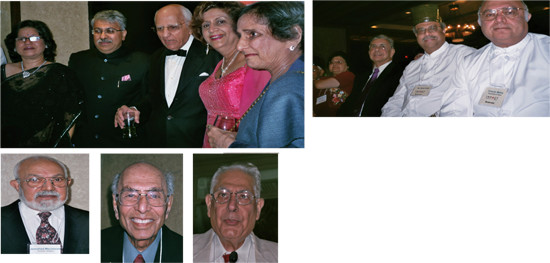
L to R (above): Ketayun Kapadia, Rustom Kevala, Bomi Patel and Firdosh Mehta; (below) Jamshed Mavalvala, Yezdi Antia and Sam Vesuna; Bottom :Ms Mehta, Satish Mehta, Minoo Shroff, Dhun Noria and Villoo Shroff
Day II
July 1 was a largely low profile working day with six concurrent sessions in the morning and seven post lunch, each over two time slots. It was in the post lunch period that Irani’s inaugural presentation of FEZANA’s Khorshed Jungalwala Lecture Series was slotted (See "The reality behind existence” page 70). The Grand Richmond Hall was packed to capacity — unfair competition, we felt, for the speakers at the concurrent lectures elsewhere: Jehaangir Bulsara, Anahita Cooper, Kelly Jogina and Xerxes Wania on entrepreneurship; Armaity Homavazir, Nikan Khatibi, Diana Katgara, Farah Minwalla and Diana Vania on unleashing youth energy on the community and the world. Also, the youths missed out on a fine presentation by a philosopher who is also a consummate speaker.
Other sessions that day had Dr Farhang Mehr and Homer Abramian speaking on Zoroastrian philosophy and culture; Zia Mahmoudzadeh, Fiona Engineer and Zenobia Homavazir speaking of women who shape the community and inspire others; authors Farishte Dinshaw and Anosh Irani discussing how being Zoroastrian has impacted writing and literature; Dr Jamsheed Choksy, Gail Gibson and Bharucha discussing Zoroastrianism and interfaith influences; Dr Robert Ayoup and Dr Khursheed Jeejeebhoy elaborating on holistic health care for seniors; Choksy and Iran Zamin editor Fariborz Rahnamoon seeing Zoroastrian life under Islam from different (and mutually exclusive) angles; Bomy Boyce and Jimmy Mistry concurring on the impact of entrepreneurship; Shara Colabewalla giving lessons on self defense; and Bharucha and Dr Narina Rustomji exploring Zoroastrian identity as a vehicle for career excellence.
The day also saw the unfurling of Phee Vania’s prized project — global mentoring — a power point presentation introduced by Congress’ co-vice chair Zarine Chenoy. "The FEZANA executive wants to involve youth in community affairs,” said Vania, relating her thought process, "Why not offer the youth something first?” She had been thinking of it she had told Parsiana prior to the Congress, ever since she had met a number of outstanding corporate CEOs, all women, who acknowledged they were where they were because they had benefited from personal mentoring. And since the sense of "giving” was an integral part of the Zoroastrian community she had conceived the project as international mentoring is a possibility thanks to communications technology. Prof Farrokh Mistree has proffered to help the youth seek and find the ideal university placements in terms of their personal career preferences. And, as it turned out, other organizations like the WZCC, ZWIN (Zoroastrian Women’s Information Network) and the Youth Leadership Enhancement Programme, meant to be launched at the Ninth World Zoroastrian Congress in Dubai in 2009, got off the ground in Toronto as noted Homai Mehta of Bombay’s J. J. College of Commerce.
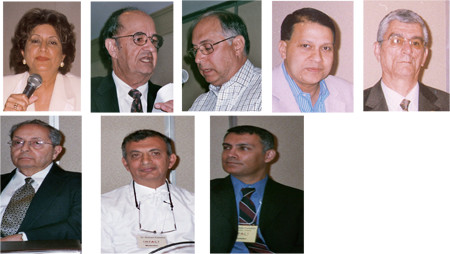
Clockwise from ext left: Dhun Noria, Daryoush Jahanian, Sam Bhiwandiwalla, Jamsheed Choksy, Faribourz Rahnamoon, Jesse Palsetia, Behram Pastakia and Keki Bhot
Closure
Reiterating that the Congress team had worked on Zoroastrian identity as an "inclusive identity,” Bharucha and Vania presented their team of organizers, who had helped to keep the event afloat and undisturbed, led by co-vice chairs Mehroo Chothia and Chenoy, as part of the closing ceremonies. Response forms had been distributed to the Congress participants and to the organizers’ delight, they were largely complimentary. "You delivered with polish and grace — a wealth of talent unleashed — a huge Fire — this is our Iranshah Flame ALIVE. Thank you,” noted a participant from India. "(It) gave us an opportunity to celebrate the survival and perpetuation of our Zoroastrian heritage and faith,” noted an Ontario resident. "(It) inspired me to work harder on community project(s),” said someone from the US.
The sense of alienation which some Iranian Zoroastrians have felt through all congresses — whether world congresses or North American — was evident here too, though much reduced as compared to their complaints at the world congresses held in Bombay 15 to 20 years ago. Their lingering reticence with the English language continues to have something to do with this perception; but it cuts both ways. For when Iranians get together they relapse into Farsi with such dedication, it is almost impossible to get their attention!
The number of participants, especially the number of youth participants, as well as the geographic spread of attendees (India, Pakistan, Dubai, Australia, UK, Switzerland…) were two of the counts on which the Congress exceeded her expectations, Vania later told Parsiana. For anyone taking on the task of being congress chair in future Vania says, "Ensure you have good support at home, because many home duties will not get priority during intense congress planning and preparation.” She has also learnt that this sort of work is for "service to the community, not for any personal glory. It is a lot of hard work. It is also very important to have a diverse committee (with a) balance of the young and old, conservative and liberal, male and female, feeling-oriented and intellectual-oriented…Having one on one talks with your key committee members and volunteers (makes for) more commitment, creativity and understanding of responsibilities than in a team forum.”
"I found long ago in life that if you find the right person, you can sit back and watch!...The Symphony Orchestra would not have happened without the persistence of Firdosh Mehta. He played a predominant part in getting us the donations,” Vesuna was lavish with his praise.
Declared Kevala, "All that needs to be said has been said. All those who needed to be thanked have been thanked…”
Teaching the religion
"The religious education program is holding the community together,” says Daraius Bharucha, chair of the Zoroastrian Society of Ontario’s (ZSO) religious education committee. The former merchant mariner states they "don’t let politics come into play with the children, keep aloof from personal views.”
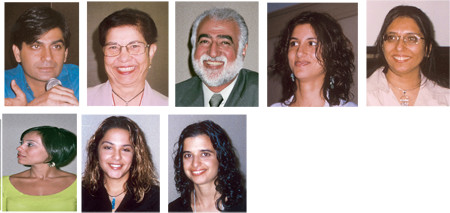
Clockwise from ext L: Anosh Irani, Zarine Chenoy, Mehraban Khodavandi, Fiona Engineer, Farishte Dinshaw, Zenobia Homavazir, Zia Mahmoud-zadeh and Niaz Kasravi
Bharucha, chair of the program committee of the XIV North American Zoroastrian Congress and its master of ceremonies, spared time to chat with Parsiana between sessions. Estimating the Zoroastrian population in the Greater Toronto Area at between 4,000 to 5,000 individuals including Parsis and Iranians, he says some people never show up for ZSO activities. The active core comprises young parents who find they cannot foster Zoroastrian identity in their children "through osmosis.” What works is the social aspect of the children meeting regularly, growing up together and forming lasting friendships. "Some pupils have become teachers now,” he notes happily.
Currently there are about 140 children of all ages learning about the religion in two locations – at the Mehraban Guiv Darbe Mehr and at the Ontario Zoroastrian Community Foundation (OZCF) center in the west end of town, Bharucha tells us. The program, taught by a team of teachers, imparts basic principles of the religion and its theology to children between the ages of six and 14. Each of the eight years of study comprises 20 sessions through the school calendar and an attempt is constantly made to keep the teaching relevant to life, he notes.
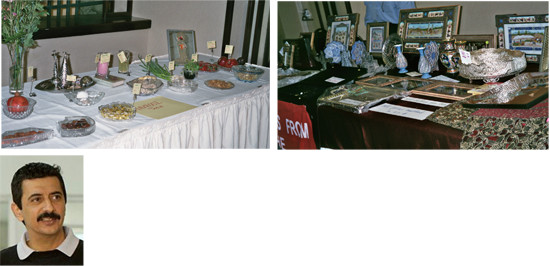
Above: Items on display and sale in the hotel lobby; Bottom: Daraius Bharucha: teaching relevant to life
The Bombay born Bharucha schooled at St Andrews in Bandra, going on to St Xavier’s College before technical training that precedes a job as an officer in the merchant marine. Between voyages, while serving on the Baber and Maersk Lines, he acquired a background in the religion from Zoroastrian Studies and held seminars for children in Bombay. After arriving in Toronto 14 years ago, he augmented his knowledge with courses in interfaith at York University. It was eight years ago that the ZSO asked him to take over the program, he states.
Now a teacher of English, history and religion Bharucha is a qualified educator for children with special needs. Fortunately, "there are not many kids with special needs in the community,” he notes. For his ZSO work he has co-edited a Handbook for Teachers. His other endeavor, the Zoroastrian Book of Readings, belongs to the series Multifaith Book of Readings and has been published by the Ecumenical Studies Committee.
Bharucha and his wife Dilnaaz, a manager in IBM, have a 14-year-old daughter Kaipa (Avestan for silver, he informs us) and son Pahlav (meaning hero/warrior), 12.
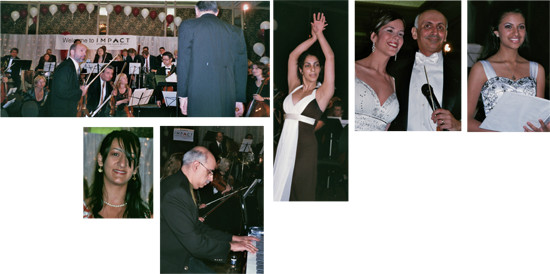
The Zoroastrian Orchestra; (L to R): Zeena Dotiwalla; Tara Jamshidian and Farobag Cooper; Meher Pavri ; Bottom: Vista Pourbahrami and Darius Bagli
"I like organizing”
Secretary of the ZSO and co-vice chair of the Congress along with Zarine Chenoy, Mehroo Chothia was involved with the publication of the 104-page Congress souvenir, a glitzy item documenting messages from Canadian politicians and community stalwarts as well as photographs and details about the speakers and chairpersons of the various sessions.
An early childhood educator and holistic healer, she is a Reiki master and practitioner of massage therapy. In sync with her naturopath son-in-law Dr Richard Ayoup, Chothia finds "allopathic medicines create vicious circles. Natural medicines can do good without harm, (especially when) supplemented by meditation and metaphysics.” She says she "loves to teach Reiki, impart knowledge which gives people the ability to heal themselves.”
She and her husband Rohinton have a stained glass business. "He creates the pieces and I market them,” says Chothia. So far based on advance orders, they hope to take it to the next level shortly by establishing themselves on the world wide web. Hailing from Bombay, they had met in Canada. Their daughter Firuza, 31, is a legal assistant in a law firm; son Rayomond, 26, is qualified in human resource management.
It seems, when ZSO president Sam Vesuna approached Phee Vania to take on the job of Congress chair, she only agreed if Chothia would help her. "I like organizing things… and Darius is a fantastic organizer…(The committee) met once every two weeks, initially, then once a month, but Phee, Darius and I were on regular conference calls. Our main goal was to give people something to take back with them, learn something.”
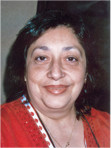
Mehroo Chothia: "learn something new”
Finding volunteers and speakers were the initial problems. While trying to coordinate activities, they had to arrange for transportation. The contract with the hotel involved a major outlay but Chothia said they had a "sliding scale” arrangement so that their financial commitment on that score reduced with the increasing number of rooms occupied by participants. They had tried to keep fees low – Canadian $ 300 for the early bird registrants. "We anticipated about 150-200 to register by the early bird deadline, but more than 300 registered. Eventually we had a total of 540 participants!” acknowledged Chothia happily.
With the ZSO since 1974, Chothia has been secretary for the past three years. There are two more years for her term and there is no bar on the number of terms. "It is hard to find people who work,” she notes matter-of-factly.
The ZSO’s Building Capital Campaign Committee under Dr Dhun Noria has raised 2.5 million dollars and the Society has applied for the necessary permits. Somewhere on the ZSO land is a ravine which presents an architectural challenge for their projected new center. "The property is unique (and) in a conservation area…We have to create optimum expansion to accommodate the needs of a growing community. That’s why it’s taking longer…”
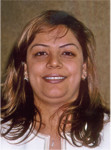
Anahita Daryu-shnejad: community involvement
Iranian commitment
Assistant secretary of ZSO as well as FEZANA, the statuesque Anahita Daryushnejad embodies Zoroastrian self-confidence. Born and schooled in Bombay, her Irani father Keki Daryushnejad took the family back to Iran in the 1970s where they witnessed the Iran-Iraq War at first hand. However, thanks to her Parsi mother Aban Kias’ Indian passport, Anahita says she learnt English by studying in Indian, Pakistani and international schools in Iran. The family migrated to Canada in 2001 to avoid military conscription for her brothers Kamran and Kaivan.
Arriving in Toronto, the only one they knew was ZSO president Sam Vesuna because "he had come to our house for dinner at the time of the Sixth World Zoroastrian Congress in Tehran in 1996,” recalls Anahita, adding, "He was our backbone of support” during those early months.
Needing to keep herself occupied, Anahita started helping out at the ZSO’s Mehrban Guiv Darbe Mehr, initially with the Iranian Kanoun. When the Building Capital Campaign Committee was formed in 2002 to raise funds for the center’s reconstruction, its chair Dr Dhun Noria inducted her on the committee saying, "We need young people,” remembers Anahita who, in turn, got her brothers involved and later, the whole family. She was elected assistant secretary of ZSO "as someone who can communicate with both communities,” she notes.
When she became aware of FEZANA, she was struck by the fact that there were no Iranians on its board. So, she says, she nominated herself for the post of assistant secretary and was elected in 2006. She says she had to attend an orientation session in Chicago. "All our work is by conference calls and on internet,” she tells us.
This was the first Congress Anahita was attending and helping to organize. It has been a "learning experience,” both socially and professionally with her family-owned travel agency — a challenge that began last September, she says. She had done a travel and tourism course in Iran. Her "book knowledge” together with her mother Aban’s experience on the staff of Kuwait Air has made a winning combination. But that is on the side. She earns her bread and butter as financial planner in the banking sector of ING Direct. And is looking forward to her marriage to Ferozeshaw Ogra who works in the information technology department of the bank.
◆ ◆ ◆
From the archive