
In Memoriam
The principal priest
Died: Ervad Rustomji Noshirwan Panthaki, 90, father figure to student-priests who had been nurtured by him during his 30 years as principal of Dadar’s Athornan Boarding Mad- ressa, on May 26, 2007 in Bombay.
"Rustomji’s name was and will always remain synonymous with the Madressa which he nurtured from obscurity to an internationally reputed institution,” noted a condolence resolution passed by the board of trustees and the managing committee of the Athornan Mandal which runs the Madressa. "When Rustomji took over the reins of the Madressa as the principal, the Madressa was not in a good condition,” adds the resolution giving him credit for changing the fortunes of the institution "with his indomitable zeal, unlimited optimism and the greatest wealth he had – his goodwill with the community on account of his pleasant and helpful nature.”
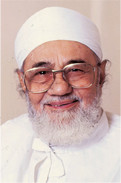
Rustomji Pan-thaki: indomitable zeal
From providing the Madressa with basic amenities like fans and tubelights, arranging for meals and recruiting of teachers at a time when it had no funds, Panthaki managed to place it on a firm footing by the time he retired in 1995. He has also been credited for arranging a tie-up with the Dadar Parsee Youths Assembly High School where scores of Madressa students received free academic education.
"A long cherished dream of Rustomji was fulfilled when in 1990 the three-storeyed annex building of the Madressa was inaugurated…As a mark of honor to him, the trustees had it inaugurated by (him) as he was instrumental for this annex right from its visualization and planning to fund-raising and completion… This building is a monument to the dedication and love of Rustomji for the Madressa and the priestly class,” mentioned a tribute by Ervad (Dr) Rami-yar Karanjia who had studied under Panthaki and succeeded him as principal.
"Today donors come to us with donations. Whatever the Madressa is today is because of him,” summed up Dastur Khurshed Dastoor, president of the Athornan Mandal who considers himself fortunate to have studied at the Madressa when Panthaki was its principal. Always impressing on his students the need to arm themselves with knowledge, both academic and religious, he would humbly tell them, "Hu tau ahree chopri seekhélo chhèu (my education has been limited) but you have to concentrate on your studies as you never know what difficulties you may need to face as a mobed,” reminisces Dastoor acknowledging the special attention he was given as a high priest’s son in the expectation that he would have to lead the congregation in prayer and at jashans. "Whatever I am in my prayers and pronunciation is thanks to him,” declares Dastoor.
"I was greatly impressed with the enthusiasm he showed to popularize Avesta (and) Pahlavi among the students and (how he) made sure that every student studied the language at the SSC level. His insistence (that) students become full-time mobeds and continue the panthaky system among Parsis will ever be remembered,” noted the condolence message from Dr Mehroo Bengalee, Zoroastrian representative on the National Commission for Minorities.
An avid reader, Panthaki’s own inspiration was derived from Zoroastrian scholars like Dasturs Faramroz Kutar and Kaekhushru Kutar, Ervads Bomanji Dhabhar and Edalji Madan, and the well known Gujarati poet Ardeshir Khabardar. To assist the present generation of English speaking priests in the offing he had transliterated into English several useful prayer books like the Yasna, Afringan and Farokhshi. The laity benefited from the small book of Nirangs which people could pray from in times of difficulty.
Believing that the community can only be strengthened if religious classes are conducted in every baug and Parsi school, for several decades Panthaki imparted religious knowledge at Rustom Baug. As acknowledged by community activist Mithoo Jesia when Panthaki was felicitated by the community at the time of his retirement from the Madressa, her pride in being a Zoroastrian was instilled by the dedicated priest. An awareness of Parsi history and heritage the priest should be able to inculcate in the laity, stressed Panthaki (see "The priest as a pillar,” Parsiana, February-March 1996) who saw the Madressa as being "of great importance to the community because by training priests it is the mediator between the community’s present and its future.”
Nargol born Panthaki’s association with the Madressa commenced in 1928, four years after he decided he too wanted to join it when he had accompanied his father for his elder brother’s enrolment. After completing his training Rustomji joined his father at the Poonjiaji Agiary at Nargol, spent a year at the Bai H. N. Mullan Dar-e-Meher at Nagpur and later opted to practise as a yozdathregar mobed at the R. N. RustomFaramna Agiary in Dadar. The evenings he would spend in the company of priests and scholars at the Madressa even before he was invited to work as a teacher in 1953. In 1966 when the Madressa reopened under a new management after languishing for a while in the early 1960s, Rustomji was the unanimous choice as its principal. Married late in life to his cousin Jalamai, the couple had no issue but served as "gentle, loving and caring parents” to the students at the Madressa as noted the Athornan Mandal resolution.
Until the end he continued to teach, guide and counsel community members for the venerated teacher believed "gnaan daan (gift of knowledge) is the biggest daan of all.”
The revered principal is survived by his wife Jalamai, sisters Manijeh Gamir and Jeroo Nargolwala, and brother Jal Panthaki.
◆ ◆ ◆
From the archive