
Books
Parenting made palatable
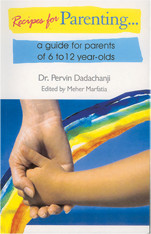
Recipes for Parenting…a guide for parents of 6 to 12 year-olds by Dr Pervin Dadachanji. Edited by Meher Marfatia. Published in 2006 by Rupa and Company, 7/16 Ansari Road, Daryaganj, New Delhi 110002. Pp:163. Price: Rs 195.
"Unfortunately, children don’t come with their very own personal ‘How To Operate’ manuals, so we either parent using trial-and-error methods or the same style of parenting on all kids. This does not work — even children with the same parents have different temperaments and need to be parented according to individual needs,” notes the introduction to Recipes for Parenting, authored by Dr Pervin Dadachanji and edited by Meher Marfatia.
In her years of practice as a leading consultant psychiatrist in Bombay with a special interest in child and adolescent psychiatry, parents have often come up to her with difficulties concerning a child’s study habits, food, discipline, sibling rivalry… There may be many other parents who might never have approached her but can easily identify with the different problems voiced by the parents in this book. Knowing that other parents too are trying to find the right balance can be reassuring to the reader. Dadachanji herself has "always maintained that she has made her mistakes (and continues to do so) like everyone else while bringing up (her) children,” notes the back cover.
Parents over-concerned about their child’s intake will be relieved by her assurance: "A child will eat when hungry.” Even if a child does not like milk but enjoys cheese, curd, milkshakes, butter and custard, there is no need to worry about his calcium intake. If he is fussy about veggies but enjoys his fruits, take heart, it could be healthier! Never encourage children to eat in front of the TV as it could lead to future obesity, she warns. To encourage children to try new dishes she advises, serve the new dish along with something they like; encourage them to try a morsel on the condition that they can spit it out if unbearable (this makes them feel in control of the situation); let the children see the parent enjoy a new dish when it is served; never introduce anything new on the menu when a child is sleepy, overly tired or starving. According to her, children have to be exposed to a particular food at least 10 times before they may decide to try it. Besides food the other topics discussed under "Activities of daily living” are sleep, morning routines, dependence, manners and common courtesies, television and computers, pocket money.
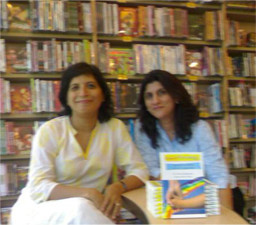
Dr Pervin Dadachanji (left) with Meher Marfatia at the book launch
Although there is a chapter titled "Joint families and inlaws,” there is none titled "Nuclear families.” Working mums though have earned a separate space in the book where she writes, "With joint families giving way to nuclear families and stay-at-home mothers becoming working mums, fathers definitely play an important role in bringing up kids…” Each mother should exercise the option of staying at home or being a working mum. "Bringing up children is really a full-time occupation. Your children have you when they need you. But be careful of not falling into the trap of living life through your children.” The distinct advantage though of being a working mother is that "children learn that every person, man or woman, needs to work, retain individuality and still be a part of family life…” Sibling relationships and rivalry, marital conflict and divorce are the other sensitive issues covered under "Family.”
With surfeit entertainment options on the TV and computer, a child may not necessarily be viewing age-related programs. "It’s strongly advisable that we watch programs with our children…This way not only are you monitoring what is viewed but are also able to help the child reject any regressive ideas presented.”
In the section on "School and Learning” the author remarks, "One of the main reasons children are more bored than we ever were in our growing up years is that they have too many structured activities facing them…they cannot believe one can have a perfectly good time without any goal directed activity.”
When are tuitions necessary? wonder many parents. If a parent is not able to guide a child with her school homework or homework causes friction between the parent and the child, it is advisable to engage a tutor because as Dadachanji states, "Should you have to choose between being a parent and a teacher, you must choose the parent. Your daughter will have several teachers but she only has one mother. If that relationship starts to fray at the edges at age seven, it does not bode well for when she becomes an adolescent.”
Strategies like praise, ignoring, time-out, motivators, negotiation, withdrawal of privileges could improve the child, but only if used in the right circumstances, notes Dadachanji in her section on "General Parenting Techniques” adding, "the ultimate goal of discipline is self-discipline, inner motivation.”
Withdrawal of privileges is to be used only "as your trump card – absolutely the last option to be exercised,” advises the author who is a strong advocate of negotiation. She relates how some parents just expect their child to do something when told, fearing that negotiation will undermine their authority. Actually "negotiating is a win-win situation benefiting parents as well as children. Parents show they are approachable and open to another’s viewpoint – a quality children become very sensitive about as they approach adolescence… Children also develop confidence and the courage to stand by their own beliefs…It helps them learn about fairness…”
Anger by itself is not a cause for concern to Dadachanji but it’s what we say or do with it that can be destructive. "Pre-adolescents usually show their grief through anger… We need to…separate the feeling (anger) from the action (aggression),” she notes. Besides anger, bullying and spanking are the other forms of aggression dealt with in "Behavior.”
"Making friends is a vital social skill which children in the six to 12 age group need to learn, helping them for years after it is initiated…We take it for granted that our children should just go out into the world befriending people. Kids are taught how to play football, paint pictures, read books, but few are helped to build the ability to communicate with people,” stresses the author in "Friendship and peer pressure” which also deals with related issues of self-esteem, shyness, sexuality, values, death and bereavement under the head "Social issues.”
That illustrations liven up and reinforce messages in children’s books we all know, but here is a book for parents where each topic starts with a visual by Prashish More, evoking respect and empathy for the child. This guide for parents of pre-teeners has been edited by Marfatia, herself an author of 10 books for children, who works as a freelance writer and text editor.
"I envisage this book becoming a family ready reckoner for childhood behavior in every home. I also see it being an important part of every physician’s desk reference,” writes Dr Vibha Krishnamurthy, developmental pediatrician and director, Ummeed Child Development Center, in her foreword to the book. The paperback hopes to make the parent-child relationship "more of an interaction and less of a war…” as notes the back cover. "Growing up is hard…But here’s how parents can make it a smoother journey for children.”
PARINAZ M. GANDHI
◆ ◆ ◆
From the archive