
In Memoriam
An officer and a gentleman
Died: Brig (retd) Noshir Bayram Grant, 88, consumer activist and former trustee of the Poona Parsi Panchayat (PPP) and the Delhi Parsi Anjuman (DPA), at Poona’s Ruby Hall Clinic, following cancer, on December 2, 2006.
"In his fearless espousal of worthy causes he had no equal, causes for which no one else seemed to have time,” recalled Vice Admiral (retd) M. P. Awati, of his "friend and exemplar,” (who) through his example espoused the case for a good officer and leader.”
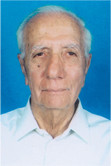
Noshir Grant: fearless
"I always called him the ‘conscience keeper’ of the Indian Army,” remarked the former chief of the Army Staff, Gen V. P. Malik, adding, "No one can forget his role for the installation of the War Memorial in Poona.”
He was active in mobilizing funds for the country’s first War Memorial which was built as part of citizens’ initiative. A committee under Grant’s chairmanship convinced the Southern Command (where Grant had worked as chief engineer) to provide a piece of land for erecting the memorial at Morwada, Ghorpadi in 1996. He was also credited for being the first army officer to oversee the functioning of the Defence Research and Development Organisation, as reported in The Times of India of December 3.
Grant was commissioned into the Corps of Engineers immediately after he earned his BE degree from the College of Engineering, Poona. Prior to that he was at The Bishop’s School in Poona. During World War II he saw action in Burma and Malaya. He took part in the first two wars with Pakistan and held many Staff and Corps appointments during his career in the Indian Army. In the building of the Pathankot-Jammu Road he had played a key role as also in the establishment of the Avalanche School in Manali. He was honored by the Government of India with the Ati Vishist Seva Medal and by the then Royal Government of Nepal with the Gorka Dakshin Bahu Medal (the right hand of the Gorkhas) for building the first road linking Kathmandu to India. During his service career he was sent on military missions abroad, including to the North Pole, notes his life profile.
"His love for the army and matters military, his strong belief in upholding the ‘izzat (prestige)’ of our men and women in uniform and his social activism made him a legend in our city. Poona has lost a prominent son,” conveyed Milind Shankar, Air Vice Marshal (retd) in his condolence letter. When comparing the situation to the other civilian societies of the world which accepts a military officer among "the highest of society and the best of clubs… (fostering a) feeling of honor and prestige,” Grant had commented, "Our country has still not grasped the significance of the word ‘izzat.’ Unless this is realized, the present shortfall of officers will further deteriorate.”
Following his retirement from military service in 1970 he worked as general manager, Bharat Alluminium Company; chief of management services, Thermax India Limited; and as chief executive, Sikkim Distilleries. He taught business ethics and management value systems at management institutes in Poona where he was invited as honorary lecturer. He was also a regular speaker on civic affairs and corporate social responsibilities at various forums in India and had helped establish the first consumer court in Poona.
"He never hesitated to speak his mind and openly criticized the unruly tactics of the authorities or the evasive behavior of citizens…One could always enjoy a good morning laugh with my brother’s articles. They even brought to light the issues that required urgent attention,” Dr Keki Grant’s recollections of his brother with whom he was "very close and shared a similar wavelength of thought since he was only two years older,” were quoted in The Indian Express of December 3.
Several of Grant’s writings were compiled into a book Thoughts and Articles on Military, Management and Civic Values wherein he wrote, "As such 90 percent of our subconscious moral thinking has become either adulterated, spurious or substandard…”
On community subjects too Grant chose to express his beliefs convincingly. How often must he have written in Parsiana about the need to do away with outdated customs like usage of taro for purification rites and a dog to certify death during a funeral ceremony. He also believed that the dakhmenashini system had outlived its time. Grant’s body was cremated after the army accorded him a soldier’s funeral with the pipers playing and the buglers sounding the Last Post.
On one of his military postings in Delhi, he served as trustee of the DPA from 1956-58. It was three decades later in 1988 that he was co-opted as PPP trustee when one of the elected trustees expired, relates his wife Mini.
His "fearlessness in bringing to the notice of the public the cankers in our society (and) readiness to take action made (him) stand tall amidst us,” acknowledged Roda Sen of Delhi referring to an incident in 2005 when on seeing her sit alone in her wheelchair at the foot of the agiary steps, he came out of the hall and sat beside her: "I learnt a great many things…that afternoon,” she gratefully noted.
As summed up Maj (retd) Noshir Mullan, "Grant has left a void in the portals of culture and upright behavior… He was a beacon of independent, free and frank opinion with honest intent regardless of what others considered as stubborn old-fashioned ideas of integrity and good citizenship…He was the epitome of…an officer and a gentleman.”
The conscientious citizen is survived by his wife Mini, sons Kurush and Cyrus, and brother Dr Keki Grant.
◆ ◆ ◆
From the archive