
Events & Personalities
For Parsis only
While commemorating the 50th death anniversary of Dr Bhimrao Ramji Ambedkar in December 2006, Reader’s Digest has, in its issue of that month, recounted four momentous incidents from his life. Though born into an untouchable caste, Ambedkar studied in New York and London and is best known as a leading architect of the Constitution of India. But in 1917, when the newly qualified Ambedkar was appointed military secretary to the Maharaja of Baroda, the 26-year-old found that there was no one to receive him at the railway station. Reluctant to check into a Hindu hotel or stay with friends lest they be embarrassed, he was guided to a Parsi dharamshala. We reproduce here an extract from the article regarding the unfortunate contretemps that resulted:
"Learning from one of the station’s tongawallahs that there was a Parsi inn in Baroda cantonment, Ambedkar decided to seek shelter there. After all, Zoroastrians didn’t have a caste system.
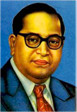
Dr B. R. Ambedkar
"At the inn, an elderly Parsi caretaker took him to an upstairs room. But on learning shortly afterwards that Ambedkar was a Hindu, he asked him to leave since the inn was for Parsis only.
"Desperate, Ambedkar offered to register under a Parsi name. Fortunately, the caretaker, who hadn’t had any guests for a while, agreed, and set the charge for room and board at a rupee-and-a-half a day.
"Once he started going to the office, though, Ambedkar was granted no reprieves. He was never told what exactly he was supposed to do. Moreover, his subordinates were insolent; they ran him down openly and flung files on his table so that they wouldn’t have to come too near him. He was given no drinking water. And at the officers’ club, he had to sit in a corner, and keep his distance from the other members.
"Not a man to take things lying down, Ambedkar often gave back as good as he got. But whenever possible, he went to Baroda’s public library to read books on political and economic subjects. He also applied for a government bungalow.
"Then one morning, as he was getting ready to go to work, a dozen Parsis, all wielding sticks, rushed up to his room screaming that he’d polluted the inn and insisting he leave immediately.
"Ambedkar begged them to let him stay for a week longer since he hoped to get his government bungalow by then. But they were obdurate. If they found him at the inn that evening, they said, God help him.
"So, after spending much of the day in a public garden, Ambedkar left for Bombay by the 9 pm train.”
Reader’s Digest further comments: "Writing about the incident 18 years later, Ambedkar confessed that he could ‘never recall it without tears in my eyes.’ And one scholar contends that it was a turning point in Ambedkar’s life, setting him on the path to fight casteism and injustice. At any rate, it is reminiscent of what had happened to another Indian rebel 24 years earlier — when Mohandas Gandhi was ejected from his first-class train compartment in Maritzburg, South Africa.”
However, Ambedkar enjoyed Parsi hospitality in the 1940s. He frequented the once popular eatery Wayside Inn at Kala Ghoda, Bombay, where he would sit at a corner table and work hard at drafting the Constitution. Parvez Patel, 78-year-old proprietor of Wayside Inn (now the swish Silk Route restaurant), reminisced: "One late afternoon I’d returned to the inn after attending college; I’d noticed a distinguished looking man in a suit drinking tea. He had two large books kept on the table and several pencils, along with erasers and sharpeners; in those days there were no ballpens. My grandfather told me he was Mr Ambedkar, and that he always sits there to concentrate on his work,” reported The Times of India of December 7, 2006.
Patel is proud that his grandfather Maneckji Patel allowed the middle-aged, serious looking man in a three-piece suit to patronize his eatery. "He would only come in the late afternoons, and order several cups of tea as he got down to work. There was an aura about the man,” Patel recounted. Former sheriff of Bombay Nana Chudasama recalls meeting Ambedkar at Wayside Inn. "I was studying at Elphinstone College and would often visit the restaurant. Many artists, poets and social reformers would meet here; and Ambedkar would politely talk to us whenever we went to his table,” Chudasama said.
◆ ◆ ◆
From the archive