
Comment
The Parsi light dimmed?
The volumes of Parsee Prakash chronicling community events along with other rare text should be digitalized
In 1849 a son was born to a Parsi couple in Bombay. This child, Bahmanji Behramji Patel, was destined to have his name intrinsically connected with his community’s history. From early childhood he maintained detailed scrapbooks of newspaper and periodical cuttings of major events in the life of the Parsi community on a world wide basis, but more particularly from Bombay. It is estimated that at the time of his demise in 1908 Patel had left behind for posterity some 200 fully filled scrapbooks of varying size and formats. The accumulated information was so rare and vital that even before his death members of his community and benevolent institutions helped him establish a periodical that would eventually make available to the general public the contents of those scrapbooks. The periodical was named Parsee Prakash. Several issues (or parts) of this periodical were later bound together and re-published as continuing volumes of Parsee Prakash. For instance, the first 11 parts of this periodical were later bound and made available to the public as Volume 1 of Parsee Prakash in 1878. This volume was later re-published in 1888.
After Patel passed away in 1908, Volume 2 was published through the efforts of his benevolent wife. Later, a Parsi institution hired the services of an illustrious scholar, Rustam Barjorji Paymaster, to carry on the publication of Parsee Prakash. Paymaster compiled and edited Volumes 3 to 7 and had them published. Volume 7 was published in 1942. With the demise of Paymaster in 1943, further work on the periodical slowed down considerably with volumes 8, 9 and 10 appearing as late as 1962. The writer of this article has been informed by some scholars (without any solid proof) that Parsee Prakash currently ends at Volume 11, with an added Volume 12 serving as the Index to the entire set. Others have told him that the set was reprinted in the late 1960s in 20 volumes. Despite doing his level best to authenticate these claims, the writer has been unsuccessful so far.
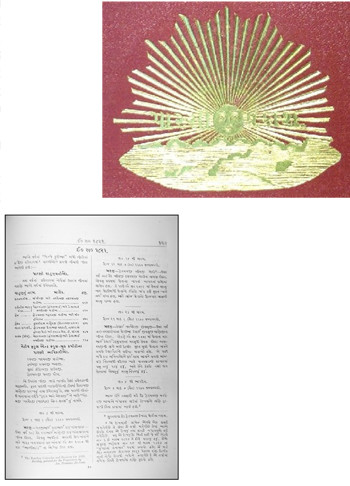
Above cover masthead and alongside page from the journal. Courtesy: www.humancomp.org/prakash
Irrespective of the actual size of the Parsee Prakash set, one fact remains undisputed. No history of the Parsi community can be written without constant references to Parsee Prakash. Time has made it the last, and the most definitive source of records concerning events in the Parsi community of Bombay. It is our most vital source of authentic information. It is not perfect, and has its share of typographical errors, but the historical information contained therein is priceless. Nothing like this exists in any other format in our community. With a very limited number of copies published during its lifetime, it is today perhaps the rarest of Parsi history monographs sought by book lovers the world over. With Volume 1 published in 1878 and Volume 10 published in 1962, this set now teeters on the brink of extinction. Only a handful of complete sets may exist in private collections today. And time may be running out even for these, as the chemicals used in the paper will, in the next decades, reduce the sets to powder by chemical decomposition. Zarathushtrians, especially future historians and chroniclers, thus stand to lose a very important piece of their recorded history. If there is one document about Parsis that deserves preservation, there is no more deserving candidate than Parsee Prakash. Zarathushtrians the world over must take action to preserve this piece of history by appropriate digitalization, and/or microfilming and/or microfiching this entire set.
Zarathushtrians must establish a permanent center, to be aptly called the "Zarathushtrian Preservation Center,” where full-time preservation experts can be employed for xeroxing, microfilming, microfiching and digitalizing rare and important Avestan and Zarathushtrian works for posterity.
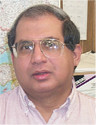
After postgraduating in physics from India, Noshir M. R. Khambatta proceeded to USA to obtain his PhD in Nonlinear Optics and Laser Spectroscopy. Later he opted for a teaching career. A self-trained bibliographer and cataloger for the past 40 years, he has been compiling a comprehensive catalog of books and articles on Avestan and Zarathushtrian subjects. He is looking into the possibility of establishing a permanent physical center for the preservation of rare and important Zarathushtrian scriptures.
◆ ◆ ◆
From the archive