
Books
Rediscovering Dadabhai
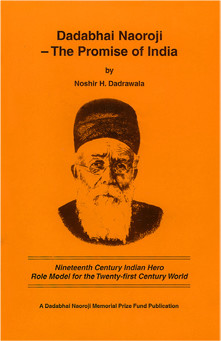
Dadabhai Naoroji — The Promise of India by Noshir H. Dadrawala. Published in 2006 by The Dadabhai Naoroji Memorial Prize Fund, c/o Forum of Free Enterprise, Peninsula House, 235, Dr D. N. Road, Bombay 400001. Pp: 39. For free distribution.
Rustom Masani’s classic Dadabhai Naoroji, The Grand Old Man of India with a foreword by Dadabhai’s great admirer Mahatma Gandhi, runs into over 550 pages. Noshir H. Dadrawala’s Dadabhai Naoroji — The Promise of India is only 39 pages long. Yet, no significant event in Dadabhai’s chequered career has been omitted nor has his outstanding leadership in the cause of freedom for India in any way diminished. This is a tribute to Dadrawala’s summarizing skills, as it is to the Dadabhai Naoroji Memorial Prize Fund (DNMPF) publication. As DNMPF chairman Adi B. Godrej, puts it: "The trust felt that for the youth of India, Dadabhai Naoroji’s life should be captured in a compact format.”

Dadrawala: writing for the youth
Dadrawala wisely decided to keep the narrative flowing, to avoid a detailed biography and focus more on this great man’s character, his qualities of leadership and the values that he truly cherished. So Dadabhai is presented as a brilliant student of the Elphinstone Institute one of whose mentors, Prof Orlebar called him "The promise of India.” Skilled management of the first Indian company to be founded in England by the Cama brothers in 1855, followed by the founding of Dadabhai Naoroji and Company proved conclusively that successful trading was in no way incompatible with the principles of ethics.
Dadabhai’s high regard for the English character and his disgust at the ‘un-British’ manner in which the British rulers were draining India’s wealth became the theme of one of his earliest books Poverty and un-British Rule in India which opened many British eyes to the true status of India under British rule. In a speech delivered at Toynee Hall, London, he proved himself a master of satire: "We are grateful to Britain for good many things, the way you secure life and property is by protecting it from open violence, taking care that you yourself take away that property… the result is that you have become the richest country in the world and we the poorest.”
Success followed success in Dada-bhai’s career — the post of Dewan of Baroda State, elected in 1875 to the Bombay Municipal Corporation, the first Asian to be elected to the British Parliament in 1892, where his conduct was exemplary and of considerable importance to his country. Even Mohammed Ali Jinnah, then an ambassador of Hindu-Muslim unity, declared that he had learnt politics "at the feet of that great man, Dadabhai Naoroji.”
In the English "Lady of the Lamp” Florence Nightingale, Dadabhai found a soul-mate. At the time of his election from Finsbury borough, Nightingale wrote to him on June 23, 1856 when sending him the warmest good wishes: "So important is it that the millions of Indians should in the British Parliament here be represented by one who, like yourself, has devoted his life to them in such a high fashion — to the difficult and delicate task of unraveling and explaining what stands at the bottom of India’s poverty.”
"For the Grand Old Man of India,” writes Dadrawala, "all Indians were a part of his family. They included, apart from Gandhi and Jinnah, men of the caliber of Jamsetji Tata, Dinshaw Watcha and Pherozeshah Mehta. In his pursuit of excellence, he went often beyond the call of duty. He was indeed a true follower of Prophet Zarathushtra’s precept: Happiness to him who makes others happy.”
Dadrawala certainly deserves the praise that the Dadabhai Naoroji Trust awarded him. Now it remains the Trust’s responsibility to ensure that the book reaches young students throughout the country. There could be no better role model for them.
◆ ◆ ◆
From the archive