
Religion
Apostle of acceptance-I
The community never forgave Dastur (Dr) Framroze Bode for performing the navjotes of 77 children of non-Parsi mothers in Vansda
Dastur (Dr) Framroze Ardeshar Bode was the High Priest of the Petit Fasli Atash Kadeh in Bombay. He was born in a poor Bhagaria priestly family in Surat on May 17, 1900. He lost his mother at a young age. He became a full-fledged navar at 17 and martab at 18. He supported himself in his younger days by practising as a yozdathregar (full-fledged priest) while studying Avesta-Pahlavi at the University of Bombay. Bode obtained his BA in Avesta-Pahlavi from the University of Bombay in 1925 and later his MA. When I came to know him, he was honorary secretary of the Rahnumae Mazdayasni Sabha — a liberal forum started by Dadabhai Naoroji and K. R. Cama — where he gave weekly lectures. I was asked twice to fill in for him as a lecturer during his long absence from India when I was a college student. He was also the honorary secretary of the K. R. Cama Oriental Institute (KRCOI) and many other organizations for many years. He expounded the liberal cause in various ways to the orthodox Zoroastrians of his day.
He was a strict vegetarian and became the president of the Indian Vegetarian Society. One of its annual conventions organized by him at the Esplanade Maidan in Bombay was addressed by the then President of India and I attended it when in college. He was very close to the industrialist P. N. Mehta who founded Boys’ Town in Nasik where Bode used to be a teaching consultant as also at the Dastur School in Poona.
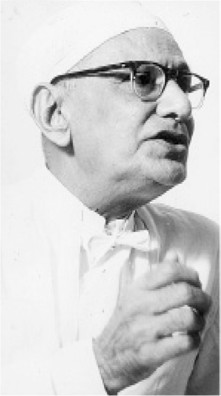
Bode expounded the liberal cause
If I mistake not, he also taught at my alma mater, The M. F. Cama Athornan Institute early in his career. It was only from his writings that I learnt that Sir Dorab J. N. Tata was actively planning to start an institute for priestly education but Cama’s sudden offer of Rs 25 lakhs dissuaded him from going ahead with his plan, which Bode seemed to regret. It is hard to imagine the later generation of Tatas showing such an interest in the well-being and upliftment of their own priestly heritage — J. N. Tata, his two sons, Dorab and Ratan and his cousin, R. D. Tata all being navars (priests). The pendulum has swung so far away from those days of symbiosis between the Tatas, or for that matter, wealthy Parsis and the community.
Bode wrote many articles and his book on the Gathas, Songs of Zaratushtra, co-authored with Piloo Jungalwala lucidly presents the Gathic philosophy to the layperson. He was invited in 1962 by the Teheran Zoroastrian Anjuman to lecture on Zoroastrianism and the Iranians, unlike the Parsis, adore him to this day. The Iranian Zoroastrians were quite enamored by Bode and his views. As a matter of fact, this sketch of his life has been written at the request of Dr Meherborzin Soroushyan to whom it is dedicated.
In the early 1950s Bode moved to Los Angeles, California where he earned a doctorate and taught eastern philosophy and Zoroastrianism from 1955 onwards. But he kept returning to India intermittently to continue his work there.
Vansda navjotes and Bode
Along with the famous Gandhian, B. F. Bharucha, Bode tried to awaken the conscience of the Parsi community in early 1942 by recognizing the pleas of 77 illegitimate children of Parsi landlords with non-Parsi women near Vansda, Gujarat that they be made Zoroastrians as they were already following the Zoroastrian religion and customs. Similar navjotes were performed for nine individuals in Mazgaon, Bombay on June 26, 1882 by JamaspAsa Dastur, Kekhushroo Jamaspasa of Bombay. However, the Parsi community was vehemently opposed to Bode’s action and never forgave him for it; the majority harshly criticized him for it throughout his lifetime. Yet, along with Bharucha, he saw it as a moral duty to accept these children into the fold. The progeny of these neo-Parsis have become very staunch and faithful Zoroastrians. At one of Bode’s lectures which I attended at the KRCOI he presented one such lady who looked like a typical Parsi woman and was so proud to be a Zoroastrian.
On the golden jubilee of the Vansda navjotes Jehan Daruwalla, erstwhile editor of The Bombay Samachar vehemently vindicated the validity of Bode’s action and detailed how it led to the addition of staunch Zoroastrians to our minuscule community (The Bombay Samachar, June 14, 1992; reprinted in Jam-e-Jamshed Weekly on February 11, 2007). Daruwalla had often expressed these views to me when I met him.
The furious intensity with which the Parsi community reacted to the Vansda navjotes is well researched by Sapur F. Desai, the then secretary of the Bombay Parsi Punchayet in his tome: History of the Bombay Parsi Punchayet 1860-1960.
"One of the navjotees filed a suit in the High Court against the trustees of a Bombay agiary to enforce his rights to enter the premises for the purpose of making use of the same as an agiary and for the purpose of saying his prayers and worshipping thereat.
"The gentleman who had filed suit in the High Court had withdrawn it for the reasons best known to him. But the dying embers kept emanating smoke from time to time, until the Mumbai Vartaman, now defunct, undertook to bring the two sides together and failed. The president of the Parsi Punchayet Sir Shapoorji Billimoria then tried and succeeded in putting cold water on the embers. He brought together the two principal parties Bode and Dastur Kekhushroo Kutar together to agree to the case law as at present prevalent (i.e. Davar’s judgement), and to admit that it is harmful to admit into the fold persons born out of wedlock with alien women.
"But this good attempt at rapprochement also failed in the end. There were white-turbaned gentry who were against any kind of children, whether born in or out of wedlock with non-Parsi females.”
To be continued
Ervad (Dr) Kersey H. Antia is a practicing psychologist based in Chicago. He is a priest and had performed the navjote of American Joseph Peterson in the 1980s.
◆ ◆ ◆
From the archive