
Drama/Cinema/Theatre
"They know how to survive"
Student documentary maker Kaevan Umrigar’s film on economically disadvantaged Parsis reflects their forlon existence
"The were sad to know there are more people like them," said neophyte filmmaker Kaevan Umrigar. This was thereacriooofdle economicall disadvantages elderly Par i after they viewed his -3-minure students- documentary titled Invis-ible Parsis in ·bi h eye opener" they featured.
They "identified" with the other Parsis portra ed in the film stating "Ai tau maari story die this is my story)," said the33-year-oldFihnandTele
vision Institmeofindia (FfII) graduate.
''People went out of their way (to help me). They let me shoot in their house at great inconvenience to them. While researching the story they took time out to talk to me," recall {.;mrigar who as part of hi comse, shot the documentary in Poona where the In titute · located.
The film focused on the subsistence-level existence of elderly Parsis assisted by the Poona Parsi Panchayat, other trusts, individuals and family members. Their stark homes are devoid of any frills or luxuries and their clothes well worn with age (see Urnrigar's account, "Poor Parsis do exist"). "With little money they manage," notes Umrigar. "Their lives have always been like this. They know how to sur-vive."
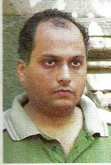
Umrigar: "An eye opener"
His documentary was screened at the National Commission for Religious and Linguistic Minorities and Tata Institute of Social Services (TISS) workshop on Pars is held at TISS on January 10, this year.
"What you saw was the aging process - the loneliness, the isolation from the community and hardship of life. We started (the seminar) with the film to sensitize the audience," stated Dr Armaity Desai, a former director ofTISS and one of the conveners of the seminar (see "Propping up the community," Parsiana, March 21, 2006).
U mrigar is keen that as many Pars is as possible view his documentary as well as four other shorts fi I ms on the community produced to fulfill his academic requirements.
He is willing to send out DVDs containing the films to Zoroastrian associations in India and abroad. Commercial merchandising of the film is not possible without the consent of the FTII. Three of the remaining four films, Dadar Ormaj, maney jaldi bolaavo, Bedpan, NonParsi are interesting but of uneven quality while Parsi Wade, Tarapore - Present Day, is academic and may not hold lay viewers' interest. All the actors performed gratis.
Dadar Ormaj maney jaldi bolaavo (Dear God,call me soon) depicts a lonely old Parsi man (Bomi Dotivala) who finds he has nothing at all to live for and decides he wants to die and decide he wants to die waiting for only for a telephone call from his son/daughter who are settled abroad. Disillusioned at their callousness he contemplates finds himself un- able to take the futal steps.
Bedpa,1. a three minute vignette of a bedridden ofarher(Rattan Pavri) and his working fahabanoo Mody-Kotwal), · Cl5 the strain in their rela-tionship on of bis physical dis-abilities.
Non-Parsi is about a Parsi daughter who weds a non-Parsi and the family's initial rereotment to the liaison. Parsi Wada Tarapore-Present Dap is a documentaI)· on the decay in villages/towns where Parsis once resided and how this decline mirrors the community's status today. There is no conunentary or background music to the film; only the sounds emanating from the surroundings.
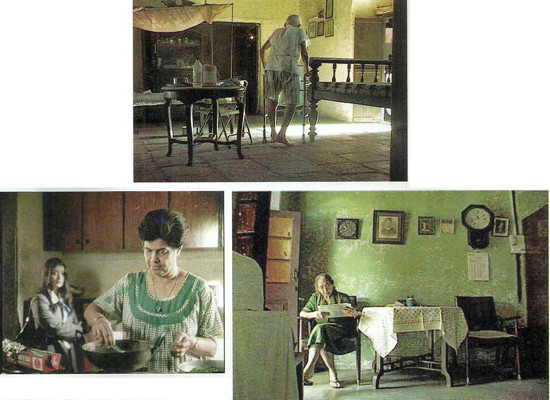
Top: Scene from Non-Parsi; Above right : Beruj Irani: Ext Right: Banoo Thanawalla
The experiences were an "eye opener" for the film-maker. ''I'm interested in documentary making but it's not a very paying career in India... funding is a problem," he notes.
The son ofDinyar, a retired accountant and the late Freny, Umrigar intends to work with the advertising agency of the Aban Pestonjee group of Sri Lanka. An electrical engineering graduate from Victoria Jubilee Technical Institute, U mrigar worked as creative group head of Everest Integrated Communications in Bombay and as a creative supervisor in Contract Advertising prior to joining the Film Institute. His sister Kazveen is a wildlife veterinarian in Morocco.
Umrigar has no plansforfilmmaking al the present but may opt for teaching film or advertising at a later stage. He appreciated the photography in the movie Being Cyrus directed by Homi Adajania and liked the irrelevance of Kaizad Gustad's Bombay Boys.
If Umrigar does decide to make a movie on the Parsis he won't "ask the community for funds - I would raise money independently" so as not to compromise the content of the film.
"Poor Parsis do exist"
Kaevan U rigar
One myth about the Parsis is that no one is poor. That ea hone is well-educated, well-fed and well-looked after. Reality though is slightly different. Poor Parsis do exist. Though they are better off than most poor, snrvna.l for them too is an everyday struggle. Dependent on charity for food, shelter and clothing, they live on the margins of Parsi society ...
Iha eseenthemwhilegrowingup in Bombay. I haveseen them in their shabby houses and their shabby dresses, hiding away shamefully, as if aware that they are the community's dirty laundry, not meant for public washing.
I have seen them lining up for aid. In hundreds ... They lived in subsidized housing. Parsi charities doled out old clothes and food-grain allowances. They lacked neither food, clothing nor shelter. And yet they were poor.
I haYe even seen them beg. But only from Parsis. They would stand outside the agiaries, especially on Navroz day, their hands outstretched but not a word from their lips. Standing there pitifully, helplessly.
My attitude towards them would be like most middle-class Parsis. I would tum away, shun them, ignore them. They weren't the Parsis I was used to. Their children didn't go to convent schools like we did, but to Parsi schools where they got free schooling, free uniforms and free lunches. They didn't go to see English films or listen to English songs. And when they married non-Parsis, they didn't marry white-skinned foreigners but lower-class Hindus and Christians.
Among the first people I meet is Dinu Choga. She is in her seventies, ridden with arthritis. She is lying down on the bed and is incapable of getting up herself. A servant has to help her up. Her fingers have all curled up and become completely useless. Her husband Noshir is well into his seventies too and again, not keeping well. The couple have no children. Their savings, nothing much to speak of anyway, have dwindled after retirement. Through charity, they manage to raise Rs 2,500 each month, 1,500 of which goes to the servant without whom they are helpless. The house is big, but bare for the most part, with a color TV standing incongruously in one comer. It is probably a gift from a concerned relative so that the home-bound couple can have something to do, but the servant's family watch it more than they do.
Banoo Thanawala is 86 and lives alone, her husband died five years ago. He used to be a store-salesman. He was only making Rs 200 a month when she married him in 1967. They had no children and she is dependent on nephews and other charities. Though arthritic she manages to do all the housework herself. Her house used to be part of a bakery once. Soot covers the peeling walls, and the roof leaks. Her home is cluttered with belongings, but it is mostly old stuff that once used to belong to her mother-in-law. There is no TV, no fridge, and she cooks on a kerosene stove.
Meheroo Karkaria (resides at) Talookdar Building ... built at the turn of the last century to house needy Parsis. Today the building is in need itself. Most of the tenants have been shifted to a newly constructed complex at Lullanagar. Meheroo is 56, but looks 10 years older. A hernia operation keeps her restricted to the house. She has no income and is dependent on charity. Her husband is dead and so is her daughter. Her son stays elsewhere and works as a TV mechanic.
Mani Mistry is the only person who breaks down while telling me her tale. Hers is a riches-to-rags story. From a comfortable life, she has been reduced to a hand-to-mouth existence. In her sixties and plagued by health problems, she makes do by making things at home and selling them door-to-door. Her husband has been reduced to a shadow of his former self after a paralytic stroke. A subsidized new flat in the Parsi housing complex at Lullanagar, a fridge, a phone, a geyser gifted by relatives. But a closer examination reveals badly-tom mattresses, old furniture and clothes stored in bags and suitcases.
I make my way to Juna Bazaar, Khadki, a regular urban shanty-town. Tiny brick tenements with asbestos or tin roofing. Hardly the place I expected a Parsi to live. But walking down its narrow winding alleys I reached Nazareth Chawl, once a hospital and dispensary and now home to Beruj Irani, 77. He moves around on a walker, and is cared for by his Maharashtrian working-class neighbors. His house is big but mostly bare. His children are away, but a TV and fridge stand in for them. Beruj whiles away time playing solitaire. HewasbominNazareth Chawl and will probably die here too.
◆ ◆ ◆
From the archive