
In Memoriam
Kavarana's kindness
Died: Social worker Silloo Kaikhushru Kavarana, 86, trustee of the Bombay Parsi Punchayet (BPP), vice chairperson of the Bombay City Committee of the Indian Red Cross Society and committee member of the Sir Ratan Tata Institute, the F. D. Petit Sanatorium and others, of congestive heart failure in Bombay on October 17, 2005.
Died: Social worker Silloo Kaikhushru Kavarana, 86, trustee of the Bombay Parsi Punchayet (BPP), vice chairperson of the Bombay City Committee of the Indian Red Cross Society and committee member of the Sir Ratan Tata Institute, the F. D. Petit Sanatorium and others, of congestive heart failure in Bombay on October 17, 2005.
Compassion was Silloo Kavarana’s middle name. Just a mention of a destitute Parsi struggling on a Bombay street was enough to send her in hot and hurried pursuit until she had set him/her into a warm bed in one of the many institutions where she was known. And she delved freely into personal and family perquisites in her labor of love, never stopping to ask if the individual in question was deserving of her attention. It was enough that a fellow Zoroastrian was in need of solace.
Her frail form clad in a simple white sari, head covered Parsi style at all times, Kavarana’s nod to fashion was her preference for court shoes. Without any claim to being an intellectual – making claims was not her style – Kavarana led by example. A group of younger women, among them the wives of fellow trustees, always surrounded her and watching her learnt the fine art of assuaging the hurt of the deprived and the displaced. Kavarana was wont to speak often and with anguish of the flotsam and jetsam of the community who ended their last days in places like the J. J. Hospital’s Parsi Ward or the J. J. Dharamshala, abandoned by their families in death as in life, dejected rejects who had lost the will to live.
In 1993, after her initial election as trustee of the BPP Kavarana had told Parsiana, "Everyone seems to blame all the problems of the community on housing. According to me housing is not the problem. The real problem today is that Parsis have no tolerance. Earlier there were many more Parsis, they had large families, but they managed to live together. Now our numbers are fewer, the families are smaller and still everyone wants his own independent household (see "A firm yet gentle lady trustee,” Parsiana, March 1993).”
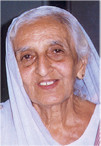
Kavarana: "a servant of the poor”
In a message of condolence Iranian philanthropist Mehraban Zartoshty recalled "the kind, loving, cheerful presence (of his) dear friend and distinguished trustee.” Recalling Kavarana’s determination to revamp the Parsi Ward from its run-down condition into a haven for the ailing destitute – a mission in which Zartoshty’s philanthropy played a major role – he spoke of her as "a great role model for whom no challenge was too great.”
At the combined condolence meet called by the BPP and the Indian Red Cross Society, Maharashtra, on November 16, BPP chairman Minoo Shroff spoke of Kavarana’s aptitude to "look forward, not back; look out, not in,” and praised her amiable temperament which allowed her to work without fanfare or hankering for power. Despite the visible strain on her poor health for the last few years, she has left behind a wonderful legacy, he noted.
Chairman of the Maharashtra State Branch of the Indian Red Cross Society Kersi Gherda asked rhetorically, "How long did Silloo Kavarana work for the Red Cross?” and answered "Forever!” He then asked, "Can you think of anyone who has not raised her voice? Silloo Kavarana never did. She used temperate language even under extreme provocation.” But, he qualified, she was no walkover, she couldn’t be duped, though she gave gladly of her resources.
Honorary secretary of the Red Cross Society’s Maharashtra State Branch Dr Chandi Batliwalla recalled her exemplary and committed fellow volunteer who believed "that time spent in helping others was never wasted…For every grief endured and pain suffered, she had a healing balm.” A resource mobilizer for good causes, Kavarana netted 12 to 15 lakh rupees from the annual Red Cross Ball she organized. Impartiality, neutrality and strong adherence to principles distinguished all that she did. "She was no great activist but accepted somebody’s idea as better than her own and respected the leadership qualities of others,” said Batlivala and though a traditional Zoroastrian, her "secular credentials were never in doubt.”
Solicitor and The Bombay Samachar columnist Bergis Desai had, as a young boy, witnessed her grief at the death of her husband in the B. D. Petit Parsee General Hospital in 1969. He spoke of her transformation from a simple housewife into a "servant of the poor.” Among the earliest members of the CER (Committee for Electoral Rights later renamed Committee for Economic Revival) they met again in 1980. "She had no personal agenda. She refused BPP trusteeship for more than 10 years.” Elected with a thumping majority in 1993 Kavarana, after a period of indecision opted to stand for reelection in 2000 when her first term ended. Her decision to stand again at the late age of 81 "became a dilemma for many of us,” said Desai, "but her infectious commitment, her visible compassion” came through.
Honorary secretary of the Bombay City Branch of the Indian Red Cross Society Homai Modi, who knew her from the early 1980s, admired her dignity and dedication to work. "She could be very stubborn and did anything and everything that an occasion required, even dusting chairs when that was necessary! She loved to do catering for people,” noted Modi recalling the many times she had lightened her burden as secretary by undertaking the job of ordering and organizing the snacks or meals that accompanied important meetings.
Describing Kavarana as "an angel who brought relief and solace to countless community members,” social worker Arnavaz Mistry, who attends to all kinds of personal needs of the inmates of the Parsi Ward at the J. J. Hospital, said, "I learnt under her tutelage, watched her going from patient to patient…She brought honor and dignity to any post she held. When The Bombay Times approached her for an interview she refused politely; publicity was not her forte.”
She visited affected areas in person in times of calamity and always had the time to stop and enquire regarding the welfare of ward boys and staff members, seeking aid for their personal problems, ensuring them Divali saris, said social worker Mahrukh Noble whom Kavarana had "steered and guided into working with the needy.”
The only non-Parsi speaker of the day, former Inspector General of Police Julio Rebeiro acknowledged that he hadn’t known Silloo except as the friend of her son Farrokh. "She always smiled at me and my wife used to say ‘she’s fond of you.’ But now it seems she smiled at and was fond of everybody!” Distinguishing Kavarana from other card-toting ‘social workers,’ Rebeiro focused on the "central theme of compassion in all religions” which needs to be developed in society at large.
The condolence resolution read out by social worker and Padma Shri Thrity Taleyarkhan spoke of "her matchless dedication and personal involvement during natural disasters in Mumbai, Latur and Gujarat…(of her) abiding interest in the Sir Ratan Tata Institute, Stri Zartohosti Mandal, the Petit Sanatorium, Happy Home and School for the Blind, the Cama Convalescent Home and the Goolestan Finishing School.”
Acknowledging this "incredible outpouring of love and affection,” her son Farrokh Kavarana said he and his sister Goolu Austin felt "humbled and touched. We wouldn’t be where we are if it hadn’t been for her. She and our father believed in not sparing the rod and spoiling the children. (In a personal chat with Parsiana later he recalled how conscientiously she not only oversaw her own children’s homework and exam preparations but that of all the cousins who were sent by their respective parents to study under her.) The letters we have received speak of our mother being mother, grand-mother, aunt to various people. We are committed to continuing the good work she did…”
Kavarana is survived by her son Farrokh and daughter Goolu Marazban Austin.
◆ ◆ ◆
From the archive